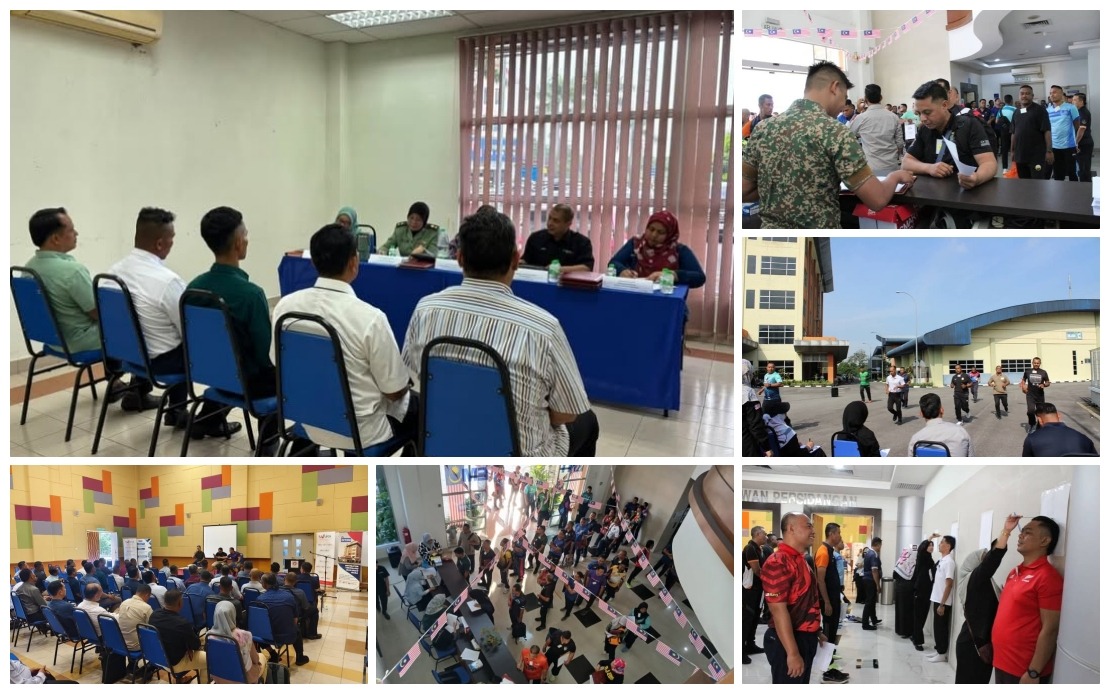
MARA has completed the physical interview phase for selecting Full-Time External Wardens across its MARA Junior Science College network, with 147 candidates who previously served in the military attending assessment sessions held at the MARA Food Technology Incubator in Kepong on two consecutive days this week. The recruitment drive represents a significant staffing initiative aimed at strengthening residential college management at MRSM institutions nationwide, which educate Malaysia's brightest junior science students in a boarding environment.
According to MARA Chairman Datuk Dr Asyraf Wajdi Dusuki, all 147 participants had already navigated two preliminary stages of online screening before being invited to the in-person assessment. This filtration process indicates a competitive selection mechanism where candidates' applications were reviewed against specific criteria before advancing to the more resource-intensive physical evaluation phase. The dual-screening approach suggests MARA is pursuing a merit-based appointment process rather than a broad-based intake.
During the interview sessions, candidates faced three distinct assessment components designed to evaluate their suitability for the demanding warden role. The first component measured Body Mass Index, reflecting the institution's emphasis on candidates maintaining physical fitness standards. The second involved the Bleep Test, a cardiovascular endurance assessment that measures aerobic capacity through progressive running intervals. These physical evaluations underline MARA's expectation that wardens demonstrate fitness levels befitting individuals tasked with overseeing the welfare and activities of boarding students.
Beyond physical metrics, candidates participated in face-to-face interviews that evaluated their understanding of MARA's educational philosophy and their capacity to serve as role models for students. The wardens, according to Dr Asyraf Wajdi, function as surrogate parents within the residential college ecosystem, bearing responsibility not merely for enforcing rules but for nurturing holistic student development. This expanded conception of the warden's role moves beyond traditional disciplinary functions toward mentorship and educational guidance.
The recruitment timeline indicates that successful candidates are expected to commence duties on July 1, establishing a relatively compressed period between final selection and operational commencement. This suggests existing vacancies or increased capacity requirements at MRSM institutions that demanded urgent recruitment action. The use of former military personnel reflects a deliberate policy choice, possibly reflecting confidence in military training's alignment with the structured discipline required in boarding school environments.
Dr Asyraf Wajdi articulated that the warden position encompasses multifaceted responsibilities extending beyond maintaining order. Wardens must embody MARA's educational vision and serve as educators and guides, suggesting the institution views these positions as integral to its broader mission of developing well-rounded scholars. This framing positions wardens as change-agents capable of influencing student behaviour and academic outcomes through their residential presence and mentorship.
The initiative specifically targets addressing persistent challenges within MRSM institutions, particularly bullying, disciplinary infractions, and broader social problems. By recruiting dedicated Full-Time External Wardens from military backgrounds, MARA appears to be investing in preventative capacity intended to create safer and more nurturing residential environments. This proactive approach acknowledges that residential colleges require specialized management to protect student welfare and optimize the boarding experience.
Concurrently, MARA is conducting parallel recruitment for female warden positions, with 162 former military women candidates scheduled for physical interviews in the following week. This gender-balanced recruitment strategy suggests institutional commitment to ensuring diverse residential staff that can provide culturally appropriate mentorship to both male and female students. The staggered interview schedule for male and female candidates reflects logistical necessity while maintaining the same assessment standards across demographic cohorts.
The emphasis on recruiting former military personnel carries implications for MRSM's operational culture and discipline philosophy. Such appointments likely reflect confidence that military training instils values of punctuality, hierarchy, chain of command, and physical discipline that translate effectively to boarding school management. However, the substantial candidate pool of 147 individuals for initial interviews indicates significant professional interest in these positions among Malaysia's veteran community, suggesting competitive remuneration and career prospects.
From a broader educational policy perspective, this recruitment initiative signals MARA's recognition that residential college management requires specialized expertise and sustained investment. The comprehensive assessment process—encompassing online screening, physical fitness evaluation, and structured interviews—demonstrates institutional seriousness about warden quality. This stands in contrast to boarding institutions where residential staff roles are treated as secondary positions requiring minimal specialized training.
The timing of this recruitment, with duties commencing in July, aligns with the Malaysian academic calendar and suggests planning for the upcoming academic year. MRSM institutions serve as talent pipelines for Malaysia's science and technology workforce, making their residential environments crucial to student welfare and academic success. By strengthening warden capacity, MARA is investing upstream in the development pipeline for the nation's future STEM professionals.
For Malaysian students seeking residential education at premier junior science colleges and their families, the expanded warden recruitment represents institutional commitment to safety and mentorship quality. The selection process's rigor indicates that MARA takes these positions seriously, potentially translating into improved residential experiences for students. As MRSM institutions continue expanding their reach across Malaysia's geography, the capacity to recruit qualified residential staff becomes increasingly critical to maintaining education quality and safeguarding student welfare in boarding environments.

