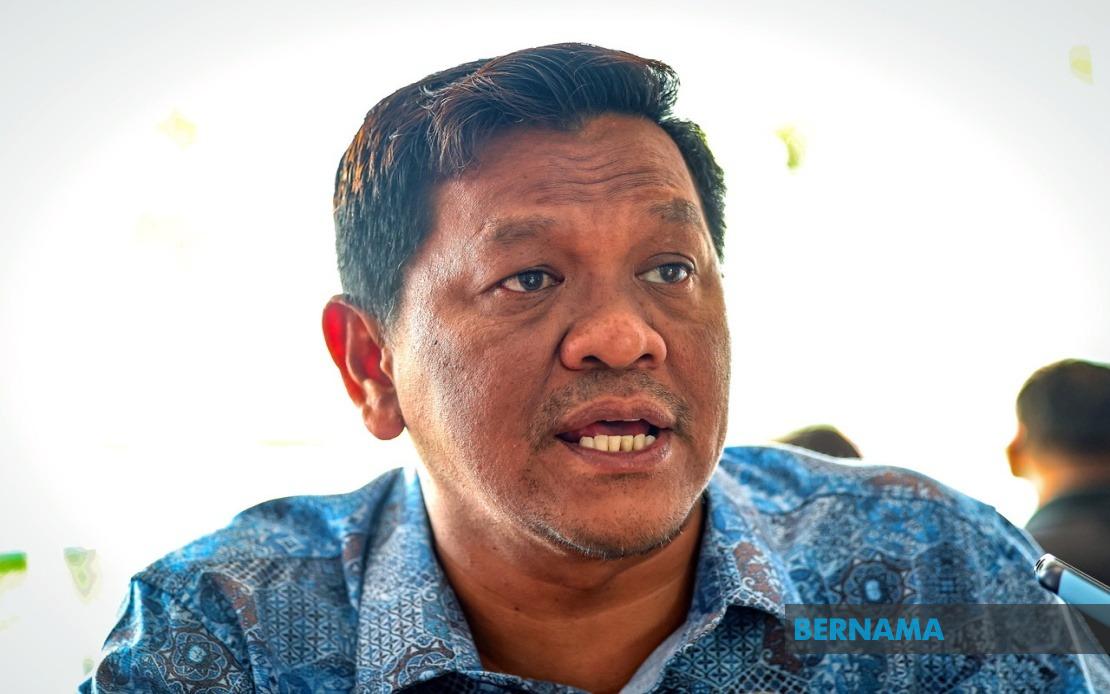
The National Security Council (MKN) distributed RM5 fuel vouchers to 200 motorcyclists in Renggam during a community engagement event in Kluang on June 25, marking one of several initiatives the government has undertaken to provide financial relief to those struggling with daily living costs. The distribution coincided with the Jiwa@Komuniti MADANI Sembang Santai World Cup Edition programme, which brought together government officials and residents for dialogue and information sharing. Abdullah Izhar Mohamed Yusof, political secretary to the Communications Minister, explained that the voucher initiative reflects the government's commitment to improving the lives of ordinary citizens while fostering national unity at the grassroots level.
The programme extended beyond simple voucher distribution, incorporating structured components intended to bridge communication gaps between government institutions and the communities they serve. Alongside the financial assistance, organisers conducted briefings on pressing national issues and facilitated dialogue sessions that allowed residents to ask questions, share concerns, and propose suggestions on matters affecting their locality. The collaboration brought together representatives from the National Security Council, the Information Department (JaPen), and the Department of Community Communications (J-KOM), demonstrating a coordinated approach to grassroots engagement across multiple government agencies.
Abdullah Izhar emphasised that such programmes serve as essential channels through which the government can ensure all Malaysians have access to reliable, accurate information about policies and initiatives. In an era where misinformation circulates widely, particularly through social media platforms popular in Malaysia and Southeast Asia, the government appears to view direct community engagement as a counterweight to false narratives. By bringing officials into neighbourhood settings for face-to-face discussions, these outreach efforts aim to establish trust and credibility that mass media campaigns alone cannot achieve.
The scale and regularity of such initiatives suggest a deliberate shift in government communication strategy. Rather than relying solely on traditional broadcast and print media, the administration is investing in local, in-person engagement that allows ordinary Malaysians to interact directly with decision-makers. According to Abdullah Izhar, the voucher distribution and community dialogue sessions will continue on a recurring basis, signalling that this is not a one-off gesture but a sustained commitment to grassroots networking. This approach particularly matters for motorcycle riders, a significant demographic across Malaysia and Southeast Asia, as they represent a cost-sensitive population heavily affected by fuel price fluctuations.
The motorcyclists who received vouchers represented diverse circumstances within the Renggam community. M. Raja, a 56-year-old father of five from Taman Sri Jaya, expressed gratitude for the assistance while acknowledging its limitations. Though he recognised the value of the RM5 voucher, he noted that monthly assistance would provide more meaningful relief from his household expenses. His measured response illustrates the reality facing many Malaysian breadwinners who juggle multiple financial obligations on modest incomes. Similarly, 66-year-old Hee Eeck Kwe from Kampung Baru highlighted the government's effort to ensure that rural and semi-urban communities are not marginalised when distributing assistance programmes, a concern that resonates across less-developed areas of Malaysia and the wider region.
The timing and location of this initiative carry particular significance. Kluang, situated in Johor, has been an important constituency in Malaysian politics, and such grassroots programmes can influence both immediate community sentiment and longer-term political relationships. By ensuring that fuel assistance reaches ordinary riders rather than limiting programmes to headline-grabbing infrastructure projects, the government demonstrates responsiveness to immediate, tangible needs. This stands in contrast to some criticisms that government initiatives often benefit larger businesses or urban centres disproportionately.
For neighbouring Southeast Asian nations, Malaysia's approach to fuel subsidies and direct cash assistance offers instructive comparisons. While many regional governments struggle with fuel price management and inflation, Malaysia's combination of targeted vouchers and regular community dialogue suggests an attempt to maintain affordability for lower-income groups while managing fiscal sustainability. Other countries grappling with similar pressures—particularly those with significant rural motorcycle-dependent populations—may observe whether Malaysia's model produces measurable improvements in household financial stability or political satisfaction.
The involvement of the Communications Minister's office underscores that this initiative carries messaging weight beyond simple humanitarian assistance. In Malaysian politics, perception management and public communication are integral to governance, and government officials view such programmes as opportunities to demonstrate responsiveness and build political capital. The Jiwa@Komuniti programme, with its emphasis on "together" and "dialogue," reflects a branding approach emphasising unity and consensus-building.
The broader policy context matters here as well. Malaysia has maintained fuel subsidies and support mechanisms for lower-income groups amid regional and global energy market volatility. Rather than simply maintaining blanket subsidies—which become increasingly expensive—the government appears to be experimenting with targeted, conditional assistance delivered through community engagement channels. This approach potentially reduces fiscal burden while maintaining political goodwill with key constituencies. How effectively these vouchers improve actual financial outcomes for recipients, and whether they influence transport choices or economic behaviour, remains an open question requiring longitudinal assessment.
For Malaysian policymakers and officials, the challenge of sustaining such programmes at scale while managing fiscal constraints will become more acute. Distributing vouchers to 200 riders in one location is manageable, but extending such initiatives nationwide—as Abdullah Izhar promised—requires significant budgetary allocation and logistical coordination. The programme's success will ultimately be measured not merely by the immediate satisfaction of recipients, but by whether it translates into sustained poverty alleviation, improved community perceptions of government responsiveness, and whether it can be maintained consistently over time without becoming a political liability if budgets tighten.

