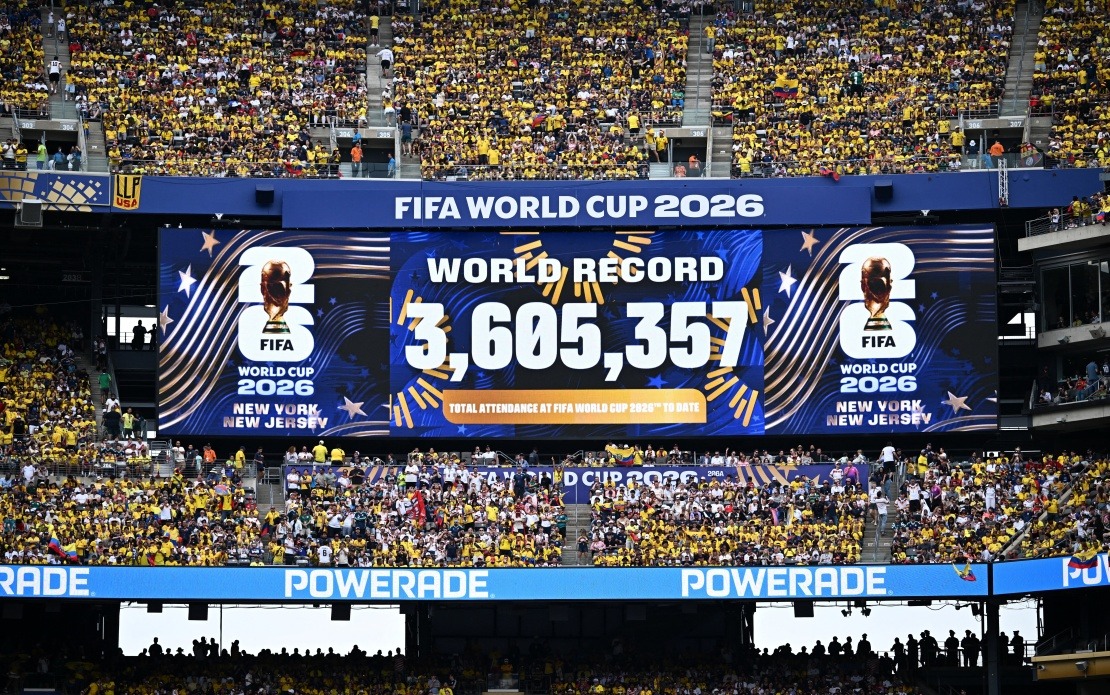
The 2026 FIFA World Cup has etched itself into sporting history by becoming the most-attended World Cup tournament ever, a milestone announced during Germany's match against Ecuador in East Rutherford, New Jersey. As the giant screens at the stadium illuminated with the figure of 3,605,357 spectators, the crowd erupted in applause, recognising the moment when the tournament surpassed the previous all-time record set 32 years earlier in 1994. The announcement underscores not only the commercial success of the tournament but also the enduring appeal of football across North America and beyond.
The 1994 World Cup had set the benchmark for attendance at nearly 3.6 million fans across its entire competition. However, that tournament featured only 52 matches, whereas the expanded 2026 edition comprises 80 matches in total. With 48 matches still remaining when the record was broken midway through the tournament, the final attendance figures could potentially approach double the 1994 record. This trajectory represents a fundamental shift in how the world's most popular sport engages audiences, reflecting both the expanded tournament format and the commercial infrastructure that the host nations have developed.
The expansion of the World Cup from 32 to 48 teams, implemented for the first time in 2026, fundamentally restructured tournament attendance patterns. The addition of 16 extra teams meant 16 additional group-stage matches and a more complex knockout phase, requiring larger stadium capacities and more matches spread across multiple cities. This format, approved by FIFA in 2018, was designed to increase competition opportunities and revenue generation, with the attendance figures now validating that strategic decision on both fronts.
Stadium utilisation across the 2026 tournament has been remarkably consistent, with venues operating at more than 99 per cent capacity on average. This saturation reflects not merely the popularity of football but the strategic selection of host cities and venues capable of accommodating such demand. The 16 host cities across the United States, Mexico, and Canada have demonstrated their readiness to support the tournament's infrastructure requirements, from ticket sales management to crowd control and fan experience.
For Malaysian readers and Southeast Asian football enthusiasts, the attendance boom carries particular significance. While Malaysia and other ASEAN nations have not qualified for the tournament itself, the record-breaking numbers underscore the globalisation of football culture and the financial trajectories that major tournaments generate. The accessibility of matches through broadcast networks, streaming platforms, and social media has extended the World Cup's reach into regions far removed from the host countries, with Malaysian fans among millions globally who engage with the competition remotely.
The announcement came with endorsement from FIFA President Gianni Infantino, who characterised the achievement as a testament to football's intrinsic power to unite people across cultures and national boundaries. His statement emphasised not just the statistical accomplishment but the atmospheric and emotional dimensions of the tournament experience. The scenes across stadiums in cities like Los Angeles, Mexico City, and Toronto have reportedly demonstrated levels of enthusiasm that extended beyond traditional football strongholds, attracting diverse audiences and creating compelling narratives around fan culture.
The commercial implications of these attendance figures extend throughout the football ecosystem. Higher gate receipts translate directly into increased revenue for FIFA, host nation governments, and participating federations. For the three host countries, the economic impact encompasses not only direct tournament revenue but ancillary benefits through hospitality, tourism, transportation, and hospitality sectors. For Asian federations monitoring global trends, these figures suggest sustained investment in stadium infrastructure and fan engagement programmes could yield substantial returns.
The comparison between 1994 and 2026 reveals how substantially football's commercial landscape has transformed across three decades. In 1994, the United States was still establishing football as a mainstream sport domestically, with Major League Soccer not yet in existence. The tournament served partly as a nation-building exercise for American soccer. By 2026, with established domestic leagues, global broadcasting infrastructure, and integrated digital platforms, the sport commands audience engagement at unprecedented scales.
Looking forward, the attendance records achieved in 2026 establish new baseline expectations for future tournaments. The 2030 World Cup, scheduled to be hosted primarily by Uruguay, Argentina, and Paraguay with opening matches in Uruguay, will necessarily consider how to replicate or exceed these engagement levels. Tournament organisers worldwide will scrutinise the 2026 data to understand which factors—venue selection, marketing approaches, pricing strategies, fan experience investments—most significantly drove attendance.
For Southeast Asian nations aspiring toward World Cup hosting, the 2026 numbers provide both inspiration and practical reference points. Potential hosts must contemplate whether their domestic infrastructure, transportation networks, and stadium capacities could accommodate comparable attendance densities. Malaysia's sporting infrastructure, including facilities in Kuala Lumpur and Johor, continues developing, though a World Cup hosting bid would represent a substantial undertaking requiring national coordination and investment at scales not yet mobilised.
The 2026 World Cup's attendance triumph ultimately reflects football's status as the global sport par excellence, capable of motivating millions to gather physically in stadiums despite digital entertainment alternatives. The record transcends mere statistics, embodying the emotional investment that fans invest in international football competition. As Malaysian supporters continue engaging with the tournament remotely, the attendance milestones reinforce why the World Cup remains the pinnacle of football achievement, attracting unprecedented numbers of spectators across continents.

