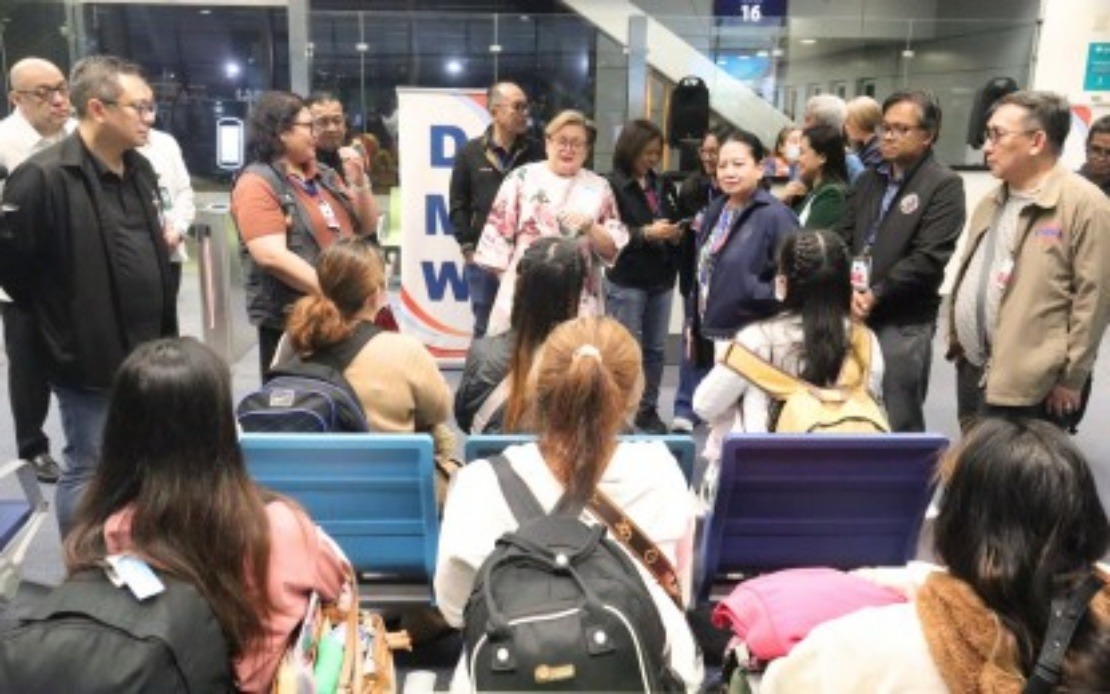
The repatriation of 24 Filipinos detained in Russia marks a significant diplomatic breakthrough for Manila, with the returnees touching down at Ninoy Aquino International Airport in two separate flights from Bangkok in the early hours of Sunday morning. President Ferdinand Marcos Jr's personal intervention during high-level talks with Russian President Vladimir Putin at the ASEAN-Russia Commemorative Summit in Kazan has proven decisive in resolving what had become a prolonged consular issue for the Philippine government. The detainees, who had been held in the Siberian city of Irkutsk for approximately nine months, have now been safely returned to their families and their home country.
The arrival process unfolded across two Philippine Airlines flights from the Thai capital, with six individuals landing shortly after midnight on Philippine Airlines Flight PR737, followed by the remaining 18 passengers arriving early Sunday morning via PAL Flight PR733. The coordinated reception reflected the significance the Philippine government attached to the case, with Foreign Affairs Secretary Maria Theresa Lazaro and Migrant Workers Secretary Hans Cacdac both present to formally welcome the returning citizens. This show of high-level official presence underscored Manila's commitment to protecting its citizens abroad, a longstanding priority particularly for a nation with millions of overseas workers globally.
The circumstances surrounding the detention revealed troubling patterns consistent with vulnerabilities faced by Filipino migrant workers in distant labour markets. Philippine officials indicated that the detainees appeared to have fallen victim to illegal recruitment schemes before being taken into custody in Irkutsk for alleged immigration-related violations. The nine-month detention period without formal charges raised concerns about due process and the protection of Filipino workers abroad, issues that have historically prompted diplomatic engagement at the highest levels. The lack of transparency in the Russian detention process made this case particularly urgent for Manila's diplomatic corps.
President Marcos expressed gratitude toward Putin and the Russian government for their cooperation in facilitating the release, framing the outcome as a positive development in bilateral relations between the two nations. This diplomatic language reflected the delicate balance required when resolving consular crises with major powers, particularly one like Russia where diplomatic channels remain complicated by broader geopolitical tensions. The president's willingness to raise the issue directly during a regional summit demonstrated how ASEAN forums can serve practical purposes beyond traditional multilateral discussions, allowing bilateral problems to be addressed at the margins of larger gatherings.
The repatriation operation itself required substantial inter-agency coordination across multiple Philippine government departments. The Department of Foreign Affairs took the lead role, coordinating directly with Russian authorities while simultaneously managing logistics through the Department of Migrant Workers and the Overseas Workers Welfare Administration. This collaborative approach reflected the complexity of modern consular operations, which increasingly demand seamless cooperation between diplomatic, labour, and welfare-oriented government bodies. The involvement of OWWA signals that the returnees will receive structured support as they reintegrate into Philippine society.
For Southeast Asia more broadly, this case highlights vulnerabilities in labour migration pathways that extend beyond the traditional corridors of Middle Eastern and Asian destinations. Russia and Eastern European nations have increasingly become recruitment targets for workers seeking employment abroad, yet these markets often lack the regulatory frameworks and diplomatic protections that exist in more established migration routes. The sophistication of illegal recruitment networks that can transport workers across such vast distances and deposit them in relatively isolated regions like Siberia demonstrates how transnational criminal operations exploit information gaps and desperation among job-seekers.
The Philippine government's commitment to providing reintegration support to the returnees addresses only one dimension of the broader challenge. Authorities have indicated that investigations will continue into how these workers were recruited, who orchestrated their transport to Russia, and what roles intermediaries played in the scheme. Such investigations are crucial not merely for prosecuting those responsible, but for identifying systemic weaknesses in recruitment oversight that allow such schemes to flourish. The Migrant Workers Secretary's direct involvement signals that lessons learned from this case will inform policy adjustments to strengthen worker protections.
This incident also underscores the ongoing relevance of traditional diplomacy in resolving issues affecting ordinary citizens. Despite digital communication and multilateral mechanisms, high-level political intervention by leaders remains essential when workers face detention in foreign countries. The success of Marcos's direct appeal to Putin demonstrates that personal relationships between leaders, even across geopolitical divides, can produce tangible humanitarian outcomes. In an era when Philippines-Russia relations exist in a more complex diplomatic context than in previous decades, this resolution suggests pragmatic channels remain available for addressing shared concerns.
The broader implications for Filipino workers globally remain significant. The Philippines hosts approximately 12 million overseas workers, making their protection an essential national interest. Incidents like the Irkutsk detention, while resolved through diplomatic intervention, highlight why workers and their families must exercise extreme caution when responding to recruitment opportunities in less familiar destinations. Public awareness campaigns coordinated through the Department of Migrant Workers must increasingly emphasise verification mechanisms and the risks associated with recruitment networks promising employment in geographically distant or geopolitically unstable regions.
Moving forward, the case creates opportunities for enhanced bilateral cooperation between Manila and Moscow on labour standards and worker protection. Both nations could benefit from establishing memoranda of understanding that clarify procedures for handling detained nationals, ensure access to consular assistance, and establish expedited resolution mechanisms for immigration-related disputes. Such frameworks have proven valuable in Philippines relations with labour-receiving nations in the Gulf and Southeast Asia, and could serve similar purposes with Russia and other Eastern European destinations that increasingly attract Filipino workers seeking employment opportunities beyond traditional markets.

