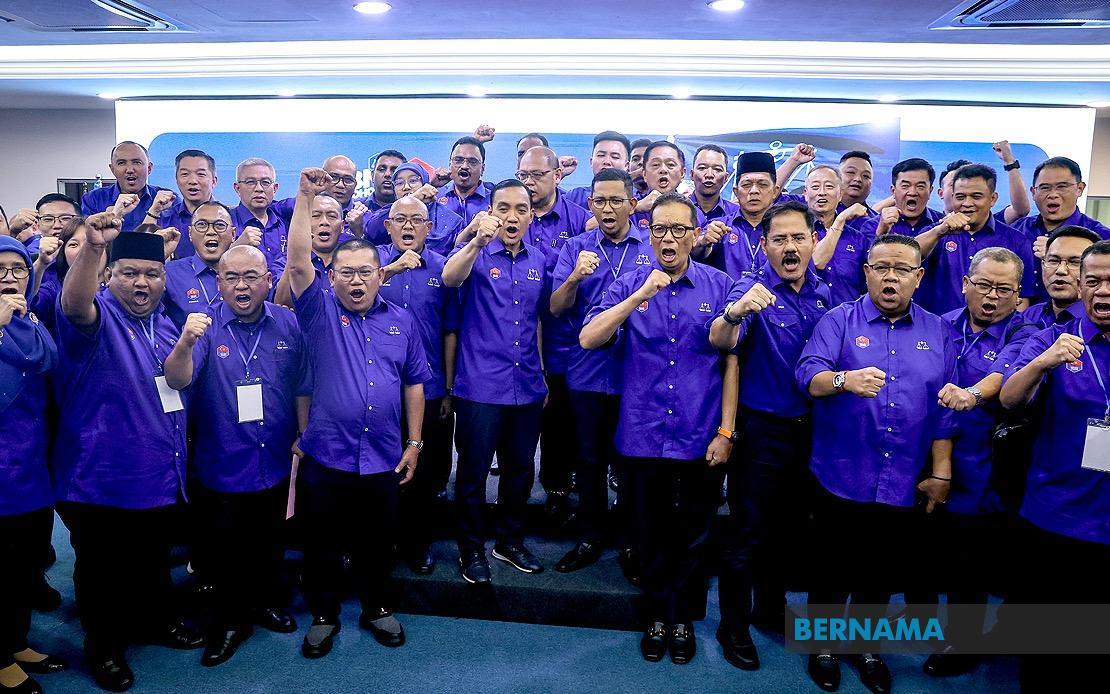
Johor Barisan Nasional has unveiled its complete slate of 56 candidates for the forthcoming state election, signalling the coalition's strategy of blending continuity with renewal across the peninsular state's political landscape. The announcement, made at a ceremony in Johor Bahru, reflects careful calculations by BN leadership to field a mix of seasoned legislators and several untested figures in an effort to maintain the coalition's grip on this crucial state seat.
The candidate distribution reveals UMNO's commanding presence within the BN machinery in Johor, with the party fielding 37 candidates alongside 15 from MCA and four from MIC. Johor BN chairman Datuk Onn Hafiz Ghazi, who personally unveiled the line-up, emphasised that the selection process carried the explicit mandate of national BN chairman Datuk Seri Dr Ahmad Zahid Hamidi. This hierarchical endorsement underscores the significance of Johor's electoral outcome for Kuala Lumpur's political establishment, positioning the state as a bellwether for broader coalition performance.
Among the most prominent returning figures is Datuk Seri Dr Adham Baba, the former health minister who now serves as Tenggara UMNO division chief. Adham's placement in Pasir Raja represents a political homecoming of sorts; he previously represented the constituency for two consecutive terms between 2008 and 2018 before moving to federal politics. His earlier tenure as Tenggara MP from 2004 to 2008 and his subsequent return to Parliament between 2018 and 2022 underscore a career marked by oscillation between state and national representation. Adham's nomination signals BN's confidence in his ability to recapture ground and consolidate support in a constituency where he maintains established networks and familiarity.
Onn Hafiz himself will seek re-election in Machap, the seat he secured in the 2022 state election. His continued candidacy in this division, combined with his leadership role within Johor BN, reinforces his position as the coalition's principal vehicle in state politics. The dual responsibilities of defending a personal constituency while coordinating a 56-seat electoral machinery demonstrate the intertwined nature of individual ambition and organisational strategy within Malaysia's political structure.
Significant changes have occurred in other constituencies, particularly in Benut, where former Menteri Besar Datuk Seri Hasni Mohammad has been dropped from the candidacy despite serving as the incumbent assemblyman. His replacement by UMNO working secretary Datuk Mohd Sumali Reduan suggests deliberate recalibration of personnel in strategic seats. This decision exemplifies the ruthless pragmatism sometimes employed by coalitions in managing their political assets, where previous service does not guarantee continuation regardless of circumstances.
The retention strategy for experienced legislators appears remarkably robust. Nine of the ten former Johor executive councillors who contested the previous state election have been renominated, indicating organisational satisfaction with incumbent performance and administrative competence. The sole exception is Khairin-Nisa Ismail @ Md On, previously chair of the State Women, Family and Community Development Committee, who has been excluded from the Serom seat contest. Her non-renomination may reflect various calculative factors, from electoral vulnerability to internal coalition dynamics.
Onn Hafiz's rhetoric accompanying the candidate announcement emphasised the gravity of the nomination process. In his address, he characterised candidate selection not as reward or privilege but as a custodial responsibility demanding integrity and ethical conduct. This framing seeks to establish normative expectations for campaign behaviour, urging contestants to maintain courtesy, respect, and prudence in their electoral activities. Such language serves multiple purposes: it attempts to elevate the tone of political discourse whilst simultaneously establishing benchmarks against which candidate behaviour can be evaluated and, implicitly, sanctioned.
The composition of the candidate slate reflects Johor BN's assessment of its electoral strengths and vulnerabilities. By retaining the overwhelming majority of previous office-holders whilst introducing new candidates in selected constituencies, the coalition attempts to balance stability with dynamism. This approach acknowledges that sitting assemblypersons bring institutional knowledge, constituent relationships, and organisational machinery that can prove decisive in competitive electoral environments.
For Malaysian and regional observers, Johor's electoral dynamics carry significance beyond state boundaries. As Malaysia's second-largest state and economically vital territory, Johor's political complexion influences broader federal calculations. BN's approach to candidate selection here, emphasising experience and continuity, suggests confidence in its institutional machinery despite periodic challenges to coalition unity at national level. The inclusion of figures like Adham Baba, who have navigated transitions between state and federal politics, demonstrates the coalition's sophisticated understanding of electoral mobilisation across multiple administrative levels.
The announcement comes amid broader Malaysian electoral cycles and reflects ongoing negotiations about political representation and leadership legitimacy. The ethnic distribution of candidates—predominantly UMNO reflecting Malay-Muslim demographics whilst incorporating MCA and MIC representation—maintains traditional BN power-sharing arrangements even as those arrangements face periodic strain from intra-coalition competition and external challengers. How effectively this slate translates nominated strength into electoral victory will partly determine BN's trajectory in forthcoming national political calculations.

