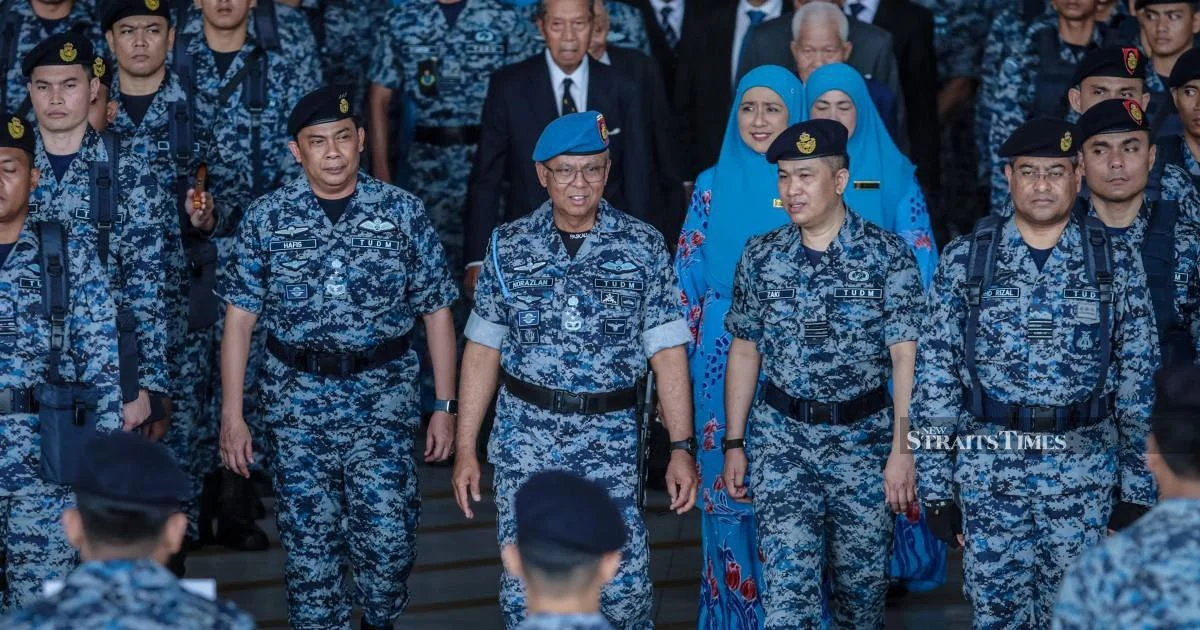
General Tan Sri Muhamad Norazlan Aris, who heads the Royal Malaysian Air Force, has stressed that maintaining robust aerial capabilities represents an essential pillar of Malaysia's maritime defence strategy as the region navigates an increasingly complex security landscape. Speaking in Subang, the RMAF chief articulated the interconnected nature of contemporary threats to Malaysia's vast sea lanes, which represent vital commercial and strategic arteries for the nation's economy and regional standing.
Malaysia's geographical position as a maritime crossroads gives the country significant strategic weight but also exposes it to multifaceted security challenges. The Strait of Malacca, through which some of the world's most critical shipping traffic flows, remains a focal point of regional interests and potential vulnerabilities. Beyond traditional piracy concerns, the emergence of new geopolitical dynamics in Southeast Asia has created an environment where air superiority directly translates into the ability to monitor, respond to, and deter threats to commercial and military maritime assets. The RMAF's emphasis on air power reflects a modern understanding that controlling airspace above sea lanes is often more cost-effective and operationally decisive than relying solely on surface vessels.
The chief's remarks come amid a period of shifting power dynamics in the region. China's expanding military footprint, competing territorial claims in various maritime zones, and the strategic repositioning of major powers have all contributed to an environment where Southeast Asian nations must carefully calibrate their defence investments. For Malaysia specifically, this means ensuring that air capabilities remain sufficiently advanced and responsive to address potential threats ranging from unauthorised incursions to the protection of offshore economic zones and strategic infrastructure.
From an operational perspective, modern air power offers Malaysian defence planners several advantages. Aircraft can conduct sustained surveillance over vast stretches of ocean far more efficiently than surface patrols, providing early warning systems that are crucial for maritime security. Beyond reconnaissance, fighter jets and armed helicopters provide flexible response options for situations requiring immediate intervention. The speed and reach of aircraft mean that Malaysia's relatively compact military can project protective influence across a significantly larger maritime domain than ground forces alone could manage.
The economic implications of unprotected sea lanes extend throughout Malaysia's economy. As a trading nation heavily dependent on maritime commerce, any disruption to shipping routes or erosion of safe passage guarantees directly impacts export-oriented industries, foreign investment confidence, and consumer prices. The RMAF's focus on maintaining credible air capabilities therefore represents not merely a military concern but a fundamental economic imperative. This dual military-economic logic helps explain why defence modernisation, particularly in air assets, commands bipartisan political support across Malaysia's policy establishment.
Regional cooperation has become increasingly important in addressing maritime security challenges. Malaysia maintains defence partnerships with several countries and participates in multilateral maritime security initiatives. The RMAF chief's emphasis on air power aligns with broader regional trends, as neighbouring countries including Indonesia and the Philippines have similarly prioritised aircraft procurement and air capability development. This creates opportunities for coordinated responses to shared threats, from combating piracy to monitoring unauthorised incursions, though coordination challenges remain a significant practical constraint.
The financial dimension of modernising air capabilities presents Malaysia with difficult choices. Contemporary fighter aircraft, surveillance systems, and maintenance infrastructure require substantial capital investment and sustained funding. These expenditures must be balanced against other pressing national priorities, from social welfare to infrastructure development. Malaysia's defence budget reflects ongoing efforts to maintain adequate air capabilities while managing broader fiscal constraints. This balancing act explains why Malaysian policymakers increasingly emphasise the multi-purpose nature of air assets, which can serve roles ranging from disaster relief to territorial surveillance.
Technological advancement in both threats and defensive capabilities reinforces the RMAF chief's position. Unmanned aerial systems, advanced radar networks, and integrated air defence systems have transformed maritime security operations. The emergence of drone technology creates new vulnerabilities but also new defensive possibilities for nations with sufficient technical sophistication. Malaysia's continued investment in modern air systems reflects recognition that technological obsolescence poses genuine security risks in an era of rapid military innovation.
Looking forward, Malaysia faces the challenge of sustaining institutional expertise and operational readiness in air forces amid budget pressures and competing priorities. The RMAF's stated need for enhanced air power reflects not merely current concerns but anticipatory strategy addressing anticipated regional developments over the coming decade. Training pilot expertise, maintaining equipment readiness, and ensuring technological currency all require consistent resources and institutional commitment beyond the lifespan of individual equipment procurement cycles. The chief's public statements thus serve to build political consensus around sustained, long-term investment in air capabilities rather than episodic procurement responses to immediate crises.

