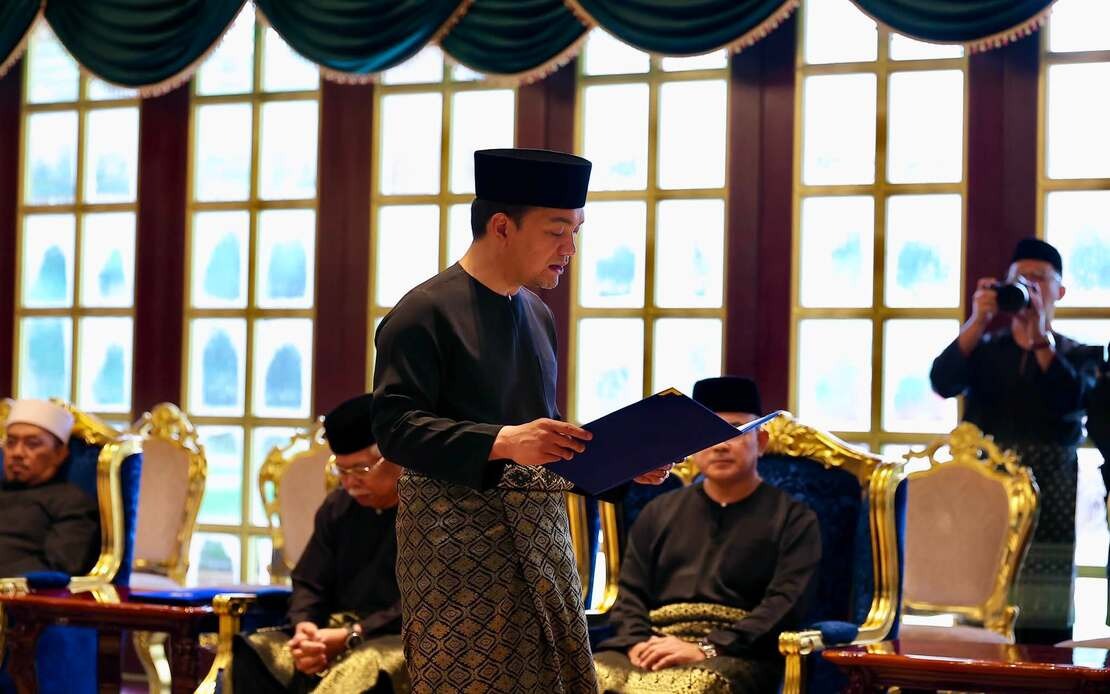
Onn Hafiz Ghazi has officially assumed office as Johor's Menteri Besar following his swearing-in ceremony at the Balai Mengadap in Istana Bukit Serene, with Deputy Prime Minister Ahmad Zahid extending warm felicitations on the momentous transition. The formal investiture took place before Tunku Ismail Sultan Ibrahim, the Regent of Johor, where Onn Hafiz received his appointment letter in a ceremony that marks a significant moment in the state's political landscape. The event underscores the stable transfer of executive authority in Malaysia's southern stronghold, traditionally considered a crucial political battleground for the ruling coalition.
Ahmad Zahid, who chairs Barisan Nasional, articulated his confidence in Onn Hafiz's capacity to navigate the responsibilities of leading Johor. In a statement posted on social media, the Deputy Prime Minister characterised the electoral outcome as a powerful mandate from the electorate, framing it as public endorsement for continued governance focused on raising living standards and ensuring coherence within the political establishment. This perspective aligns with BN's broader narrative following its decisive performance in the recently concluded state election, where the coalition secured overwhelming parliamentary backing.
The Johor state election, held in mid-July, delivered a resounding victory for Barisan Nasional, which captured 48 of the 56 available legislative seats—a supermajority that substantially exceeds the 29 seats necessary for parliamentary control. This commanding result represents a significant validation of BN's political positioning in Johor and reinforces the coalition's dominance in one of Malaysia's most populous and economically significant states. The two-thirds majority grants Onn Hafiz considerable legislative latitude to pursue his administration's agenda without requiring cross-party cooperation or negotiating with opposition factions.
Onn Hafiz brings considerable provincial experience to his new role, having previously served as both the state assemblyman representing the Machap constituency and chairman of Johor's BN division. His dual responsibilities in provincial administration and party management position him as an established figure within the state's political hierarchy, having demonstrated capacity to navigate the complex interplay between local governance and broader coalition interests. The appointment reflects confidence from both the electorate and the coalition's upper echelons in his ability to manage Johor's multifaceted portfolios.
In his congratulatory remarks, Ahmad Zahid emphasised the spiritual and institutional dimensions of the position, invoking divine guidance while simultaneously highlighting the practical governance challenges ahead. He referenced the need to advance economic development on a sustainable foundation while maintaining the political equilibrium necessary for effective administration. These themes resonate with contemporary Malaysian political discourse, where policymakers increasingly articulate development objectives through frameworks emphasising environmental stewardship and long-term prosperity rather than short-term gains.
The ceremonial swearing-in before the Regent carries constitutional and symbolic weight, underscoring the monarchy's integral role in Malaysia's parliamentary system. This formal process ensures continuity with established protocols while affirming the constitutional framework within which executive authority operates. The involvement of Tunku Ismail Sultan Ibrahim, a figure who has demonstrated modernising tendencies and active engagement with governance matters, suggests institutional backing for Onn Hafiz's mandate.
Johor's political trajectory holds significance beyond the state's boundaries, as developments there often portend broader Malaysian political trends. The state's economy, driven by manufacturing, trade, and increasingly diversified services sectors, makes its governance particularly consequential for national prosperity. An administration focused on political stability and sustainable development could facilitate investor confidence and support Malaysia's competitiveness within the broader Southeast Asian region.
The emphatic nature of BN's victory in Johor appears to consolidate the coalition's recovery from previous electoral challenges, suggesting that voter preferences may have shifted back toward the established political establishment. This recalibration of electoral support could influence dynamics within the federal government and shape strategies pursued by competing coalitions as Malaysia approaches future electoral cycles. Onn Hafiz's elevation occurs within this context of shifting political fortunes and evolving voter sentiment.
The appointment positions Onn Hafiz as a key figure in shaping Johor's development priorities during a period of significant economic transformation and regional competition. With a decisive legislative majority and Ahmad Zahid's backing at the federal level, his administration possesses substantial autonomy in policy formulation. The success of his tenure will likely depend on translating electoral support into tangible improvements in public service delivery, infrastructure development, and economic opportunity creation—outcomes that Malaysian voters increasingly expect from their elected representatives.

