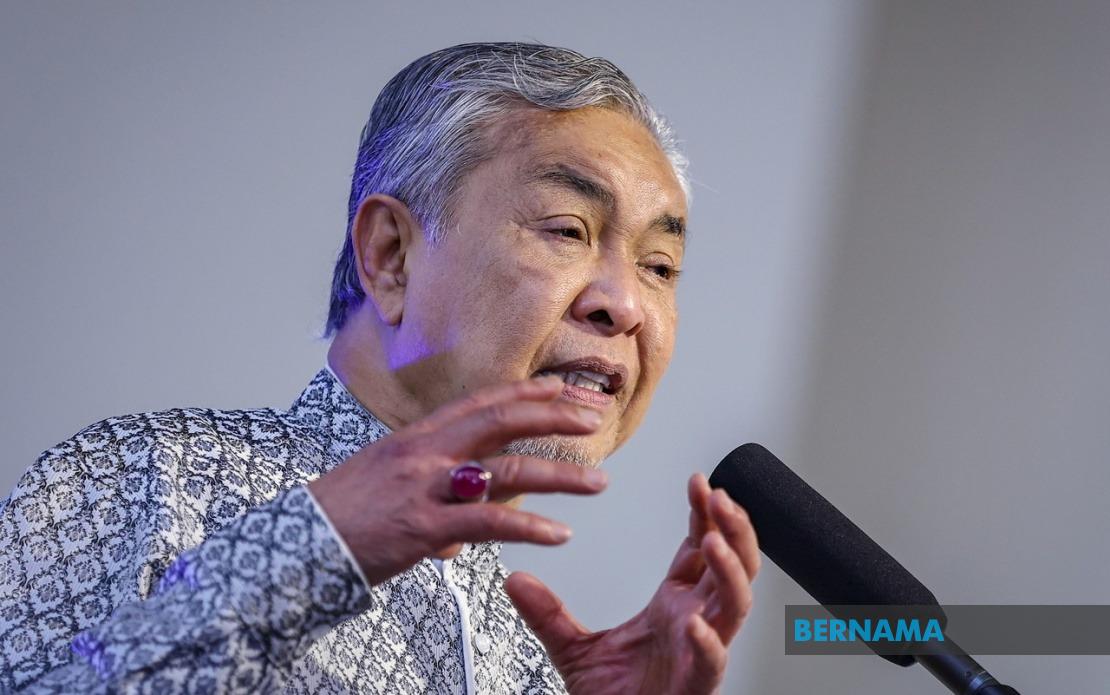
With the Johor state election entering its final week, Barisan Nasional chairman Datuk Seri Dr Ahmad Zahid Hamidi has made a direct appeal to rival parties to set aside historical disputes and concentrate the campaign discourse on what candidates and political coalitions can deliver to voters. Speaking after attending a community gathering in the Kempas state constituency on July 3, the Deputy Prime Minister emphasised that a mature and respectful political contest benefits all Malaysians and strengthens democratic participation in the state.
Ahmad Zahid's remarks came amid what appears to be intensifying campaign rhetoric as the July 11 polling date approaches. He acknowledged that certain individuals have levelled criticisms against UMNO and BN rooted in past controversies, but argued that rehashing such matters serves no constructive purpose, particularly given the complex political alignments at the federal level where parties competing in Johor work together in government. The message reflects a broader concern within BN circles that negative campaigning could undermine the coalition's electoral prospects in a state where political dynamics have shifted considerably over the past election cycle.
A critical subtext to Ahmad Zahid's call for restraint is the recognition that some of BN's opponents in the Johor contest are simultaneously coalition partners in the federal Cabinet. This unusual arrangement—common in Malaysia's fractious political landscape—creates genuine awkwardness when leaders must transition between being political adversaries in one arena and governmental colleagues in another. Ahmad Zahid stressed that he prefers not to see coalition partners feel uncomfortable when they encounter each other in Cabinet meetings, a remarkably candid acknowledgment of the strain such dual relationships can impose on political decorum.
Despite leading the ruling coalition, Ahmad Zahid adopted a notably cautious tone about BN's electoral position, describing the party as an underdog facing significant headwinds. This positioning contrasts sharply with the confidence often projected in campaign speeches and reflects genuine anxiety within party leadership about whether BN can sustain its hold on Johor. He pointed to fundamental changes in the state's electoral composition and voter behaviour as justification for this defensive posture, suggesting that complacency represents a genuine threat to the coalition's performance.
The figures underlying BN's concerns are sobering. In the previous state election, BN secured 40 seats out of 56 contested—a substantial majority but one that left little room for error. Now, with more than half of Johor's electorate comprising young voters, the demographic profile has shifted decisively toward a generation with different priorities, grievances, and political reference points than older voters who traditionally formed BN's electoral base. This generational transition has played out across multiple electoral cycles in Malaysia and consistently posed challenges for established parties.
To address these demographic headwinds, Menteri Besar Datuk Onn Hafiz Ghazi's manifesto places significant emphasis on youth-oriented policies and tangible economic opportunities. The focus on technical and vocational education training represents a strategic effort to speak directly to young Johor voters' anxieties about employment security and wage prospects. Ahmad Zahid highlighted that the national unemployment rate has declined to 2.9 per cent, presenting this as evidence of economic resilience, yet he simultaneously acknowledged that headline unemployment statistics mask deeper concerns about the quality of available employment.
The distinction between jobs and good jobs matters enormously to young voters weighing their career prospects. Ahmad Zahid's emphasis on skills training leading to premium-wage employment suggests that BN's campaign message recognises young Malaysians are not satisfied merely with employment but seek positions offering genuine career advancement and financial security. This represents a recalibration of BN's traditional economic messaging, which often emphasised macroeconomic stability and infrastructure development rather than individual opportunity and social mobility.
BN is contesting all 56 seats in the 16th Johor state election, a comprehensive commitment that provides no strategic retreat or margin for delegation. Early voting is scheduled for July 7, with the main polling day set for July 11. The compressed campaign timeline means that Ahmad Zahid's plea for civility and issue-focused debate may have limited practical impact on how rival parties conduct themselves over the remaining campaign period, particularly if the contest tightens or if opposition parties perceive vulnerability in specific constituencies.
The appeal also reflects BN's calculation that negative campaigning, even if it energises the party's own base, may ultimately depress overall voter turnout or alienate swing voters who prefer substantive policy discussion to partisan attacks. In an election where demographic composition is shifting and generational allegiances remain fluid, driving favourable turnout among younger voters becomes crucial. Campaigns perceived as excessively negative or focused on old controversies risk seeming disconnected from the concerns animating youth political engagement.
Ahmad Zahid's positioning as Minister of Rural and Regional Development adds another dimension to his campaign messaging. By emphasising skills development, job creation, and economic opportunity, he frames BN's federal government role as directly supporting Johor's economic interests. This integration of federal and state campaign narratives aims to present voting for BN in Johor as ratifying the coalition's broader economic and social policy agenda rather than treating the state election as an isolated political contest.
The competitive landscape in Johor has become considerably more complicated than in previous electoral cycles, with multiple parties vying for seats and voter allegiances fragmenting across ideological and personality-based lines. Ahmad Zahid's call for restraint and focus on substantive issues may partly reflect concern that excessive negativity benefits opposition parties by allowing them to present themselves as above the fray or by generating confusion that works against the incumbent coalition's message clarity.
Ultimately, whether rival parties heed Ahmad Zahid's appeal will become apparent over the coming week as campaigning reaches its crescendo. His plea for maturity and civility carries weight within BN's messaging strategy but represents only one element of a complex electoral contest shaped by demographic change, evolving voter priorities, and the particular political dynamics of a state that has proven increasingly unpredictable in recent years.

