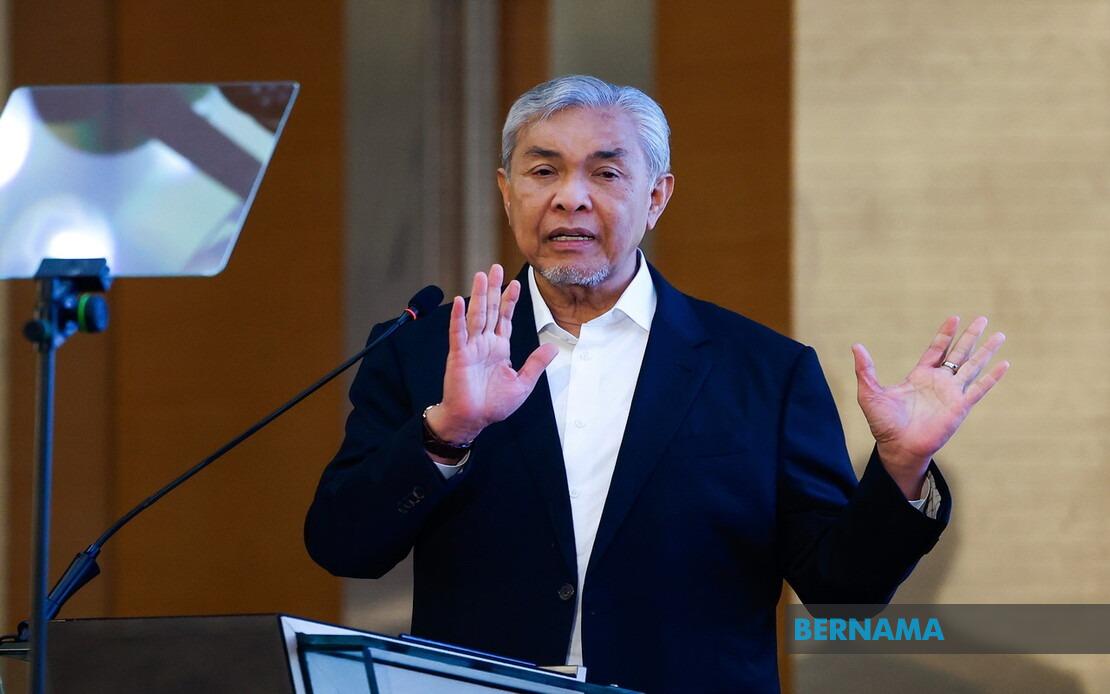
Deputy Prime Minister Datuk Seri Dr Ahmad Zahid Hamidi has underscored the importance of protecting Malaysia's monarchical institutions ahead of the Negeri Sembilan state election, urging all contesting parties to heed guidance from the Negeri Sembilan Palace regarding campaign conduct. Speaking in Seremban on July 27, Ahmad Zahid stressed that political organisations must steer clear of matters touching on race, religion and royalty—commonly referred to as 3R—throughout the campaign period. The reminder comes as the state prepares for electoral contests that will determine the composition of its legislative assembly.
The Negeri Sembilan Palace had previously issued an advisory to all participating political coalitions, requesting they refrain from involving the royal institution in their ceramah and campaign messaging. Ahmad Zahid's comments reinforce that plea, positioning respect for constitutional monarchies as a fundamental principle that transcends partisan politics. He stressed that the Malay Rulers' institution must be defended collectively, noting that this principle extends specifically to the Undang Yang Empat of Negeri Sembilan, a customary title referring to the state's paramount ruler.
In asserting Barisan Nasional's track record, Ahmad Zahid indicated that the coalition has maintained disciplinary standards and has never weaponised 3R-related subjects as campaign tools. He presented this commitment as evidence of BN's institutional respect and maturity, suggesting that political competition can be conducted without compromising constitutional arrangements. His remarks implicitly challenged other political movements to adopt similar restraint, framing the issue as one of basic political decency rather than partisan advantage.
The gathering where Ahmad Zahid made these statements included Deputy Rural and Regional Development Minister Datuk Rubiah Wang and Majlis Amanah Rakyat (MARA) chairman Datuk Dr Asyraf Wajdi Dusuki, who attended the Negeri Sembilan Entrepreneurs Gathering Programme. The presence of senior government figures underscored the official importance placed on managing electoral conduct and maintaining institutional harmony during the campaign season. Such coordinated messaging reflects governmental concern that election periods do not destabilise established constitutional frameworks.
The invocation of palace guidance carries particular weight in Malaysian political culture, where the monarchy holds significant symbolic and constitutional authority. Negeri Sembilan's electoral history has occasionally witnessed heated exchanges, making palace interventions on campaign propriety noteworthy. By publicly endorsing the palace's advisory, Ahmad Zahid attempted to establish a clear ethical boundary that should discourage parties from testing limits on sensitive subjects. The strategy reflects a deliberate effort to pre-empt potential controversies before campaigns intensify.
Ahmad Zahid also addressed broader coalition dynamics in national politics, dismissing suggestions of fractured relations between Barisan Nasional and Perikatan Nasional. He asserted that no quarrel existed between these two major political groupings, characterising their relationship as grounded in mutual understanding and pragmatic cooperation. This clarification appears intended to counter narratives suggesting incompatibility between the coalitions, potentially deflecting attention from historical tensions and differing electoral strategies that have periodically created friction between them.
The statement regarding BN-PN relations carries significance for Malaysia's evolving political landscape, where coalition flexibility has become increasingly important for government formation at both federal and state levels. By emphasising continuity rather than conflict, Ahmad Zahid sought to project stability and cooperative intent at a moment when election cycles typically generate heightened speculation about political realignments. For Negeri Sembilan specifically, such reassurance may influence how local parties within each coalition coordinate their candidacies and campaign messaging.
The 3R framework that Ahmad Zahid invoked reflects long-standing Malaysian constitutional sensitivities surrounding religion, the monarchy, and communal harmony. Article 153 of the Malaysian Constitution grants special provisions to Malays and indigenous peoples, while Articles 10 and 63 contain restrictions on speech that might undermine the institution of the Malay Rulers or Islam's constitutional position. These constitutional guardrails have periodically intersected with electoral politics, creating situations where parties face genuine constraints on messaging while also occasionally using 3R frameworks strategically to delegitimise opponents' statements.
For Malaysian readers tracking state-level electoral competition, Ahmad Zahid's intervention signals that senior federal leadership intends to maintain clear boundaries around constitutional institutions during campaigns. This positioning may reflect lessons from previous elections where inflammatory rhetoric contributed to communal tensions or necessitated post-election clarifications and apologies. By establishing expectations early, the Deputy Prime Minister attempted to create space for vigorous political competition while discouraging the kinds of extreme rhetoric that have occasionally characterised Malaysian election periods.
The practical implications of such guidance remain somewhat ambiguous, as determining what constitutes inappropriate engagement with 3R-related matters often proves contentious during actual campaigns. Different parties and observers frequently dispute whether specific statements cross acceptable boundaries. Ahmad Zahid's comments do not establish enforcement mechanisms or specify consequences for violations, relying instead on voluntary compliance rooted in respect for institutional norms and palace directives. This approach privileges persuasion and social pressure over institutional penalties.
For Negeri Sembilan voters observing campaign development, Ahmad Zahid's remarks serve as a baseline statement of expectations from federal leadership regarding electoral conduct. The emphasis on palace guidance suggests that institutional harmony remains a priority that takes precedence over maximalist campaign strategies. Whether individual parties, particularly those outside the BN framework, choose to respect these boundaries will become evident as campaigning progresses and specific statements emerge from various candidates and organisations competing for electoral support in the state.

