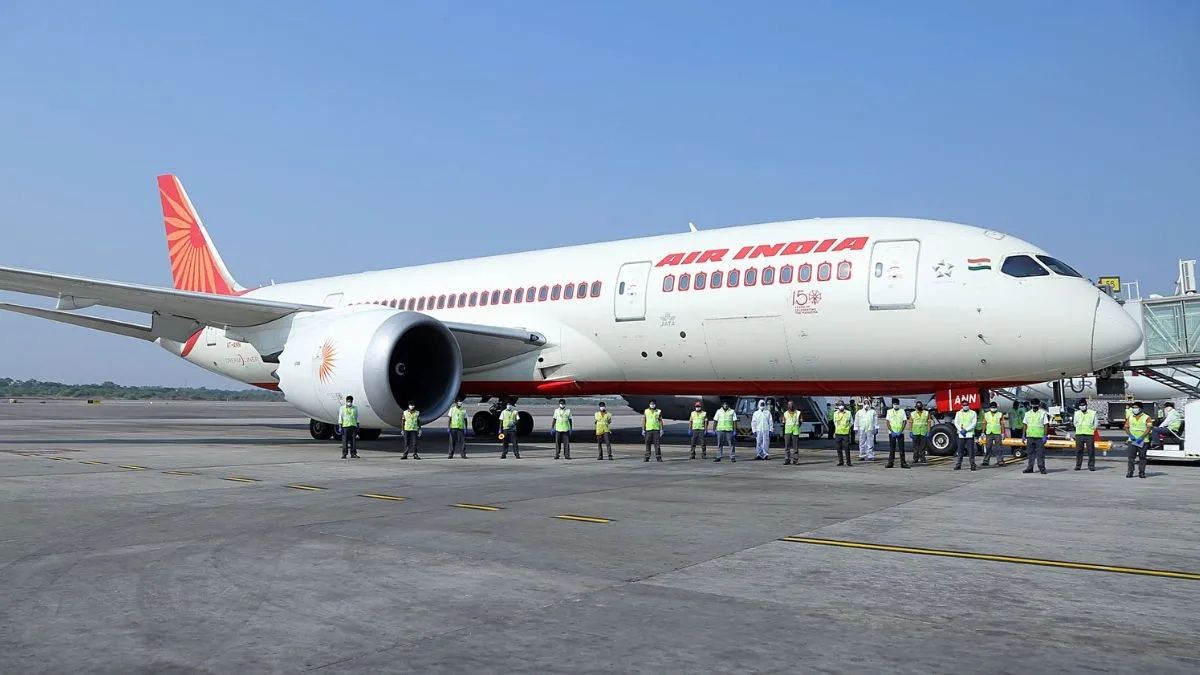
An Air India flight operating between Delhi and Amritsar inadvertently penetrated Pakistani airspace late on Monday evening following a technical malfunction in its onboard navigation equipment, aviation authorities confirmed three days later. The incident, involving Airbus A321 aircraft Flight AI-463, highlighted the critical importance of real-time coordination between neighbouring countries' air traffic control systems and the technical vulnerabilities that can emerge even on routine short-haul flights within South Asia's densely trafficked airspace.
The aircraft departed Delhi's Indira Gandhi International Airport at 9.18pm on June 22, embarking on what should have been a straightforward 90-minute journey to Amritsar in Punjab. Minutes after takeoff, however, the plane's navigation system experienced a technical failure that caused its flight path to drift progressively westward, carrying it across the International Border demarcation line into Pakistani-controlled airspace. The deviation was neither intentional nor immediately apparent to the crew, but rather the consequence of degraded navigational guidance that would have been generating increasingly inaccurate directional data.
Pakistani Air Traffic Control authorities detected the incursion promptly and initiated immediate contact with the flight crew to alert them of the airspace breach. This coordination mechanism between the two nations' aviation systems, despite historical tensions, functioned effectively in this instance. The pilots aboard Flight AI-463 responded quickly upon receiving notification, correcting their course and guiding the aircraft back across the border into Indian airspace without further incident. The swift intervention by Pakistani ATC personnel and the crew's immediate corrective action prevented the situation from escalating, demonstrating the professional protocols that exist between the countries' aviation authorities despite periodic diplomatic friction.
The aircraft's troubles, however, were far from concluded. As the flight approached Sri Guru Ram Dass Jee International Airport in Amritsar around 10.30pm, the airspace around the city was experiencing significant congestion. With no immediate landing slot available and operational constraints limiting the airport's capacity to accommodate additional arriving traffic, Amritsar's air traffic control directed the flight to return to Delhi rather than maintain a holding pattern. This decision, while frustrating for passengers aboard the aircraft, reflected standard operational procedures designed to maintain safe separation between aircraft and prevent runway saturation during peak periods.
Flight AI-463 subsequently retraced its route to Delhi, landing at Indira Gandhi International Airport where it underwent technical inspection to address the navigation system failure and assess the aircraft's airworthiness for further operations. Engineering teams conducted the necessary diagnostics and rectification work while regulatory authorities cleared the aircraft for flight. The aircraft finally departed Delhi for its original destination, touching down in Amritsar at approximately 2.20am on Tuesday—nearly four hours behind its scheduled arrival time and after passengers had experienced an extraordinarily lengthy delay for what is normally a short regional flight.
The specific technical nature of the navigation system malfunction remains undisclosed, as Air India and India's Directorate General of Civil Aviation have not yet issued detailed public statements regarding the precise cause of the failure. This absence of detailed technical disclosure is typical in early-stage aviation incidents, where investigations are ongoing and releasing preliminary information might be misleading or incomplete. Aviation authorities have initiated a formal investigation to determine the exact circumstances surrounding the route deviation, examining maintenance records, pilot actions, and the performance of various onboard systems to understand how the navigation failure occurred and what preventive measures might be necessary.
The incident represents a relatively rare but not unprecedented occurrence in South Asian aviation. Navigation system failures can stem from various causes, ranging from software glitches and sensor malfunctions to inadequate maintenance or calibration errors. The A321, a widely used short-to-medium range aircraft operated by numerous carriers globally, has a strong safety record, though like all aircraft types, it requires consistent maintenance and system checks to ensure optimal performance. For airlines operating in the region, this incident underscores the importance of rigorous technical standards and the potential consequences when navigation systems degrade during flight operations.
This development gains additional significance given the geopolitical sensitivities surrounding airspace incursions between India and Pakistan. Just one month earlier, a Pakistan International Airlines flight had briefly entered Indian airspace due to adverse weather conditions before being guided back to its designated route by Indian air traffic controllers. That incident similarly resolved without incident, with both nations' ATC systems functioning cooperatively to ensure flight safety. The pattern of occasional airspace deviations, while generally attributable to technical issues or weather rather than deliberate actions, periodically tests the bilateral coordination mechanisms that have been established through decades of aviation protocol development.
For Malaysian and Southeast Asian aviation professionals and observers, these incidents offer instructive lessons about the technical and operational challenges inherent in managing heavily congested airspace with multiple nations sharing overlapping flight corridors. The region's own complex airspace architecture, with numerous flight information regions and increasing traffic density, requires similar levels of technical reliability and professional coordination between countries. The Air India incident demonstrates that even routine flights can encounter unexpected technical challenges, and that well-functioning air traffic control systems and professional crew responses represent essential safeguards against escalation.

