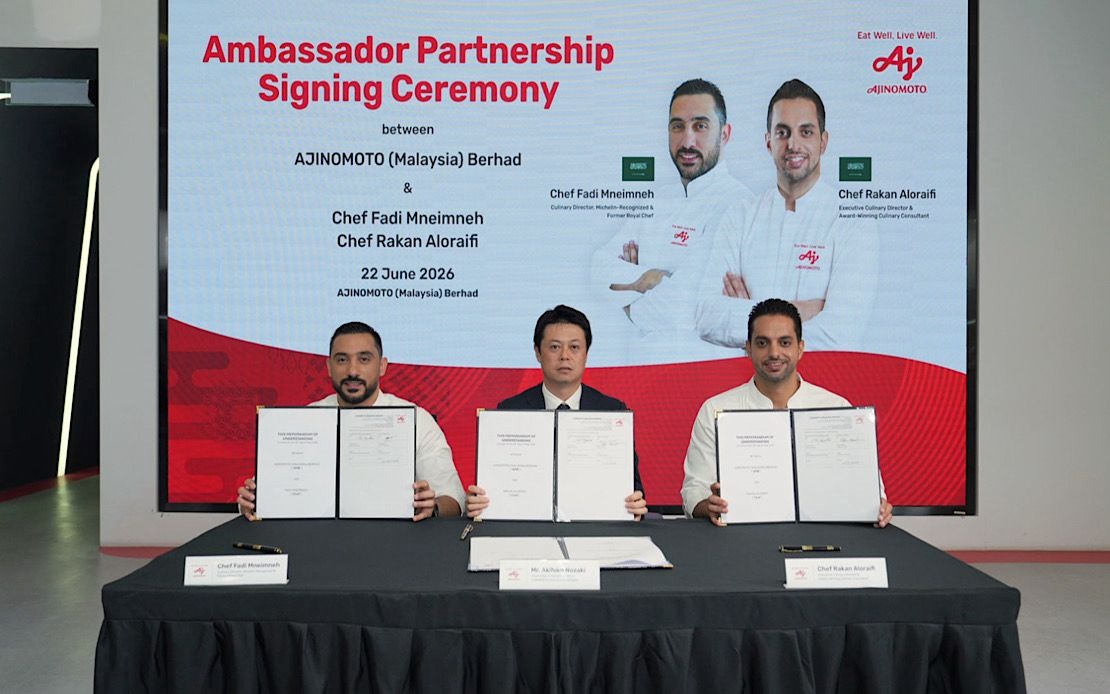
Ajinomoto (Malaysia) Berhad is making a strategic push into the Middle Eastern market by aligning itself with two of Saudi Arabia's most respected culinary personalities, capitalising on the region's expanding appetite for premium halal food solutions. The partnership with Chef Fadi Mneimneh, a Michelin-starred culinary director with royal household experience, and Chef Rakan Aloraifi, an acclaimed executive chef and consultant, signals the company's confidence that influential food figures hold the key to penetrating one of Asia's most lucrative and fastest-growing food sectors. This collaboration represents more than a simple endorsement arrangement; it reflects a deeper strategic commitment to embedding Ajinomoto's brand values and product innovation within the Middle Eastern culinary establishment.
The two chefs recently toured Ajinomoto's manufacturing facility in Bandar Enstek, Negeri Sembilan, an experience designed to familiarise them with the company's halal certification processes, production standards, and the scientific principles underpinning umami flavour enhancement. Such facility visits serve a dual purpose: they allow culinary leaders to verify quality claims firsthand while simultaneously generating authentic content and testimonials that resonate with hospitality professionals and consumers alike. By inviting these influential figures to witness operations directly, Ajinomoto reinforces its commitment to transparency and rigorous quality standards—critical factors in building trust within markets where halal credentials and food safety command paramount importance.
The Middle East represents a particularly attractive expansion target for Malaysian food manufacturers. The region's rapidly expanding middle class, rising consumer spending on dining experiences, and strict adherence to halal standards create a natural alignment with Ajinomoto's existing product portfolio and manufacturing expertise. Malaysia's reputation as a global centre of halal food production and certification provides local companies with inherent credibility in the region. Ajinomoto's established presence as one of Malaysia's flagship food manufacturers positions it uniquely to leverage this national advantage, particularly when backed by respected local voices within the culinary sphere.
Umami, often described as the fifth taste, remains poorly understood in many Western-influenced culinary contexts, yet it represents the cornerstone of Asian cooking traditions and increasingly sophisticated modern gastronomy. The partnership specifically emphasises educating Middle Eastern chefs and consumers about umami's potential to enrich traditional recipes without compromising authenticity. This educational angle carries significant commercial implications: by positioning umami as a scientifically validated enhancement tool compatible with heritage cooking, Ajinomoto transforms its flavour products from industrial additives into ingredients that preserve and elevate culinary tradition. For Saudi chefs accustomed to guarding the integrity of their cuisine, this framing provides philosophical and practical justification for incorporating Ajinomoto products into professional kitchens.
The live culinary demonstrations conducted during the chefs' Negeri Sembilan visit showcased how Ajinomoto's products integrate seamlessly into authentic Middle Eastern dishes. These practical demonstrations carry enormous persuasive weight within the HORECA sector—hotels, restaurants, and catering establishments make purchasing decisions based on proven results. When influential chefs publicly prepare traditional dishes enhanced with specific Ajinomoto products, they implicitly endorse those ingredients to peers, suppliers, and patrons. This peer-to-peer validation mechanism operates far more persuasively than conventional advertising in professional food service markets, where credibility among fellow chefs often determines purchasing patterns.
The involvement of Ajinomoto's distributor representative in Brunei during these sessions underscores the company's regional networking strategy. While Saudi Arabia represents the primary target market, Brunei's position as a wealthy, halal-conscious market with strong ties to Saudi Arabia creates opportunities for parallel expansion. The Brunei distributor's participation facilitates knowledge exchange and coordination across markets, ensuring that messaging and product positioning remain aligned while accommodating local preferences and business relationships. This approach reflects sophisticated regional market understanding, recognising that successful expansion across the Middle East requires simultaneous cultivation of supply chain relationships and consumer awareness.
Planned participation in the Hotel, Restaurant and Café (HORECA) event in October 2026, scheduled for both Riyadh and Jeddah, represents the next phase of this expansion strategy. Major HORECA exhibitions serve as condensed marketplaces where industry decision-makers—purchasing managers, head chefs, kitchen directors—converge to evaluate suppliers and identify new products. Chef Mneimneh and Chef Aloraifi's prominence at these events will draw significant attendance and media attention, providing Ajinomoto with a high-profile platform to showcase products directly to procurement professionals and influential culinary figures. The dual-city approach ensures geographic coverage of Saudi Arabia's two largest commercial food service hubs.
From a broader Malaysian perspective, this partnership exemplifies how Malaysian companies can leverage national strengths in halal manufacturing and regional culinary expertise to penetrate lucrative emerging markets. Rather than competing solely on price or commodity attributes, Ajinomoto positions itself as an innovation partner aligned with chefs' artistic and business objectives. This value-added approach creates sustainable competitive advantages and deeper customer relationships than transactional supply arrangements. The partnership also subtly reinforces Malaysia's positioning as a trusted halal partner within ASEAN and beyond, strengthening the country's reputation in food manufacturing and export competitiveness.
The strategy carries implications for consumer confidence in the halal food sector across the region. When respected culinary authorities publicly engage with and endorse products, consumers gain assurance that halal certification represents genuine commitment rather than mere compliance documentation. This dynamic becomes increasingly important as global halal markets mature and differentiation depends less on certification alone and more on demonstrable quality, innovation, and alignment with culinary excellence. By embedding Ajinomoto products within the professional practices of celebrated chefs, the partnership effectively communicates that halal-certified ingredients need not represent compromise; rather, they facilitate both compliance and culinary distinction.
Longer-term, this partnership establishes foundations for deepened engagement with the Middle Eastern food industry. Chef Mneimneh and Chef Aloraifi's ongoing collaboration with Ajinomoto creates opportunities for product innovation tailored to regional tastes, co-authored culinary content, training programmes for hospitality professionals, and joint participation in major industry events. As these relationships mature, they can evolve into more substantive partnerships encompassing product development, brand ambassadorships, and commercial joint ventures. The initial factory visit and demonstrations therefore function as relationship investment, building goodwill and shared understanding that supports more ambitious collaborations.
Ajinomoto's broader commitment to showcasing Malaysian halal excellence globally positions the company as an ambassador for national manufacturing capabilities. Export-oriented food companies inherently shape international perceptions of Malaysia's competitiveness, innovation capacity, and quality standards. By achieving prominence in the Middle Eastern market through partnerships with respected local figures, Ajinomoto effectively demonstrates that Malaysian food manufacturers can compete successfully in sophisticated, quality-conscious markets without relying on cost competition alone. This competitive positioning strengthens Malaysia's overall reputation in global food trade and potentially attracts investment in domestic food manufacturing infrastructure.

