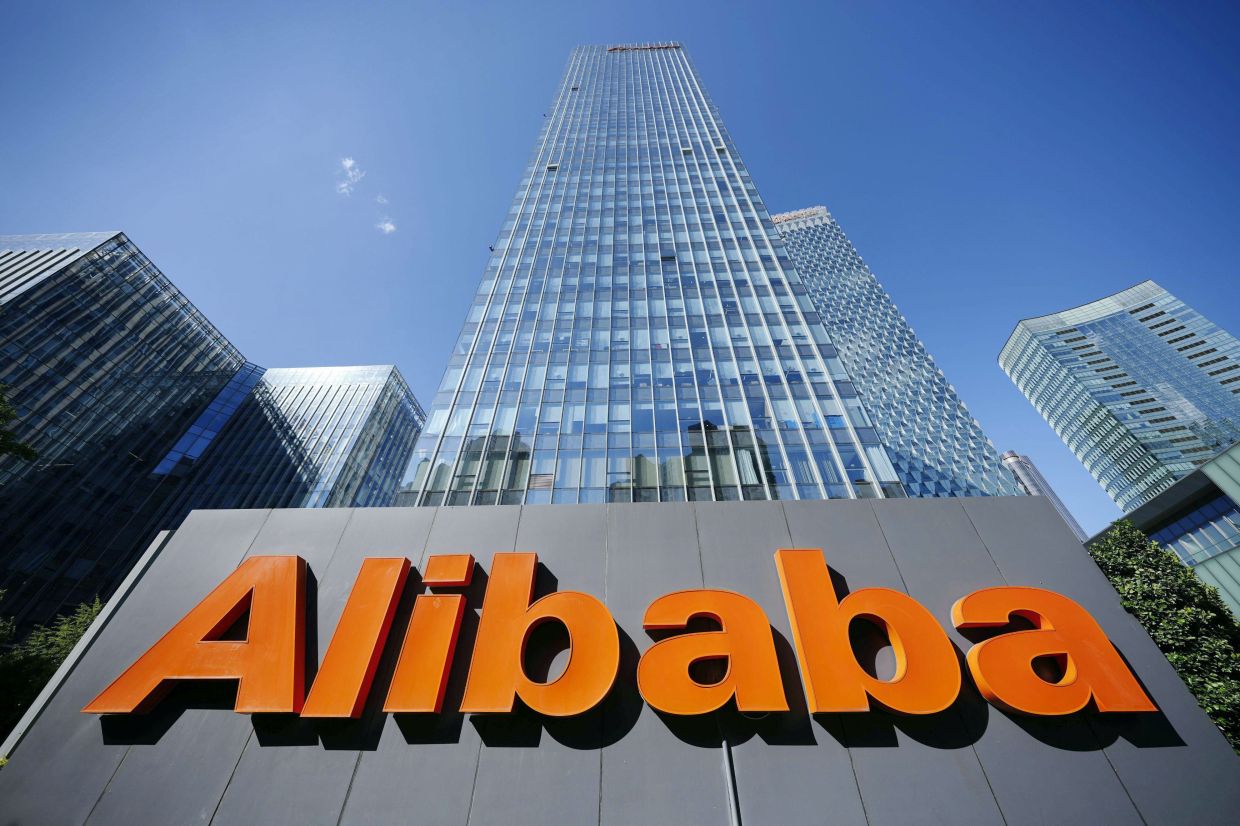
Alibaba Group Holding, the Chinese technology and e-commerce powerhouse, has escalated its dispute with the United States government by filing a federal lawsuit challenging the Pentagon's classification of the company as a military-linked entity. The suit, lodged in a San Jose district court on Tuesday, represents a significant pushback against what Alibaba characterises as an arbitrary and constitutionally unsound decision made without adequate due process or factual foundation.
The Pentagon added Alibaba to its "Chinese military companies" list on June 9, alongside other prominent Chinese firms including electric vehicle manufacturers BYD and Nio, search engine giant Baidu, and robotics company Unitree Robotics. The designation also encompassed networking equipment maker TP-Link and various other enterprises operating in artificial intelligence, biotechnology, and the solar energy sector. What unites these diverse companies is their strategic importance to China's technological advancement—sectors that have become focal points in the intensifying technological rivalry between Beijing and Washington.
The blacklist operates under Section 1260H of the National Defence Authorisation Act, a legislative framework designed to identify companies with alleged ties to China's military apparatus or participation in military-civilian fusion programmes. While the designation itself does not automatically impose sanctions, its consequences can be substantial and far-reaching. Companies on the list face potential difficulties in accessing United States capital markets, raising venture capital, or securing government contracts—barriers that could severely constrain their business operations in America.
Alibaba's legal challenge rests on multiple constitutional grounds, with the company arguing that the Pentagon's action violated its right to due process and infringed upon free speech protections. In its formal complaint, Alibaba specifically refuted the Pentagon's assertion that it maintains indirect affiliation with China's State-owned Assets Supervision and Administration Commission (SASAC), a powerful government body overseeing state enterprises. The company likewise rejected claims that it functions as a military-civilian fusion contributor due to alleged connections with the Ministry of Industry and Information Technology (MIIT).
According to Alibaba's position, any engagement with MIIT represents nothing more than routine regulatory compliance required of technology companies conducting business throughout China. The firm further highlighted what it characterises as procedural inadequacies in the Pentagon's decision-making process. Alibaba stated that it met with Defence Department officials in January to discuss the potential designation, subsequently submitting a comprehensive written response in March. Despite this engagement and submission, the Pentagon proceeded with the blacklist designation in June without addressing the company's substantive objections.
An Alibaba spokesperson provided a strong statement rejecting the military designation outright: the company "is not a Chinese military company nor part of any military-civil fusion strategy." The spokesperson further criticised the Pentagon's approach as "arbitrary and capricious," reflecting legal terminology used to describe government decisions that lack rational basis or depart from established procedures. For Malaysian and Southeast Asian readers, Alibaba's case carries particular significance given the company's substantial regional presence through its e-commerce platforms, cloud services, and investments throughout the Association of Southeast Asian Nations.
The Pentagon declined to engage substantively with Alibaba's lawsuit, issuing only a terse statement noting that it does not comment on ongoing litigation. This reticence suggests the Defence Department intends to defend its action in court rather than reconsider the designation. Meanwhile, Alibaba's legal challenge arrives amid an accelerating cycle of tit-for-tat trade and technology restrictions between Washington and Beijing, with neither side showing signs of de-escalation.
China responded swiftly to the original Pentagon blacklist by announcing its own countermeasures the very day before Alibaba's lawsuit. Beijing's Ministry of Commerce placed ten American companies on an export control list, including defence contractors and technology firms such as Aveox, Red Cat Holdings, Teal Drones, IMSAR, and Jaia Robotics, alongside aerospace and defence specialists Ball Aerospace & Technologies and Oshkosh Defense. A ministry spokesperson characterised these actions as necessary responses to what it termed "malicious actions" by Washington.
Simultaneously, China's Ministry of Finance implemented an even broader measure, announcing restrictions on government procurement from 46 American firms effective immediately. This list includes major defence contractors and weapons manufacturers—Lockheed Martin, Raytheon Missiles & Defense, General Dynamics Land Systems, and others—representing some of the most strategically significant companies in the American military-industrial complex. The procurement restrictions specifically exempt companies involved in joint ventures with Chinese partners, suggesting Beijing intends to preserve certain bilateral business relationships while punishing predominantly American-controlled entities.
The escalating dispute reflects deeper anxieties animating US-China relations, where technology and defence capabilities have become intertwined with national security calculations. For Southeast Asian nations seeking to maintain balanced relationships with both superpowers, such developments create considerable tension. Regional companies operating across both markets face increasing pressure to navigate divergent regulatory frameworks and political pressures. Alibaba's lawsuit may ultimately determine whether foreign companies can successfully challenge Pentagon military designations through American courts, potentially establishing precedents affecting other Chinese enterprises facing similar classifications.
Other designated companies have registered strong objections to the Pentagon's determinations. Baidu, China's dominant search engine, and BYD, a global leader in electric vehicle and battery technology, have publicly opposed their inclusion on the military list. China's embassy in the United States has characterised Washington's approach as an overextension of national security concerns, employing what it describes as "discriminatory lists" to pursue strategic objectives beyond legitimate defence requirements. These disputes will likely persist and intensify unless both nations find mechanisms to de-escalate technology competition.
For observers in Malaysia and across Southeast Asia, Alibaba's legal action underscores the risks Chinese technology companies face when operating across geopolitical divides. The case may ultimately turn on whether American courts accept the Pentagon's broad interpretation of military affiliation or demand more specific, verifiable evidence of direct connections to China's defence establishment. Regardless of the legal outcome, the broader pattern of technological decoupling between the United States and China will continue reshaping global markets and presenting difficult choices for regional actors attempting to maintain commercial and strategic flexibility.

