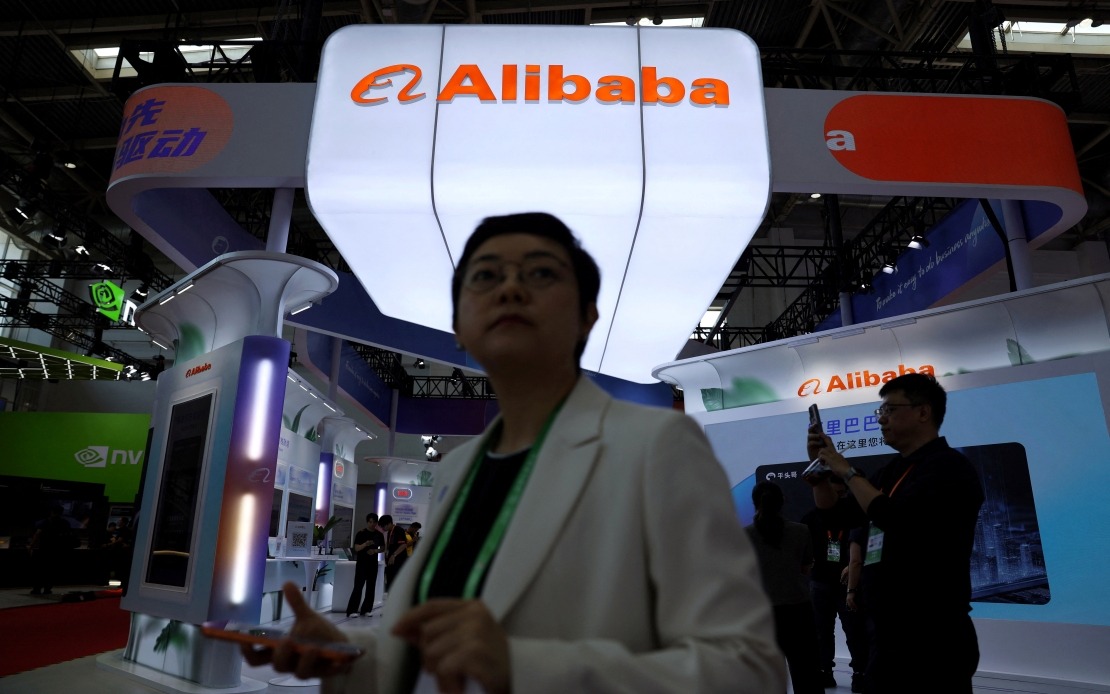
Alibaba, one of Asia's most influential technology companies, has filed a lawsuit challenging the US Department of Defense's decision to designate it as a Chinese military company, marking an escalation in tensions between American authorities and major Chinese tech firms. The court filing, released on Tuesday, represents Alibaba's formal contestation of a Pentagon decision issued in June that added the company to a list of entities deemed connected to China's military-industrial complex. This legal move underscores the high stakes involved in US-China technological competition and the consequences that such classifications carry for global business operations.
The Pentagon's June designation, which swept in 188 Chinese companies including tech leaders Tencent and automotive manufacturer BYD, reflects an increasingly hardline American approach toward Chinese technology firms. Under this classification, Alibaba and other listed entities face potential restrictions on contracts with US government agencies and scrutiny from American investors and partners. For a company with extensive international operations and aspirations to expand in Western markets, such a designation poses existential risks to its business model and reputation. The lawsuit signals that Alibaba intends to mount a vigorous legal defence rather than accept the Pentagon's determination.
Alibaba's legal arguments strike at the heart of the Pentagon's classification methodology. The company contends that the determination contains no factual or legal foundation, emphasizing that its governance structure includes an independent board completely devoid of military connections or affiliations. This statement is critical because it directly addresses the Pentagon's apparent reasoning: that the company's leadership or ownership links it to China's defence establishment. By highlighting the independence of its board, Alibaba seeks to establish a clear separation between itself and the Chinese military apparatus, a distinction the company claims the Pentagon has failed to substantiate.
Furthermore, Alibaba maintains that its entire business portfolio—spanning e-commerce, cloud computing, digital logistics, and enterprise software solutions—serves exclusively civilian and commercial purposes. The company emphasizes that its operations concentrate on serving retail consumers, supporting supply chain logistics, and providing information technology infrastructure to businesses of all sizes. None of these activities, Alibaba argues, bear any operational resemblance to military production, defence contracting, or weapons development. This delineation attempts to remove the company from the category of military-linked entities by demonstrating the exclusively non-defence character of its corporate mission.
The company's internal policies and contractual frameworks further strengthen its position. Alibaba states that its contracts contain explicit prohibitions against military applications and use cases, and that its compliance procedures are designed to prevent any form of military engagement. Additionally, the company lacks the specialised military certifications and government defence licences that would typically characterise a genuine military contractor. In many respects, Alibaba's defence mirrors arguments made by other Chinese technology companies facing similar scrutiny: that designation as military-linked entities mischaracterises their actual business operations and unfairly subjects them to restrictions intended for genuine defence contractors.
The legal challenge carries significant implications for Malaysian businesses and the broader Southeast Asian technology ecosystem. Malaysia, like many ASEAN nations, maintains economic relationships with both the United States and China, and many Malaysian companies rely on partnerships with major Chinese technology platforms. A successful Alibaba challenge could preserve the company's operational capacity in international markets and maintain supply chain relationships that Malaysian enterprises depend upon. Conversely, if the Pentagon's designation is upheld, it would signal that American policymakers are prepared to apply broad military-linked designations to major Chinese technology companies regardless of their actual defence involvement, potentially affecting Malaysian access to services provided by these platforms.
The designation's impact extends beyond Alibaba itself, affecting the entire ecosystem of US-China technology relations. By casting its net widely across the technology sector, the Pentagon has essentially categorized a significant portion of China's innovation economy as defence-adjacent. This approach suggests that American authorities view technological capability itself—particularly in cloud computing, data management, and artificial intelligence—as inherently dual-use and therefore potentially military in nature. For companies operating internationally, this creates a scenario where cutting-edge technology development becomes increasingly difficult to pursue without triggering scrutiny from Western defence authorities.
Alibaba's legal strategy appears designed to challenge both the substance and the process of the Pentagon's designation. By arguing that the determination lacks factual and legal grounding, the company invites judicial review of the decision-making criteria and evidence upon which the Pentagon relied. This approach differs from a simple petition for reconsideration and instead subjects the designation to legal standards of proof and reasonableness. If successful, such a challenge could establish important precedent regarding how broadly American authorities can classify foreign companies as military-linked entities without demonstrating concrete connections to defence activities.
The timing and magnitude of this lawsuit also reflect Alibaba's strategic calculation that defending its international reputation is worth the expense and diplomatic complexity of suing a US government agency. For a company that has faced previous regulatory pressure from Chinese authorities, adding litigation against American authorities represents a significant reputational and operational gamble. However, the company appears to have concluded that accepting the military designation would inflict greater long-term damage to its business prospects, particularly for cloud services and enterprise solutions that depend on trust and access to Western markets.
The outcome of Alibaba's lawsuit will likely influence how other Chinese technology companies respond to similar designations. If courts find that the Pentagon lacks sufficient basis for such classifications, it could prompt other companies to mount legal challenges. Conversely, if the designation is upheld, Chinese technology firms may increasingly accept such restrictions as an inevitable cost of operating in an era of elevated US-China technological competition. For Malaysia and other Southeast Asian economies that seek to benefit from Chinese technology innovation while maintaining strategic flexibility with Western partners, this case represents an important test of whether large Chinese technology companies can operate internationally or whether American restrictions will progressively limit their global reach and influence.

