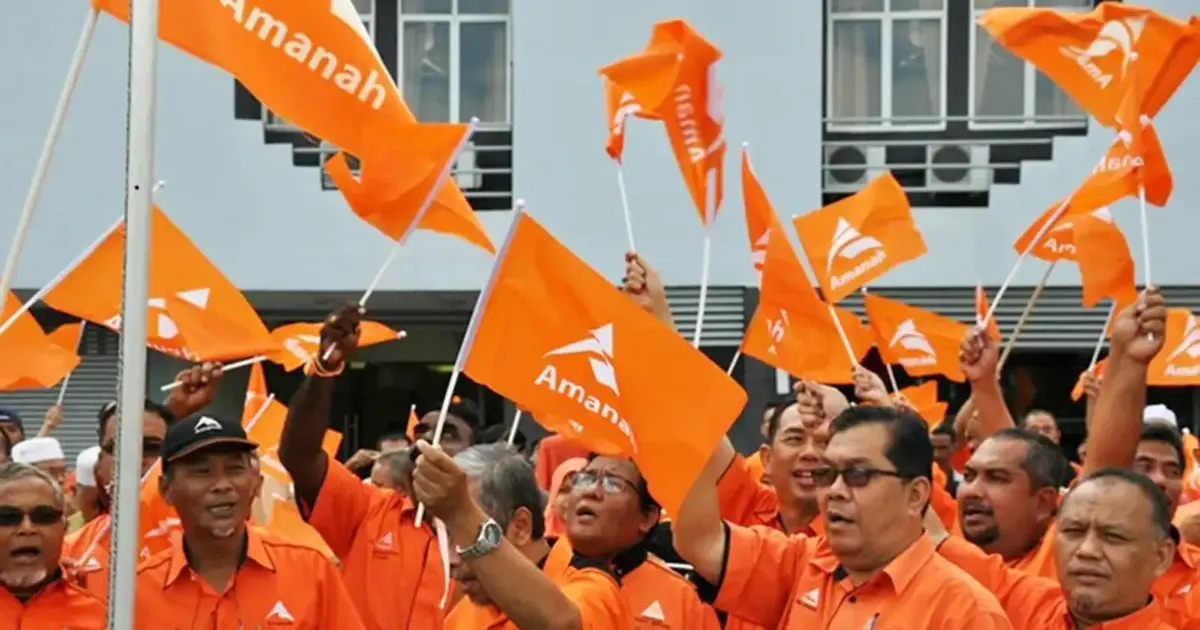
Amanah's secretary-general Faiz Fadzil has signalled the party's willingness to fall in line with whatever determination Pakatan Harapan arrives at concerning contested representation in the Puteri Wangsa electoral division during the forthcoming Johor state election. The statement underscores a broader commitment within the coalition to maintain unity ahead of the crucial state poll, with internal differences being subordinated to the collective aim of securing as many constituencies as possible to form the next Johor government.
The Puteri Wangsa seat has emerged as a potential flashpoint between coalition members, as is often the case when multiple parties compete within the same electoral alliance. Such disagreements over seat allocation are not uncommon in multi-party coalitions, where each member organisation seeks to maximise its presence in state legislatures while maintaining the broader partnership necessary to counter stronger rivals. Faiz Fadzil's measured approach reflects an understanding that fractious public disputes over candidacy could undermine coalition morale and provide ammunition to opposition forces in a state where political competition remains intense.
Johor represents strategically important electoral territory for Pakatan Harapan, given the state's size, population, and economic significance within the Malaysian federation. The state government controls substantial resources and influences regional political dynamics, making the election outcome consequential not merely for local governance but also for the broader balance of power in Malaysian politics. A successful outcome would reinforce Pakatan's position as a credible alternative administrator while a poor showing would invite questions about the coalition's coherence and electoral appeal.
The decision to prioritise overall coalition performance over individual party gain suggests that Amanah's leadership perceives greater strategic benefit in maintaining Pakatan unity than in pursuing particularistic interests in any single constituency. This calculation reflects the realities of Malaysian coalition politics, where parties must often accept disappointments on specific seats to sustain partnerships that deliver greater aggregate advantage. Amanah's apparent acquiescence demonstrates sophisticated political judgment about long-term positioning relative to short-term gains.
Faiz Fadzil's statement also signals to other coalition members that Amanah will not become a disruptive force during crucial negotiations over seat distribution. Such assurances are valuable currency in coalition bargaining, as they reduce anxiety among other parties that internal disputes will spiral into public conflicts damaging to all members. The secretary-general's emphasis on collective victory rather than individual party performance serves as both a reassurance and an implicit appeal for reciprocal flexibility from partner organisations on other contested seats.
The timing of such coalition management is particularly sensitive in the pre-election period, when media scrutiny intensifies and opposition parties actively seek opportunities to highlight divisions within Pakatan ranks. Any public squabbling over the Puteri Wangsa seat or others could provide opposition actors with narratives suggesting Pakatan lacks the cohesion required for effective governance. Amanah's apparent commitment to subordinating its interests to coalition requirements preempts such criticisms and maintains the unified front necessary for electoral competitiveness.
Seat allocation within multi-party coalitions involves complex calculations regarding each party's electoral viability, historical performance in specific constituencies, demographic composition of electoral divisions, and perceived ability to defend or capture territory. The process often requires significant negotiation and occasionally demands that parties accept fewer seats than their leadership would prefer. These negotiations typically occur behind closed doors, with public statements serving to signal acceptance of whatever arrangement emerges from elite-level bargaining.
For Malaysian voters and political observers, Amanah's stance reflects the pragmatic compromises inherent in coalition-based politics. While such flexibility may disappoint party loyalists seeking maximum representation, it represents acknowledgment that achieving power through electoral means often requires prioritising collective outcomes over partisan advantage. The statement thus offers insight into how established coalitions maintain internal discipline despite inevitable tensions over resource distribution.
The Johor election will test whether Pakatan's demonstrated capacity for internal coordination translates into electoral success. If the coalition performs well, Faiz Fadzil's willingness to accept central direction regarding seat allocation will appear strategically vindicated. Conversely, disappointing results might invite retrospective criticism that individual party flexibility was not reciprocated or that seat distribution decisions were suboptimal. Such contingencies shape coalition politics in ways that extend well beyond any single election cycle.
Looking forward, Amanah's apparent deference to Pakatan's decision-making on Puteri Wangsa establishes precedent for similar accommodations on other disputed seats. Coalition partners will note this gesture and likely factor it into their own calculations regarding flexibility on territories where they might otherwise insist on nominating candidates. The statement therefore possesses significance beyond the immediate Puteri Wangsa question, functioning as a broader signal about Amanah's approach to intra-coalition negotiation during this election cycle.
The commitment to collective victory as the overriding objective suggests Amanah's leadership believes that successful state government formation offers greater long-term benefits than maximising seats in this particular election. This outlook aligns with the patience and strategic thinking required in Malaysian politics, where multiple electoral cycles provide opportunities for parties to adjust positioning and pursue constituency-specific strategies based on evolving circumstances. Amanah's current flexibility thus represents investment in Pakatan's continued viability as a governing alternative.

