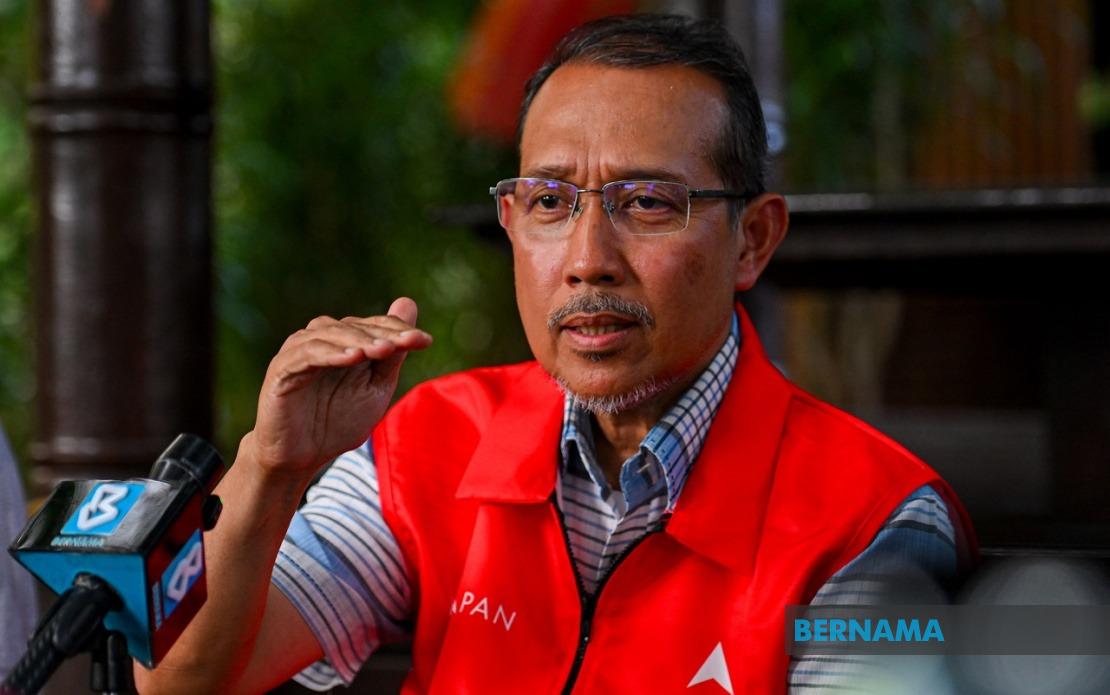
Pakatan Harapan's nominee for the Ampangan state seat, Datuk Muhammad Nazri Kassim, is positioning his candidacy around a comprehensive plan to develop the constituency into a prosperous economic zone whilst addressing longstanding infrastructure challenges that have plagued residents. Speaking during campaign activities in Seremban ahead of the Negeri Sembilan state election, Muhammad Nazri articulated a vision that extends beyond typical electoral promises to encompass concrete infrastructure improvements and economic diversification strategies tailored to the local context.
At the heart of Muhammad Nazri's platform lies a pragmatic approach to flood management, a concern that resonates deeply with Ampangan's residents following severe inundation events in 2021. The candidate emphasises that systematic maintenance of critical drainage infrastructure—roads, drains, ditches and waterways—represents not merely a cosmetic improvement but a foundational requirement for residents' safety and quality of life. The 2021 floods served as a watershed moment, demonstrating the consequences of inadequate river management and spurring the Negeri Sembilan government to implement collaborative maintenance programmes that have yielded measurable results over the subsequent three to four years.
What distinguishes Muhammad Nazri's flood mitigation strategy from conventional responses is his integration of this infrastructure challenge into a broader economic development framework. Rather than viewing well-maintained rivers solely as flood prevention mechanisms, he positions them as valuable community assets capable of supporting recreational infrastructure. Enhanced riverbanks could accommodate jogging paths, cycling routes, and sports facilities, transforming what has historically been a liability into an amenity that enhances residents' wellbeing whilst potentially attracting external visitors to the constituency.
The candidate's economic vision specifically targets Ampangan's geographic advantage as a central location within Seremban's urban landscape. Muhammad Nazri identifies the Benteng area as a strategic focal point for revitalisation efforts, arguing that targeted development here could catalyse broader economic activity throughout the constituency. The premise underlying this approach rests on a straightforward economic principle: improved physical environments attract commerce, draw consumers, and create entrepreneurial opportunities for small-scale traders and local residents seeking income generation avenues.
Muhammad Nazri's articulation of this development philosophy emphasises the interconnectedness of environmental quality and economic vitality. His position holds that constituencies featuring clean streets, attractive landscaping, well-maintained public infrastructure, and functional drainage systems inherently prove more conducive to business activity. This framing implicitly acknowledges that economic development cannot be divorced from the quality of public spaces and the reliability of basic services—a recognition often absent from more granular policy discussions that treat infrastructure and commerce as separate domains.
The candidate has adopted a methodical campaign approach characterised by direct voter engagement rather than reliance on mass rallies or media saturation. House-to-house canvassing serves dual purposes: it allows Muhammad Nazri to project accessibility and commitment to constituent concerns whilst simultaneously gathering granular intelligence about the specific issues troubling voters. This ground-level intelligence gathering approach theoretically enables more targeted and responsive policy formulation compared to top-down electoral platforms developed in isolation from voter input.
The Ampangan constituency represents a competitive battleground in the August 1 state election, with 21,336 registered voters spread across territory embedded within the broader Seremban parliamentary constituency. The seat will contest as a three-way race pitting Muhammad Nazri against Datuk Dr Mohamad Rafie Malek representing Perikatan Nasional and Noor'azah Harun contesting for Parti Pribumi Bersatu Malaysia, fragmenting voter preference across ideologically and organisationally distinct alternatives. Early voting commenced on July 28, providing preliminary insight into voter mobilisation patterns across the three competing camps.
Muhammad Nazri's positioning within the broader Pakatan Harapan machinery gains significance from his alignment with national leadership during the campaign phase. The presence of Prime Minister Datuk Seri Anwar Ibrahim, who simultaneously serves as PH chairman, at campaign events underscores the coalition's investment in securing this particular seat. For Malaysian observers tracking coalition dynamics and state-level electoral competitiveness, the Ampangan race illuminates how national political formations seek to consolidate or expand influence through targeted state-level campaigns.
The flooding issue that Muhammad Nazri prioritises reflects a broader Southeast Asian vulnerability to climate variability and inadequate urban drainage infrastructure. Seremban's experience with major inundation in 2021 aligns with similar challenges confronting urban centres across Malaysia and the wider region, where rapid urbanisation has frequently outpaced drainage system capacity. Muhammad Nazri's emphasis on systematic river maintenance and collaborative approaches to watershed management addresses this pressing regional challenge, suggesting that local candidates increasingly recognise environmental and climatic resilience as electoral priority issues.
For Ampangan's residents and other Malaysian constituents observing this electoral cycle, Muhammad Nazri's platform raises substantive questions about the connection between local governance quality and economic opportunity. His emphasis on environmental conditions and infrastructure reliability as prerequisites for business development challenges the notion that economic growth emerges primarily from capital investment or sectoral policies whilst overlooking the foundational role of reliable public services. This perspective potentially reshapes electoral discourse by highlighting how constituency-level voting decisions influence the basic material conditions shaping daily life and livelihood possibilities.
The three-way contest adds complexity to Ampangan's electoral calculus, as vote fragmentation might prevent any single candidate from achieving overwhelming mandates despite potentially strong voter preferences. This dynamic mirrors patterns emerging across multiple Negeri Sembilan constituencies where opposition and coalition fragmentation creates uncertainty around which political forces will ultimately govern the state. For Malaysian political observers, such competitive dynamics underscore the fluid nature of contemporary electoral politics in states where no single coalition commands overwhelming dominance.
Muhammad Nazri's focus on transforming Ampangan into a local economic hub through systematic infrastructure development and environmental improvement represents a middle-ground positioning that emphasises practical governance competence rather than ideological appeals or radical policy departures. This approach may resonate with voters prioritising functional local administration over partisan considerations, though its electoral resonance ultimately depends on voters' assessment of whether Pakatan Harapan at state level has delivered on comparable promises in other constituencies and whether competing candidates project equally credible commitments to infrastructure and economic development.

