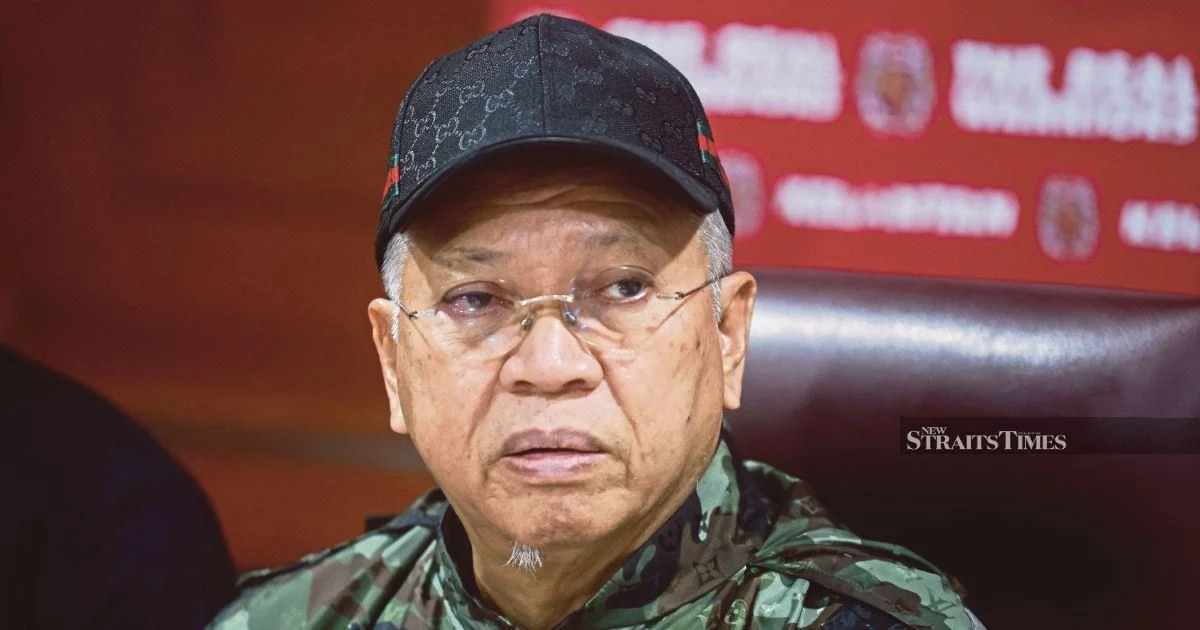
Tan Sri Annuar Musa acknowledged today that his personal efforts to mend deepening rifts between PAS and competing Bersatu factions have yielded no meaningful progress, raising fresh concerns about the durability of the Perikatan Nasional coalition at a time when political stability remains paramount for Malaysia's governance and economic outlook.
The senior Umno leader's admission comes as internal divisions within the coalition continue to fester, reflecting broader ideological and structural tensions that have proven resistant to conventional peacemaking approaches. Annuar's candid assessment suggests the coalition may require more substantive structural reforms rather than goodwill gestures alone to address the underlying causes of friction between its major components.
PAS and Bersatu represent distinct political traditions and constituencies within Perikatan Nasional. The Islamic party brings its conservative religious base and institutional strength, whilst Bersatu, having splintered following its 2020 formation, now operates through competing leadership camps with differing visions for the coalition's direction and resource allocation. These fault lines have created decision-making paralysis on several key policy matters, undermining the coalition's effectiveness in parliament and state governments.
Annuar's failure carries particular significance given his standing within both Umno and the broader coalition. As a seasoned political operator with experience bridging different party interests, his inability to forge compromise suggests the disagreements run deeper than personality clashes or simple miscommunication. The substantive nature of these disputes—touching on coalition hierarchy, policy priorities, and post-election reward structures—resists conventional political negotiation.
The implications for Malaysia's political landscape are considerable. Perikatan Nasional governs at the federal level and controls several states, meaning internal dysfunction directly impacts policy implementation and administrative efficiency. Delayed decisions on economic stimulus packages, infrastructure projects, and social programmes have already frustrated stakeholders expecting clearer direction from the coalition government. Businesses requiring long-term policy clarity face uncertainty that constrains investment decisions across manufacturing, technology, and services sectors.
For PAS, the reconciliation failure reflects its growing confidence within the coalition—the party now possesses sufficient political leverage to resist compromises it views as contrary to its interests or religious platform. The party's strong electoral performance in 2022 and subsequent state-level gains have emboldened party leaders to pursue positions independently rather than subordinate themselves to coalition decision-making. This assertiveness, whilst politically rational from PAS's perspective, has created friction with coalition partners expecting greater collaborative spirit.
Bersatu's factional divisions complicate matters further. The party has never fully cohered following its creation and subsequent migration of members from Umno and PKR. Competing power centres within Bersatu pursue conflicting agendas regarding coalition participation levels and political direction, making it difficult for Annuar or other mediators to negotiate with a unified Bersatu position. Coalition partners cannot meaningfully engage with an organisation that cannot speak with a single voice on fundamental matters.
The regional dimension warrants attention as well. Other Southeast Asian nations are observing Malaysia's political stability closely given the country's role as a major economic hub and significant regional player. Persistent coalition dysfunction sends negative signals about governance quality and decision-making capacity. Investors and neighbouring governments interpret coalition instability as a proxy for broader institutional weakness, potentially affecting trade relations, foreign direct investment flows, and Malaysia's standing in regional forums.
Annuar's public acknowledgment of failure may paradoxically serve a clarifying function. Rather than maintaining the fiction of coalition harmony whilst problems fester beneath the surface, the admission creates space for more honest conversations about what structural or institutional changes might prove necessary. Some observers suggest that formal coalition governance protocols, clearer resource-sharing mechanisms, or defined dispute-resolution procedures could provide frameworks within which disagreements become manageable rather than coalition-threatening.
The reconciliation impasse also highlights how Malaysia's political system distributes power in ways that can make coalition maintenance exceptionally challenging. Minority coalitions, lacking comfortable working majorities, must manage multiple constituencies with competing interests simultaneously. Unlike dominant-party systems where a single entity can impose discipline, coalition governments require continuous negotiation and compromise—work that becomes exponentially harder when underlying structural incentives push partners towards conflict.
Looking forward, Perikatan Nasional faces a critical choice between accepting some degree of factional tension as a permanent feature of coalition politics or pursuing more fundamental restructuring. The path to genuine reconciliation likely requires acknowledgments of legitimate grievances, explicit power-sharing arrangements, and perhaps even organisational reforms within constituent parties themselves. Whether coalition leaders possess the political will to pursue such profound changes remains unclear, but Annuar's candid statement suggests the softer approaches have exhausted their utility.

