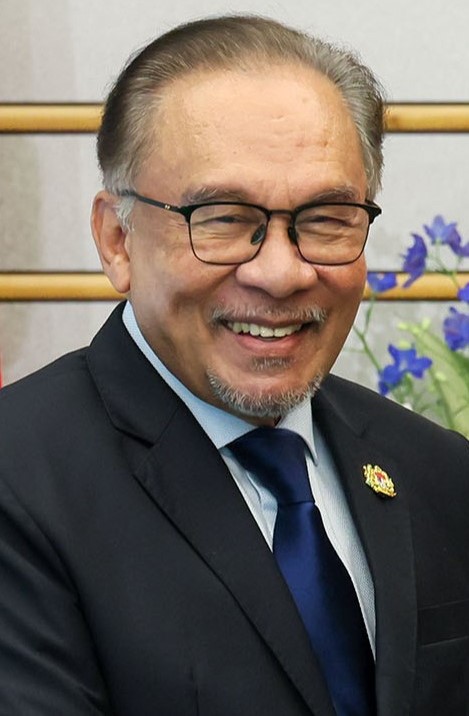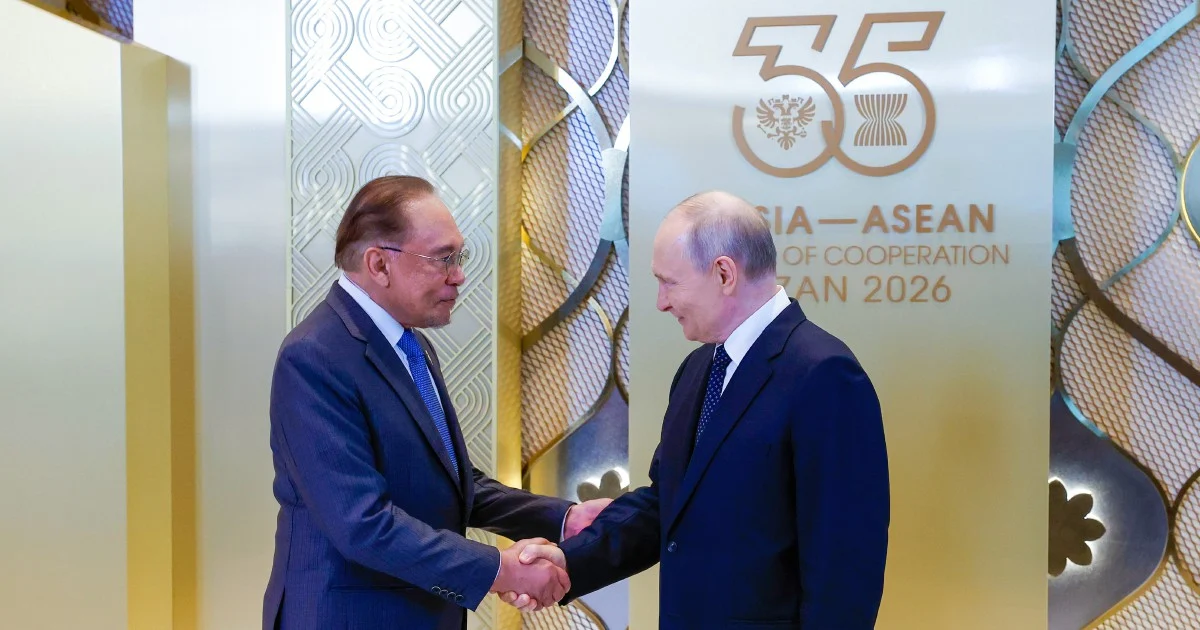
Prime Minister Datuk Seri Anwar Ibrahim and Russian President Vladimir Putin met in Kazan to chart a course for expanded Malaysia-Russia engagement across critical economic sectors. The conversation between the two leaders underscored a strategic pivot toward energy partnerships and financial mechanisms that bypass traditional currency constraints—a significant move for both nations navigating a reconfiguring global order.
Energy security emerged as a central pillar of their discussions, reflecting Malaysia's growing appetite for diversified fuel sources and Russia's efforts to deepen its influence in Southeast Asia despite international sanctions. For Malaysia, securing alternative energy pathways has become increasingly vital as the nation pursues its energy transition goals while maintaining stable, affordable power supplies. Russia, as a major global energy exporter facing geopolitical isolation, views partnerships with Asian economies as essential to its long-term economic resilience and market access.
The emphasis on trading in local currencies—Malaysian ringgit and Russian ruble—signals a deliberate effort to reduce dependence on the US dollar in bilateral transactions. This approach mirrors broader trends across Asia and beyond, where nations seek to insulate their trade relationships from currency volatility and potential sanctions regimes. For Malaysia, such arrangements provide practical advantages in reducing foreign exchange costs and strengthening the ringgit's regional utility. The mechanism also aligns with Malaysia's interest in deepening ties within non-Western economic structures without necessarily abandoning its traditional partnerships.
The Kazan meeting carries particular significance given Malaysia's delicate balancing act on the global stage. As a Southeast Asian nation with strategic interests spanning Western and Eastern alignments, Malaysia has historically maintained pragmatic relationships across ideological divides. This engagement with Russia demonstrates Kuala Lumpur's determination to preserve bilateral options and economic opportunities, even as Western nations have tightened their stance toward Moscow. For regional observers, Malaysia's approach offers a template for managing geopolitical complexities without outright polarization.
Russia's outreach to Southeast Asian partners has intensified as Western sanctions limit its conventional avenues for economic engagement. Malaysia, with its significant oil and gas reserves and downstream energy capabilities, presents an attractive counterpart for collaborative ventures. Joint projects in liquefied natural gas, petrochemicals, and renewable energy could create mutual benefits, particularly if structured to leverage each nation's comparative advantages. Such cooperation might also extend to technology transfer and capacity building in energy sectors, enhancing Malaysia's industrial capabilities.
Bilateral trade between Malaysia and Russia remains modest compared to the nation's commerce with major partners, but the trajectory suggests growing potential. Beyond energy, discussions likely touched on manufacturing, agriculture, and technology sectors where both economies can find complementary interests. The shift toward local currency transactions reduces transaction friction and signals commitment to deepening economic interdependence, which historically serves as a stabilizing force in diplomatic relations.
For Southeast Asia broadly, Malaysia's cultivation of Russian ties reflects the region's determination to avoid exclusive alignments during a period of great power competition. As Washington and Beijing vie for influence, nations like Malaysia are asserting their agency by maintaining multiple partnerships and negotiating favorable terms with various powers. This multipolar approach, while sometimes requiring diplomatic dexterity, allows smaller economies to extract maximum benefit from their strategic positions.
The energy security dimension resonates particularly given regional concerns about supply chain vulnerabilities exposed by recent global disruptions. Diversifying energy partnerships reduces concentration risk and provides leverage in negotiations with existing suppliers. For Malaysia, which already supplies liquefied natural gas to global markets, deeper Russian engagement might open new investment and technology opportunities in energy infrastructure and innovation.
The timing of the Kazan meeting also reflects Malaysia's participation in regional frameworks that include Russia, such as the East Asia Summit and broader ASEAN-plus-one arrangements. These multilateral structures provide contexts where bilateral discussions can be embedded, reducing the appearance of exclusive alignment while allowing substantive cooperation. For Malaysian policymakers, such arrangements offer political cover domestically and internationally while advancing concrete national interests.
Moving forward, the effectiveness of these energy and trade initiatives will depend on translating diplomatic commitments into concrete projects and investment flows. Building institutional frameworks for cooperation, establishing joint ventures, and creating regulatory certainty will be essential. Malaysia's track record of managing complex bilateral relationships suggests it possesses the diplomatic sophistication to develop these arrangements in ways that serve national interests while maintaining stability and predictability.
The broader significance of the Anwar-Putin meeting lies in its affirmation that Asian nations are reclaiming agency in determining their economic and strategic partnerships. Malaysia's willingness to explore deeper ties with Russia, even as Western allies urge restraint, demonstrates the limits of pressure-based diplomacy in the region. As the global order continues shifting, such bilateral engagements will likely proliferate, reshaping patterns of trade, investment, and security cooperation across Asia.