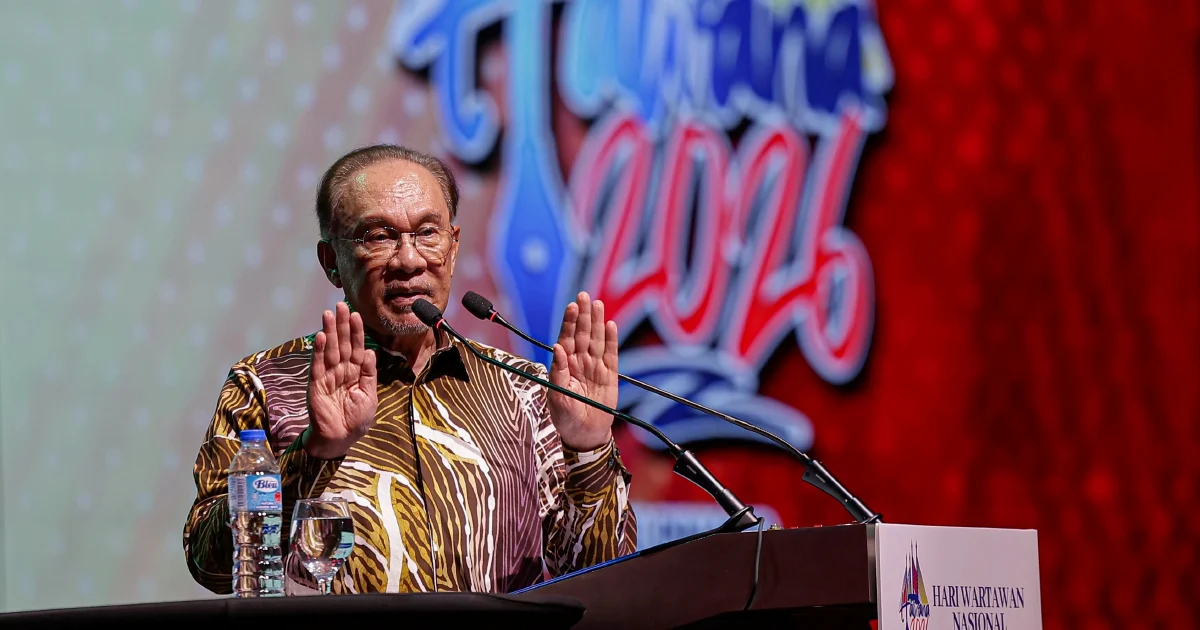
Prime Minister Datuk Seri Anwar Ibrahim has thrown his support behind the appointment of former Federal Court judge Tan Sri Nallini Pathmanathan to lead the Malaysian Media Council (MMC), signalling the government's commitment to strengthening institutional independence and public confidence in media regulation. Speaking in Butterworth, Anwar portrayed the selection as a strategic move to elevate the council's standing and restore faith among Malaysians in how the country's media ecosystem is overseen.
The appointment of Nallini represents a notable shift in leadership at the MMC, bringing judicial experience and a track record of impartiality to an organisation that has faced periodic criticism regarding its effectiveness and perceived independence. Her elevation to the chairmanship signals an attempt to position the council as a credible arbiter in a media landscape that has become increasingly fragmented and contentious, particularly in the digital age where misinformation and polarised reporting have become common concerns.
As a former member of the highest court in the land, Nallini brings considerable legal acumen and institutional gravitas to a role that demands both technical expertise and moral authority. The judiciary's independence, though occasionally tested, remains a comparatively respected institution in Malaysian public life. Her background suggests the government is banking on judicial credentials to lend weight to the MMC's decisions and restore confidence among stakeholders who have grown sceptical of media regulation bodies.
The timing of this appointment reflects broader anxieties about media quality and responsibility in Malaysia. The country has witnessed recurring tensions between press freedom advocates who fear censorship and regulators concerned about false information and inflammatory content. The MMC, tasked with maintaining professional standards and investigating complaints about editorial conduct, occupies a delicate space in this debate. By appointing someone with unimpeachable judicial standing, authorities hope to signal that the body can navigate these tensions with fairness and competence.
Public trust in institutions remains a critical challenge across Southeast Asia, and Malaysia is no exception. Media organisations themselves have faced declining credibility as audiences fragment across digital platforms and traditional outlets struggle to adapt to changing consumption patterns. A well-functioning media council that is seen as independent and equitable could help rebuild confidence that someone is monitoring standards and protecting the public interest against journalistic malpractice.
Nallini's judicial experience, particularly at the appellate level, suggests she understands the complexities of interpreting laws and balancing competing rights. The MMC's mandate encompasses investigating complaints, mediating disputes between media outlets and the public, and advocating for media freedom within responsible boundaries. These responsibilities require someone with both legal sophistication and political wisdom—qualities that former senior judges typically possess.
However, the effectiveness of this appointment will ultimately depend on whether the MMC itself operates with genuine autonomy and whether its decisions are respected by both media organisations and the public. Institutional credibility cannot rest entirely on the reputation of individual leaders; it requires consistent, principled decision-making and demonstrated independence from political pressure. The council's ability to hold powerful media interests accountable while resisting government interference will be the true test of whether Nallini's appointment successfully restores confidence.
For Malaysian media practitioners, the appointment carries both promise and potential concern. Those committed to ethical journalism may welcome leadership that emphasises professional standards. Conversely, critics worry that even well-intentioned leadership cannot overcome structural limitations if the MMC lacks enforcement teeth or operates within a regulatory framework that prioritises state interests over genuine public accountability. The extent to which Nallini can reshape the council's culture and effectiveness will require resources, institutional support, and political backing to implement unpopular but necessary decisions.
The broader regional context matters too. Across Southeast Asia, countries grapple with similar challenges: how to maintain press freedom while combating misinformation, how to regulate digital platforms, and how to ensure media councils serve the public rather than particular interests. Malaysia's experiment with judicial leadership at the MMC will be watched as a potential model for peer nations seeking to strengthen their own media governance structures.
For Malaysian audiences, the appointment represents an acknowledgment that media regulation institutions require credible leadership to fulfil their mandate. Whether Nallini's tenure becomes a turning point for the MMC or merely another episode in the body's ongoing struggle for relevance and independence will largely depend on factors beyond her individual competence—including the political environment, industry cooperation, and public engagement with media regulation questions that have historically remained technical and obscure.

