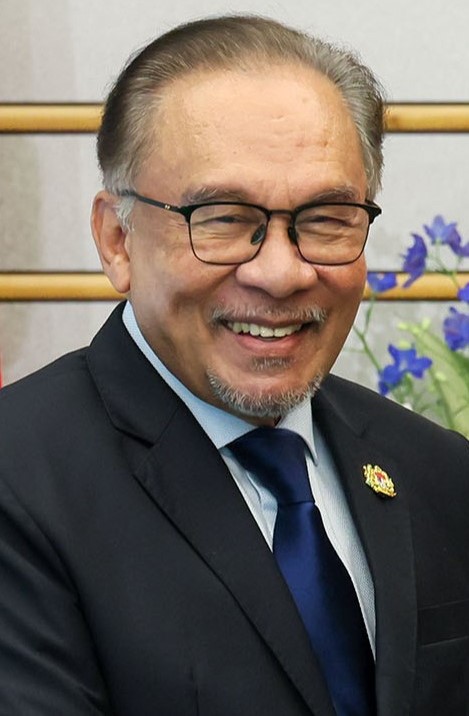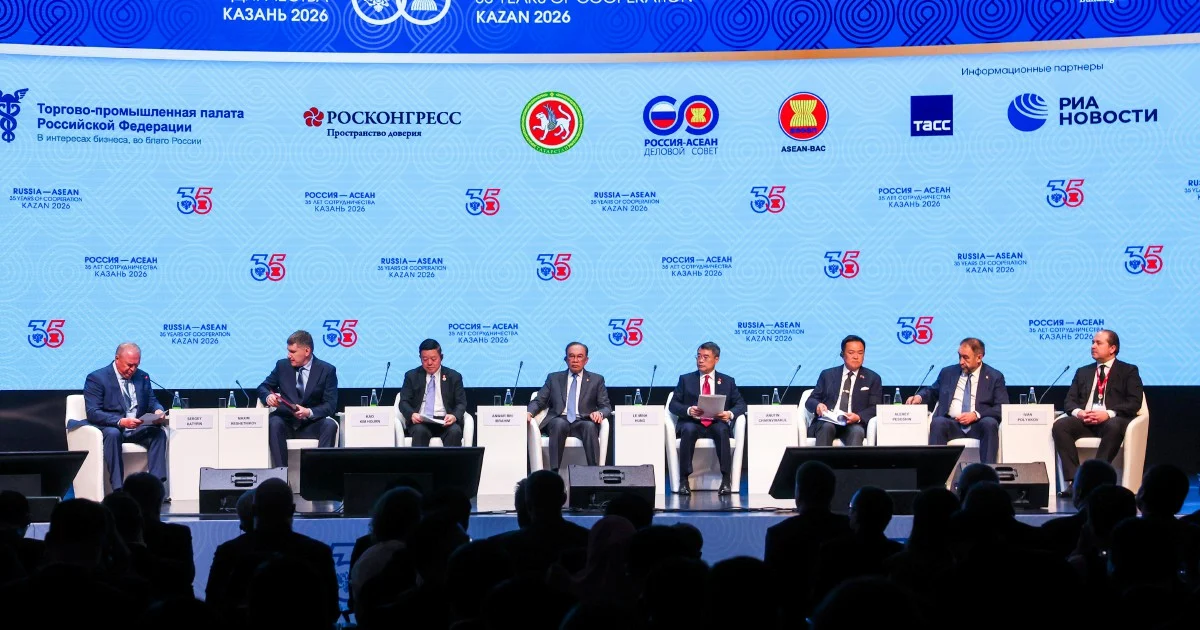
Prime Minister Datuk Seri Anwar Ibrahim has advocated for a substantial broadening of collaborative efforts between the ten-nation Asean bloc and Russia, framing such partnerships as essential to tackling pressing regional and global challenges. Speaking from Kazan, Anwar emphasised that the relationship between Asean members and Russia must move beyond traditional diplomatic exchanges to encompass concrete action across multiple critical domains that shape economic stability and national development priorities throughout Southeast Asia.
Food security emerged as a paramount concern in Anwar's statement, reflecting anxieties that ripple through the region's supply chains and domestic agricultural sectors. Southeast Asian nations, while among the world's largest producers of certain commodities, remain vulnerable to price volatility and global market disruptions that can destabilise societies already managing complex demographic pressures. Russia, as a significant agricultural exporter particularly of grain and fertilisers, possesses resources and expertise that could help Asean diversify its sourcing strategies and strengthen resilience against future shocks. Enhanced cooperation in this sphere would allow Malaysia and its neighbours to develop more robust contingency frameworks while supporting smallholder farmers who constitute substantial portions of rural populations throughout the region.
The energy dimension carries equally significant weight, given that most Asean economies remain dependent on fossil fuel imports or face rapidly rising electricity demands as industrialisation accelerates. Russia's hydrocarbon reserves and technological sophistication in energy production and distribution present opportunities for knowledge transfer and infrastructure development. For Malaysia specifically, exploring energy cooperation with Russia could supplement existing partnerships and diversify the country's energy diplomacy, particularly as regional economies grapple with transition pressures and the need to balance affordable power supplies with environmental commitments. The cost-benefit calculus of energy independence becomes more compelling when multiple reliable suppliers compete for market share.
Advanced manufacturing capabilities represent a strategic frontier where Asean's growing industrial base could benefit from Russian technical expertise and investment. The region aspires to move beyond simple assembly operations toward higher-value production that commands premium pricing and creates employment opportunities for skilled workers. Russia's industrial heritage and manufacturing standards could inform process improvements and quality assurance protocols that enhance the competitiveness of Asean-made goods in global markets. Such cooperation would particularly benefit nations seeking to upgrade their industrial positioning within global value chains.
Digital technology cooperation underscores the imperative for Southeast Asian nations to develop indigenous technological capabilities rather than remaining dependent on Western or Chinese platforms and systems. Russia has demonstrated competencies in software development, cybersecurity, and information technologies that could complement Asean's strengths in digital adoption and e-commerce innovation. Building bridges in this sector could foster technological pluralism and reduce concentration risks inherent in relying exclusively on limited providers. For a region navigating geopolitical complexities, technological self-sufficiency carries strategic implications beyond purely commercial considerations.
Education partnerships would establish long-term foundations for sustained cooperation by nurturing generations of professionals with cross-cultural understanding and technical expertise. Scholarship programmes, university exchanges, and research collaborations between Asean institutions and Russian counterparts could produce cadres of specialists capable of driving innovation domestically while maintaining constructive connections across Eurasian networks. Such human-centred cooperation often yields dividends that extend far beyond their immediate institutional contexts, influencing policy thinking and business networks for decades.
Anwar's advocacy reflects Malaysia's broader strategic positioning as a nation conscious of maintaining equitable relationships across major powers without surrendering autonomy. As geopolitical tensions intensify globally, Asean collectively faces pressure to choose sides; Anwar's framing of comprehensive, mutually beneficial cooperation suggests an alternative pathway where engagement deepens based on concrete sectoral interests rather than ideological alignment. This approach preserves Asean's cherished strategic autonomy while enabling members to address development challenges through pragmatic partnerships.
The timing of such statements carries significance, occurring amid persistent US-Russia tensions that complicate the international environment. For Southeast Asia, Russia remains a significant diplomatic player despite Western sanctions, and maintaining functional relationships across ideological divides serves regional interests. Asean's fundamental principle of non-interference and consensus-seeking approaches natural reservations about taking adversarial positions in global conflicts not directly threatening member security. Anwar's articulation of cooperative sectors acknowledges this reality while signalling that Asean nations view Russia as a partner in legitimate economic development rather than exclusively through a geopolitical lens.
Implementing such cooperation frameworks requires navigating institutional complexities, given that individual Asean members maintain distinct relationships with Russia shaped by historical experiences and contemporary strategic calculations. Malaysia's balanced approach toward major powers provides a potential model, though variations across the region mean that initiatives may proceed unevenly. Multilateral Asean mechanisms offer vehicles for coordinating engagement without demanding unanimity on sensitive political matters.
For Malaysia specifically, expanded Asean-Russia cooperation aligns with the nation's positioning as a moderate, pragmatic player seeking to harness international partnerships for development objectives. As domestic challenges mount—from managing economic transformation to addressing education and skills deficits—access to Russian expertise and investment in prioritised sectors could supplement traditional Western and regional partners. The proposition reflects confidence that prosperity emerges through competitive multilateralism rather than exclusive bloc alignment, an increasingly important stance as global integration fragments into competing spheres.