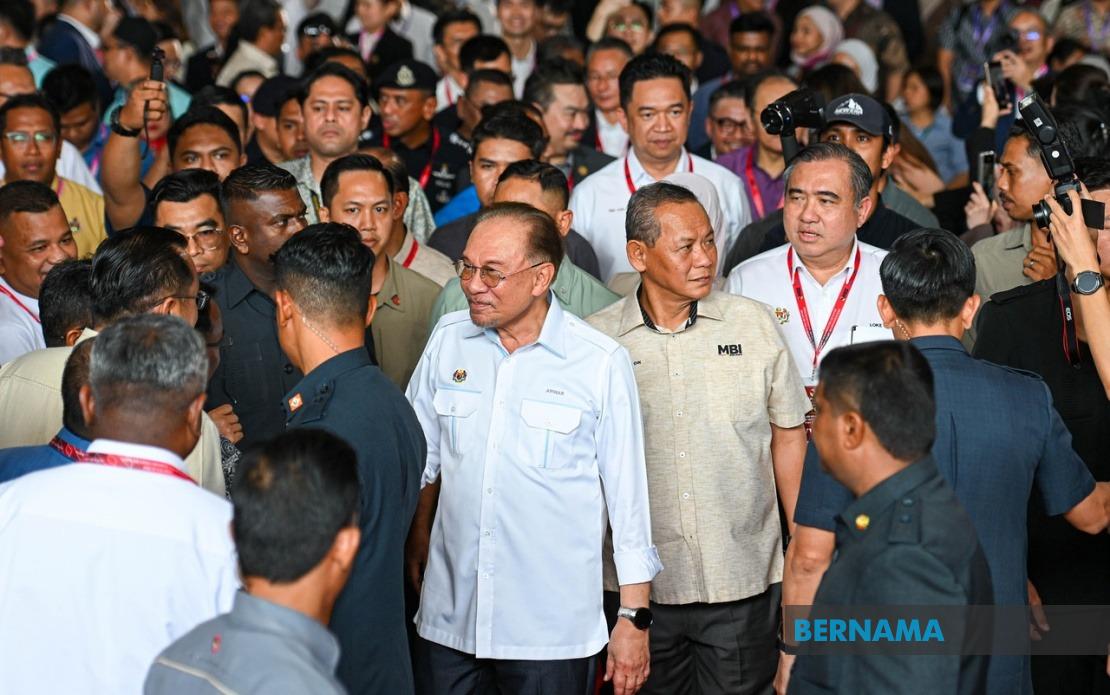
Prime Minister Datuk Seri Anwar Ibrahim is seeking a reprieve on the Melaka Democratic Action Party's decision to exit the state administration, urging the party to shelve its departure plans at least until the next election cycle. Speaking after inaugurating an automated container terminal project in Port Dickson on July 14, Anwar framed the request as essential to maintaining governmental continuity and protecting the development trajectory that benefits ordinary Malaysians.
As chairman of the Pakatan Harapan coalition, Anwar holds significant leverage in these discussions, though his appeal represents a diplomatic rather than directive approach to internal party disputes. He revealed that he had already engaged directly with DAP secretary-general Anthony Loke and Melaka Chief Minister Datuk Seri Ab Rauf Yusoh, indicating that informal negotiations were underway to find middle ground. This three-way dialogue suggests that the leadership recognises the political costs of allowing the coalition to fracture visibly just months before a general election.
The Melaka DAP's withdrawal materialised following the state assembly's approval of constitutional amendments that would permit the appointment of nominated assemblymen, a development that triggered principled objections from the party. DAP chairman for Melaka Khoo Poay Tiong justified the immediate exit by arguing that the nominated seats arrangement violated democratic principles and electoral integrity. This constitutional modification struck at the heart of the DAP's foundational ideology regarding democratic representation, creating a genuine clash between institutional loyalty and party values.
Anwar's framing of the dispute as a routine disagreement within coalition politics attempted to contextualise the row as manageable rather than systemic. He acknowledged that component parties within a ruling coalition inevitably held differing perspectives on specific issues, and suggested that such divergences should not translate into operational paralysis or abandonment of the coalition project. His position implied that the nominated assemblymen amendment, whilst contentious, should not become a breaking point if broader agreement existed on economic policy and welfare priorities.
For Malaysian observers, this episode reveals the persistent tensions within the Pakatan Harapan structure as it attempts to govern multiple states while maintaining ideological coherence. The Melaka situation exemplifies how federalism and internal party democracy can create competing pressures: the DAP's democratic principles clash with the pragmatic coalition-building necessary to sustain state governments. Melaka is particularly sensitive given its critical swing-state status in electoral mathematics, making its governance stability a matter of broader political consequence.
The Prime Minister's appeal invokes the utilitarian argument that development and welfare considerations should supersede doctrinal disputes. He suggested that voters care primarily about infrastructure, economic growth, and public service delivery rather than constitutional fine points about assemblymen appointment methods. This positions Anwar as the custodian of coalition interests and deliverables, willing to negotiate but firm that the development agenda must not become collateral damage in internal political disputes.
The timing of this crisis carries strategic weight ahead of electoral contests. A visible coalition collapse in Melaka would provide ammunition to opposition parties seeking to portray Pakatan Harapan as unstable and fractionalised. Conversely, preserving the coalition whilst accommodating DAP concerns would demonstrate maturity in managing pluralistic governance. Anwar's intervention thus serves dual purposes: genuine conflict resolution and political risk management for the coalition's broader standing.
The constitutional amendment creating nominated assembly seats remains the substantive issue underlying the disagreement. From the DAP perspective, such appointments undermine the principle that representation should flow exclusively from electoral mandates. This touches on fundamental democratic theory, explaining why the party felt compelled to take a principled stand despite coalition costs. The amendment arguably strengthens the state executive's flexibility in legislative composition, but at the expense of pure electoral legitimacy.
Anwar's request for postponement rather than reversal suggests he recognises the amendment will likely proceed regardless of DAP objections. His strategy therefore pivots toward damage control: keeping the DAP nominally within government structures whilst allowing the party scope to maintain its democratic credentials through protest without triggering immediate withdrawal. This reflects the complex bargaining that occurs within multi-party coalitions where constituent members hold incompatible positions.
For Southeast Asian coalition governance more broadly, the Melaka case demonstrates how structural democracy—the rules governing representation and appointment—can threaten coalition durability. Unlike ideology-based splits, procedural disputes often lack obvious compromises, making them more destabilising. Anwar's attempt to subordinate procedural objections to outcome-focused governance reflects a pragmatic regional approach to managing diversity within ruling coalitions.
The resolution of this standoff will test the resilience of Pakatan Harapan's institutional mechanisms for conflict management. Should negotiations succeed and the DAP withdraw its immediate departure, it would vindicate Anwar's diplomatic approach and strengthen his hand in managing coalition tensions. Conversely, a failed negotiation might signal that ideological red lines truly cannot be compromised, with implications for future coalition sustainability across Malaysian states where similar tensions simmer beneath the surface.

