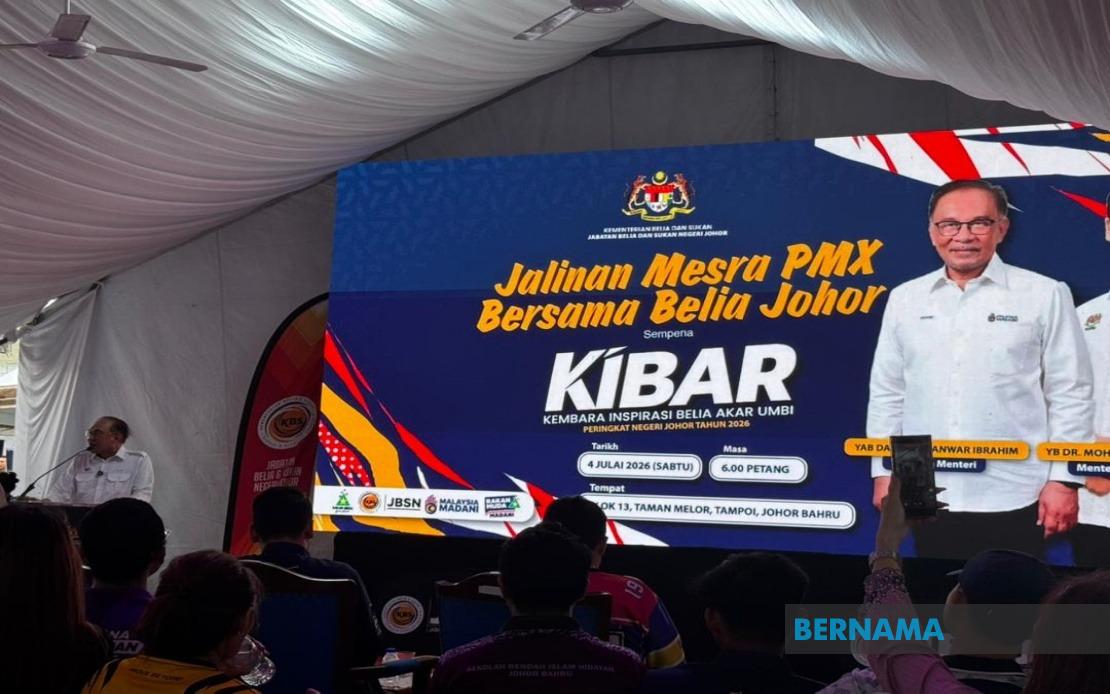
Prime Minister Datuk Seri Anwar Ibrahim launched a pointed critique at political parties that invoke Malay supremacy and Bumiputera principles during electoral campaigns, accusing them of inconsistency between their public messaging and governing actions. Speaking at a youth engagement programme in Johor Bahru on July 4, Anwar highlighted a troubling contradiction: parties that loudly proclaim their dedication to advancing Malay interests frequently oversee the erosion of Malay reserve land and assets once they gain office. His remarks cut to the heart of Malaysia's perennial political tension between nationalist rhetoric and the practical implementation of policies designed to protect and advance indigenous Malay-Muslim economic interests.
The Prime Minister's intervention reflects growing frustration within the government coalition over what he perceives as opportunistic political positioning by opposition and rival factions. Anwar did not name specific parties, but his criticism targets the common pattern whereby politicians and organisations amplify Bumiputera advocacy and calls for Malay unity during election cycles, mobilising grassroots support through appeals to identity and historical rights. Yet once electoral victories are secured, these same parties frequently preside over the conversion, alienation, or misappropriation of Malay reserve land—constitutionally protected zones intended exclusively for Malay ownership and development. This pattern, Anwar suggested, exposes a gap between electoral promises and governance realities that undermines genuine efforts to strengthen Malay economic participation.
At the gathering held at Taman Melor in Tampoi as part of the 2026 Johor-level Kembara Inspirasi Belia Akar Umbi (KIBAR) programme, Anwar posed rhetorical questions designed to challenge parties claiming to champion Malay causes. He asked when these organisations last created new Malay reserve land or took meaningful steps to preserve existing reserves. According to his assessment, substantial portions of such land have been lost to non-Malays through various mechanisms—leases, conversions, or legal transfers—often with the knowledge or acquiescence of governing parties. This loss represents not merely an economic matter but a breach of the foundational compact upon which Malaysia's constitutional framework rests, wherein Bumiputera rights form a central pillar.
The distinction Anwar drew between rhetoric and action carries particular weight given Malaysia's complex constitutional and social architecture. The Federal Constitution explicitly recognises and protects Malay-Muslim special rights, including priority in land ownership, business licensing, and educational opportunities. These provisions emerged from Malaysia's social contract at independence, negotiated between communities with different economic and political interests. When reserve land—legally designated for Malay ownership and use—diminishes through inadequate governance or deliberate negligence, the practical substance of these constitutional protections erodes. Anwar's challenge thus invokes the constitutional order itself as a standard against which political parties should be measured, regardless of their rhetorical flourishes.
Selangor Menteri Besar Datuk Seri Amirudin Shari and Youth and Sports Minister Dr Mohammed Taufiq Johari attended the event, signalling the Pakatan Harapan (PH) coalition's emphasis on this governance theme. The presence of high-ranking figures from both federal and state governments underscores the coalition's intention to position itself as genuinely committed to defending Bumiputera interests through systematic policy implementation rather than seasonal political appeals. For PH, which has faced criticism from more nationalist-oriented opposition parties and civil society groups over perceived inadequacy in advancing indigenous economic interests, reasserting commitment to Bumiputera principles and reserve land protection serves multiple strategic purposes. It consolidates support among Malay voters, reinforces the coalition's legitimacy in protecting constitutionally entrenched rights, and differentiates PH from competitors accused of empty posturing.
The timing of Anwar's remarks, ahead of the 2026 Johor state elections, reflects the intensifying political competition surrounding Malay-Muslim interests and identity. Johor, as a strategically significant state with substantial Malay-Muslim population, represents crucial electoral terrain. Opposition parties, particularly those with nationalist or Islamic platforms, frequently mobilise appeals to Malay unity and Bumiputera protection as core campaign themes. By pre-emptively challenging the credibility of such messaging, Anwar attempts to inoculate PH against criticism that the coalition insufficiently prioritises indigenous economic advancement. His framing—that genuine commitment requires transparent action and measurable policy outcomes—sets a standard for evaluating all political parties' performance on this dimension.
For Malaysian observers and policymakers, Anwar's intervention highlights systemic challenges in implementing Bumiputera protections amid competing pressures. Creating new Malay reserve land faces significant obstacles, including land scarcity in developed areas, fiscal constraints, and resistance from property owners and commercial interests. Preserving existing reserves requires vigilant administration, clear legal titling, and enforcement against conversion or alienation. Many state governments, regardless of ruling party, struggle with resource limitations and institutional capacity to effectively manage reserve land systems. Corruption, poor record-keeping, and unclear property rights have historically facilitated encroachment. Anwar's emphasis on demonstrable action implicitly acknowledges these implementation gaps and calls for renewed commitment to institutional strengthening.
The broader Southeast Asian context gives additional significance to Anwar's remarks. Throughout the region, questions of indigenous economic rights, land protection, and inter-community economic balance occupy central political space. Malaysia's constitutional approach to these issues—establishing reserved categories for indigenous peoples—differs from approaches in Singapore, Indonesia, or Thailand but reflects comparable underlying tensions. Anwar's challenge to his political competitors essentially asks whether Malaysia will maintain meaningful substance to its Bumiputera framework or allow it to become ceremonial rhetoric divorced from practical implementation. This question carries implications for Malaysia's social stability, inter-communal relations, and the durability of its constitutional bargain.
The youth focus of the KIBAR programme adds another dimension to Anwar's message. Younger Malays, increasingly urbanised and educationally advanced, represent both new constituencies for Bumiputera-focused messaging and potential critics of ostensibly paternalistic or ineffective policies. For young Malay professionals and entrepreneurs, Bumiputera protections offer both advantages and constraints—preferential access to certain opportunities alongside restrictions on property and business sectors. Anwar's appeal to demonstrate commitment through transparent, effective policy implementation rather than sloganeering implicitly acknowledges this generation's demand for substantive governance rather than identity-based populism. By addressing youth directly, he seeks to reframe Bumiputera advocacy as modernising and performance-oriented rather than defensive and nostalgic.
Looking forward, Anwar's critique may influence how PH coalition members campaign in state and federal elections, emphasising measurable protection of Malay reserve land, transparent Bumiputera policy administration, and quantifiable improvements in indigenous economic participation. It also establishes a framework for holding opposition parties accountable on these dimensions, transforming Bumiputera protection from ritual campaign invocation into an assessed governance metric. Whether such emphasis translates into institutional reforms, enhanced resource allocation for land administration, or genuinely new reserve land creation remains uncertain. Yet by positioning himself as demanding tangible action rather than accepting rhetorical commitment, Anwar signals that PH intends to compete for Malay-Muslim voters on substance rather than conceding the identity politics terrain to more nationalist competitors.

