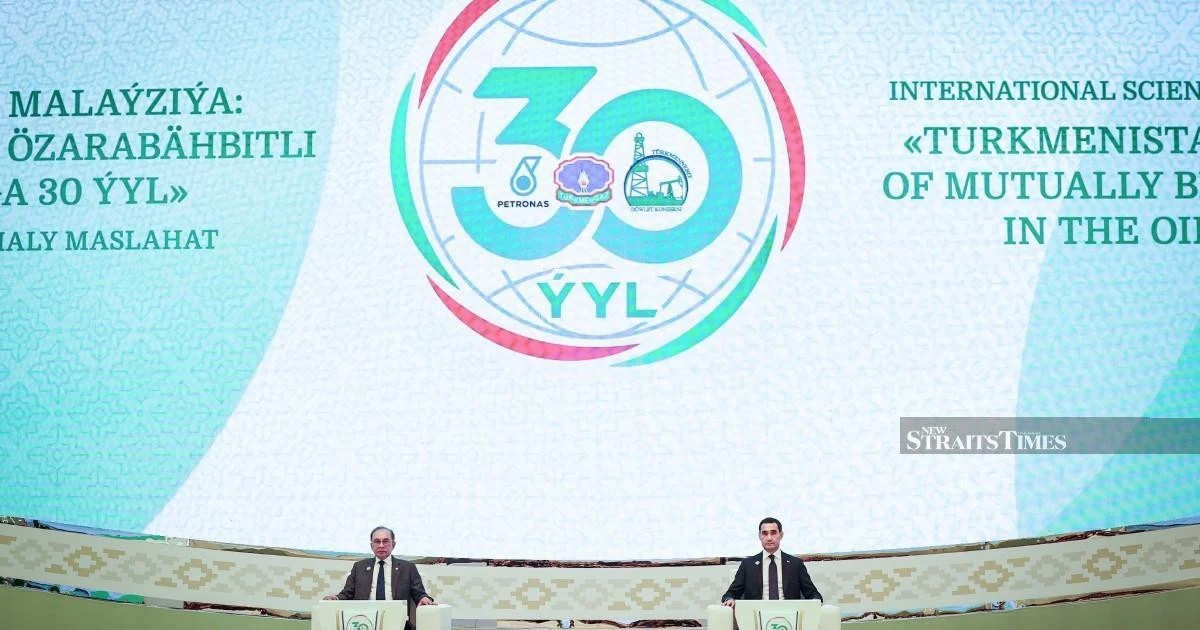
Prime Minister Datuk Seri Anwar Ibrahim's recent diplomatic mission through Russia and Turkmenistan has yielded substantial gains for Malaysia's energy security architecture. The tour, undertaken at a critical juncture for regional geopolitics, represents a meaningful broadening of Malaysia's energy partnerships beyond traditional suppliers and highlights the government's pragmatic approach to securing long-term fuel supplies.
Malaysia's energy landscape has undergone significant transformation in recent years, with domestic production declining while demand continues to climb. The nation's aging oil and gas fields in the Petronas-operated regions have necessitated a shift toward strategic international partnerships. By engaging directly with major hydrocarbon producers in Central Asia and Eastern Europe, Malaysia addresses a fundamental economic challenge: ensuring stable, diversified energy sources to power its manufacturing and industrial sectors while maintaining competitive electricity prices for consumers.
The timing of Anwar's initiative reflects broader regional realignment patterns. Many Southeast Asian nations are reassessing traditional energy partnerships and exploring alternatives that offer both economic advantage and geopolitical flexibility. Turkmenistan, with proven natural gas reserves among the world's largest, represents particularly valuable potential for long-term liquefied natural gas (LNG) procurement. Russia's vast hydrocarbon resources and established infrastructure present complementary opportunities for diversified sourcing arrangements.
Energy security considerations carry substantial weight in Malaysia's economic planning. Disruptions to fuel supplies or sudden price volatility can cascade through manufacturing competitiveness, transportation costs, and consumer electricity rates. By establishing direct governmental relationships with major producers, Malaysia reduces dependency on spot market purchases and creates possibilities for long-term contracts with pricing stability. This approach parallels strategies employed by other Asian economies seeking to insulate themselves from energy supply shocks.
The diplomatic groundwork laid during such missions extends beyond immediate commercial transactions. Establishing high-level relationships between energy ministers and state petroleum officials creates frameworks for technical cooperation, knowledge exchange, and collaborative infrastructure development. These intangible benefits often prove as valuable as initial contract values, enabling future expansion of commercial relationships as regional conditions evolve.
For Malaysian energy companies like Petronas, such governmental initiatives open pathways for upstream exploration partnerships, technology transfer arrangements, and downstream investment opportunities. International energy partnerships frequently entail collaborative ventures where Malaysian expertise in offshore operations can be deployed in new geographic markets, diversifying revenue streams and reducing exposure to any single operational region.
The strategic dimension extends to regional competition among Asian economies. Nations including India, Pakistan, Bangladesh, and various Southeast Asian countries are simultaneously pursuing energy partnerships with Central Asian suppliers. By moving decisively, Malaysia positions itself favorably within this competitive landscape, potentially securing preferred terms or priority allocations in agreements. Energy diplomacy has become as significant as traditional foreign policy considerations.
Domestic economic implications warrant careful attention. Malaysia's manufacturing sector—particularly electronics, petrochemicals, and petroleum refining—depends substantially on stable energy costs. By securing reliable energy supply arrangements with favorable terms, the government supports these industries' international competitiveness. Relatively stable electricity and fuel prices enhance Malaysia's attractiveness as a manufacturing destination against competitors in Thailand, Vietnam, and Indonesia.
Investor sentiment frequently reflects confidence in governments' capacity to manage critical resource security. Successful energy diplomacy demonstrates administrative competence and forward-thinking governance, qualities that influence foreign direct investment decisions across sectors. International companies evaluating Malaysian manufacturing operations consider energy availability and price stability alongside workforce costs and regulatory frameworks.
The geopolitical ramifications also merit consideration. Malaysia's deliberate engagement with Russia and Turkmenistan, despite prevailing Western sanctions against Russia, demonstrates the nation's commitment to non-aligned principles and maintaining relationships across various international alignments. This approach aligns with ASEAN's stated posture of strategic autonomy and friendly relations with all major powers—a delicate balance that Malaysia has consistently sought to maintain.
Future energy agreements with these suppliers will likely evolve beyond simple commodity transactions. Joint ventures in renewable energy infrastructure, cooperation in carbon management technologies, and collaborative research initiatives may eventually complement hydrocarbon partnerships. As global energy markets transition toward cleaner sources, maintaining relationships with established producers while exploring transitional opportunities becomes increasingly sophisticated strategic requirement.
The success of Anwar's mission extends beyond contract signatures to encompass establishing credible channels for ongoing energy dialogue. As Malaysia's demographic trends and development trajectory sustain rising energy demand through the coming decades, such diversified partnerships provide essential flexibility. The initiative demonstrates recognition that energy security constitutes foundational element of national competitiveness and prosperity in increasingly resource-conscious global economy.

