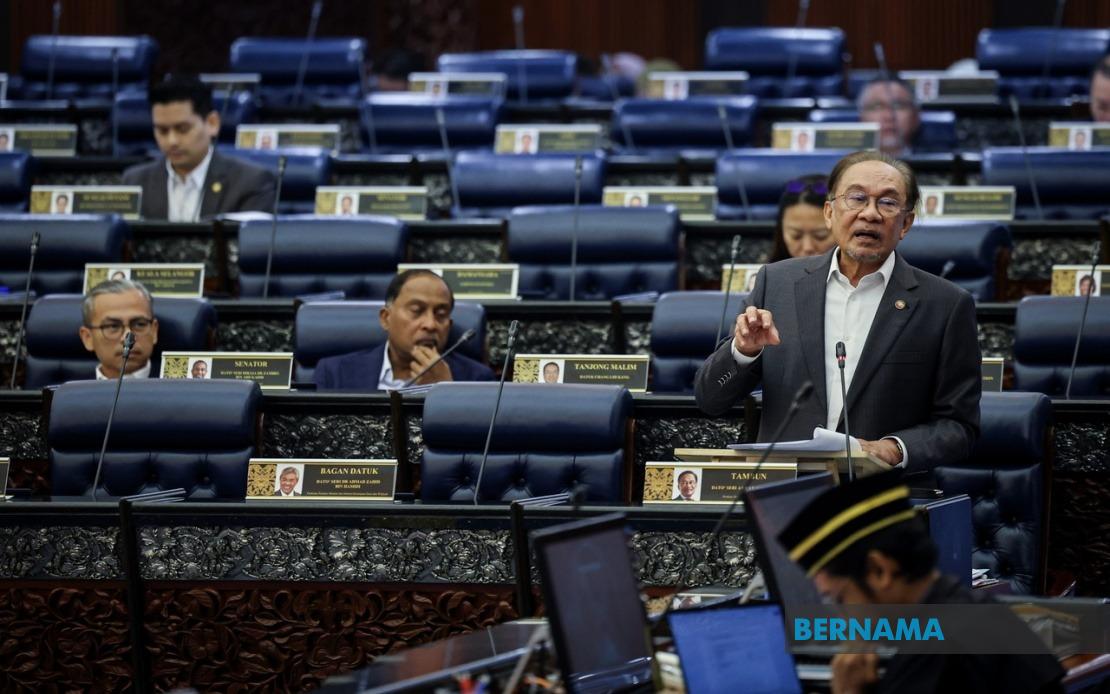
Prime Minister Datuk Seri Anwar Ibrahim moved swiftly to defuse controversy surrounding his public comments on the Johor state election's scheduled polling date, characterising his earlier remarks as a personal observation rather than a challenge to the Election Commission's institutional independence. Speaking during parliamentary question time, Anwar distinguished between offering a general perspective on voter convenience and attempting to shape the regulatory body's actual decisions, drawing a careful line between political commentary and administrative overreach.
The timing of Anwar's clarification reflects sensitivities within Malaysia's constitutional framework regarding the separation of powers. The Election Commission, as an independent constitutional body, must retain absolute authority over all procedural matters relating to elections, including the selection of polling days. Any suggestion that a sitting prime minister could pressure or influence such decisions would undermine the institutional credibility essential for holding fair contests. Anwar's emphasis on this distinction signals an awareness of how his earlier intervention had been perceived by observers monitoring adherence to constitutional norms.
The substantive issue underpinning the controversy centred on whether Saturday or Sunday represented the optimal polling date for the Johor election. Anwar had previously advocated for Sunday voting, citing the substantial Malaysian workforce employed across the border in Singapore. Many of these transnational workers, he reasoned, faced reduced accessibility on Saturdays due to half-day work schedules, making a Sunday election more accommodating for their participation. This argument, while pragmatic in addressing a real logistical challenge facing a specific voter demographic, had triggered questions about whether the prime minister was inappropriately lobbying an independent body.
During the Dewan Rakyat session, Anwar elaborated on his position with careful language designed to reaffirm institutional boundaries. He acknowledged the Election Commission's sole prerogative to establish polling dates while simultaneously reiterating his conviction that Sunday would better serve the interests of Malaysian workers in Singapore. This formulation allowed him to preserve his substantive argument about voter accessibility while explicitly disavowing any intention to dictate outcomes. The distinction he drew—between offering constructive input and attempting to control decisions—represents a common negotiation point in democracies balancing executive commentary with bureaucratic autonomy.
The parliamentary exchange itself illuminated how electoral arrangements intersect with Malaysia's cross-border labour dynamics. Tens of thousands of Malaysians maintain employment in Singapore, commuting regularly or working on extended assignments. Elections scheduled on Saturdays potentially disadvantage this cohort, who may struggle to arrange transport back to Malaysia on days when Singapore's work schedules run partly through the afternoon. Anwar's advocacy for Sunday polling thus addressed a genuine voter access issue affecting citizens spread across the Singapore-Malaysia frontier.
However, Anwar explicitly rejected suggestions that he should approach Singapore's Prime Minister Lawrence Wong to coordinate voting arrangements. While acknowledging his personal and professional relationship with Wong, he insisted that electoral matters remained exclusively within Malaysia's sovereign domain. This stance reflects Malaysia's commitment to non-interference in other nations' affairs, a principle he invoked to justify his reluctance to internationalise the debate. The rebuff also implicitly acknowledged that requesting foreign government assistance with domestic voting procedures, even informally, would constitute precisely the kind of interference Malaysia itself opposes from external actors.
Anwar did concede that Malaysian companies operating in Singapore had been provided general guidance about facilitating employee participation in voting whenever elections occurred. This modest accommodation fell far short of formal diplomatic engagement, operating instead at the level of corporate communication and workplace flexibility. The distinction proved significant: companies informing their Malaysian staff of voting opportunities and offering time off represented standard practice, whereas an official request to Singapore's government would have crossed into problematic terrain.
The controversy surrounding Anwar's initial remarks reveals underlying tensions about the boundaries of prime ministerial speech in systems with independent constitutional bodies. Elected executives naturally wish to shape policy outcomes according to their legislative mandates and campaign platforms. Yet institutions like election commissions require genuine autonomy to discharge functions critical to democratic legitimacy. The challenge lies in distinguishing between a leader advocating for particular approaches through normal political channels and that same leader deploying executive authority to coerce independent bodies into compliance.
The Johor election provided a concrete test case for these principles. By proceeding with Saturday polling despite Anwar's public preference for Sunday, the Election Commission demonstrated its practical independence from prime ministerial pressure. Whether the commission considered Anwar's remarks substantively or treated them as mere noise in the background remained unclear, but the outcome itself mattered less than the principle it established. The election proceeded according to the commission's judgment, unambiguously affirming its decision-making authority.
For Malaysian voters, particularly those working in Singapore, the practical outcome of this exchange had real implications for election participation. The Saturday polling date, regardless of its origins, created logistical obstacles for cross-border workers seeking to vote. Anwar's advocacy, even if framed as personal observation rather than institutional directive, at minimum elevated awareness of this challenge and signalled political attention to the issue. Future electoral arrangements might incorporate such concerns more systematically, even if this particular election proceeded unchanged.
The incident also underscores how Malaysia's political landscape requires navigation of multiple overlapping principles: executive leadership, institutional autonomy, constituent service, and international comity. Anwar's careful walk-back of his earlier remarks reflected an understanding that strong executives must ultimately respect constitutional boundaries, even when pursuing substantive goals they consider important. The clarification, though prompted by parliamentary scrutiny, reinforced the norm that independent bodies retain genuine authority over their domains, setting a precedent likely to influence future prime ministerial interactions with the Election Commission.

