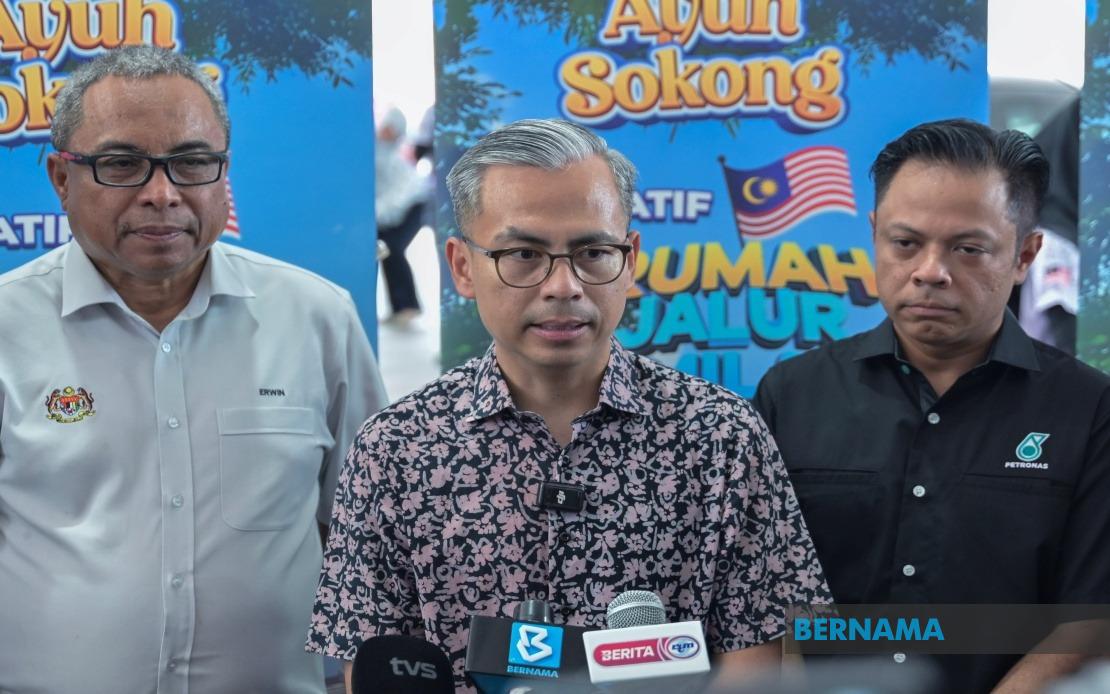
Prime Minister Datuk Seri Anwar Ibrahim has reaffirmed his administration's commitment to implementing a significant constitutional restructuring in Sarawak that would expand the state legislature. In a directive outlined during a recent Cabinet meeting, he instructed the Election Commission to furnish updated documentation on the proposal to increase the number of Sarawak State Legislative Assembly seats. Government spokesman Datuk Seri Fahmi Fadzil confirmed the development, emphasizing that the leadership views the redelineation as a priority matter warranting swift administrative action.
The initiative forms part of broader constitutional amendments proposed for Sarawak, where the State Legislative Assembly would undergo composition changes through the Sarawak State Legislative Assembly (Composition of Membership) Bill 2025. This legislation seeks to add 17 new seats to the chamber, expanding total membership from the current 82 to 99 seats. Such expansion would fundamentally alter Sarawak's representation structure, potentially redistributing electoral influence across constituencies and reflecting demographic shifts within the state.
The redelineation exercise carries significant implications for Sarawak's political landscape, as it will redraw existing electoral boundaries and create new ones to accommodate the additional legislative positions. For Malaysian readers, this development underscores how state-level constitutional reforms remain central to federal governance priorities, particularly in large East Malaysian states like Sarawak that maintain substantial autonomy under the Malaysian federation framework. The scale of the proposed change—adding over 20 percent more seats—suggests recognition that current representation may not adequately reflect population distribution or demographic changes across Sarawak's extensive geography.
Fahmi clarified that while the Prime Minister has expressed definitive commitment to implementation, no specific timeline has been communicated to Cabinet at this juncture. The delay in announcing implementation dates reflects dependencies on procedural requirements involving the Election Commission, which must complete preparatory work before redelineation can proceed. This sequential approach is standard practice in Malaysia, where electoral boundary changes require meticulous technical documentation and public notification periods established through electoral law.
The push for Sarawak's expanded legislature gained momentum when Women, Family and Community Development Minister Datuk Seri Nancy Shukri and Works Minister Datuk Seri Alexander Nanta Linggi raised the matter during Cabinet deliberations. Their advocacy highlights cross-portfolio support for the initiative, suggesting the proposal enjoys backing beyond any single ministry or political faction. This broader ministerial alignment enhances prospects for smooth passage through necessary regulatory channels, though Cabinet endorsement still requires complementary actions from the Election Commission.
For Southeast Asian observers monitoring Malaysia's institutional evolution, the redelineation proposal demonstrates how federal structures must periodically adjust representation mechanisms to maintain legitimacy and responsiveness. Sarawak, as one of Malaysia's most geographically expansive and ethnically diverse states, faces particular challenges in ensuring all communities within its borders receive proportionate legislative voice. The additional 17 seats would presumably address geographic disparities and population concentrations that may have emerged since the current framework was established.
Beyond Sarawak's restructuring, Fahmi also provided updates on concurrent electoral preparations in Melaka, where state elections approach. The government is undertaking comprehensive logistical planning to ensure operational readiness, including designation of media facilities and digital infrastructure at polling stations. The Malaysian Communications and Multimedia Commission has been enlisted to coordinate with the Election Commission on internet connectivity requirements, drawing upon lessons learned from previous state elections held in Johor and Negeri Sembilan.
This integrated approach to electoral management reflects institutional learning within Malaysia's electoral system. By systematizing technical requirements across multiple state elections, the government demonstrates commitment to operational consistency and professional standards. For media practitioners covering Malaysian elections, reliable internet access at polling stations remains essential for real-time reporting and observation, making this technical preparation meaningful beyond mere administrative routine.
The Melaka preparations also reveal how state-level elections have become occasions for testing and refining national electoral procedures. Each successive state poll generates operational data that informs subsequent elections, creating a feedback loop that gradually improves administrative capacity. As Malaysia conducts elections at federal, state, and local levels with increasing frequency, such systematic refinement becomes crucial for maintaining public confidence in electoral integrity and efficiency.
The combination of Sarawak's constitutional expansion and meticulous election planning in Melaka illustrates the MADANI government's stated emphasis on institutional strengthening and good governance. By publicly committing to redelineation while simultaneously demonstrating operational rigor in electoral management elsewhere, the administration seeks to project both reformist ambition and administrative competence. For Malaysian stakeholders invested in democratic health, these parallel initiatives suggest an executive branch willing to undertake consequential structural adjustments while maintaining procedural discipline in electoral administration.

