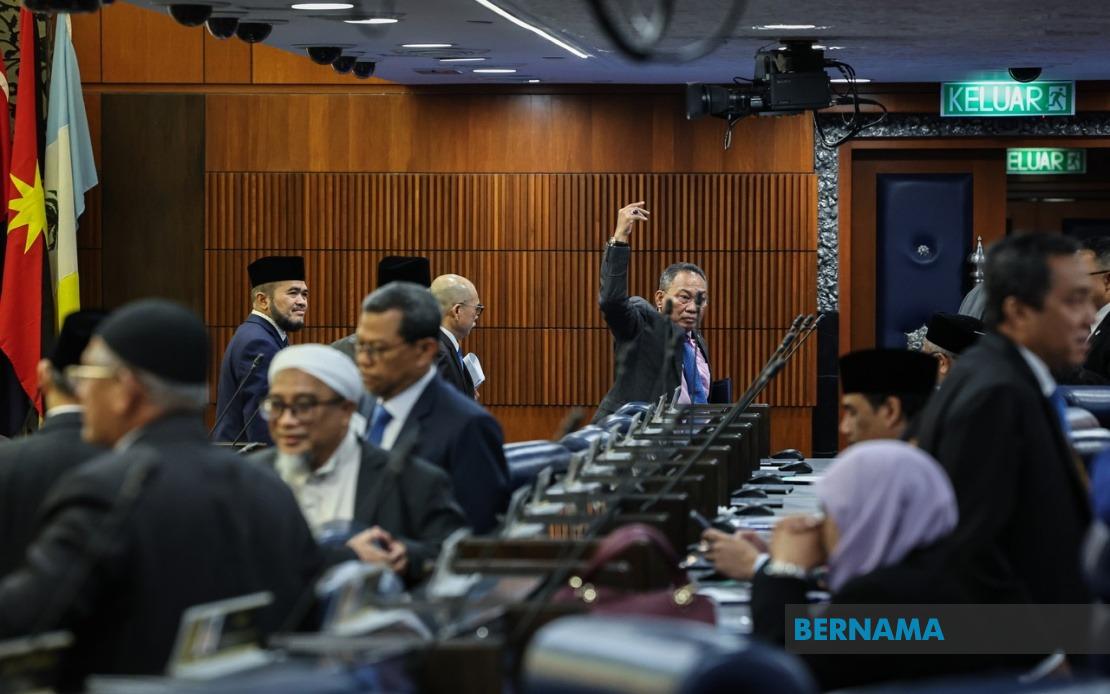
Prime Minister Datuk Seri Anwar Ibrahim has delivered a sharp rebuke to opposition lawmakers, accusing them of deliberately obscuring the Tabung Haji crisis by transforming it into a vehicle for political attacks rather than pursuing genuine institutional accountability. In a statement posted to Facebook on August 11, the Premier expressed frustration that the genuine concerns of depositors—comprising fishermen, farmers, teachers, police officers and retirees—were being overshadowed by partisan theatrics that prioritised personal political gain over the interests of the Islamic pilgrimage savings scheme.
The controversy erupted following a special parliamentary sitting convened to discuss the findings of a Royal Commission of Inquiry into Tabung Haji's operations. During the session, several opposition members staged a walkout in protest at Speaker Tan Sri Johari Abdul's decision to proceed with ministerial briefings despite the Prime Minister's absence. The opposition had also sought to adjourn proceedings, a proposal that was rejected. This parliamentary drama became the immediate trigger for Anwar's withering social media response, though the underlying tensions reflect deeper disagreements over how culpability for the institution's financial deterioration should be assigned and addressed.
Anwar's intervention also targeted the PAS-led Perikatan Nasional coalition directly, questioning whether opposition leaders genuinely prioritised the welfare of working-class Muslims or merely exploited their circumstances for electoral advantage. The Prime Minister posed a pointed question about whether the opposition genuinely concerned itself with ordinary Malaysians who had entrusted their earnings to Tabung Haji as an avenue for fulfilling the Islamic pilgrimage obligation. This rhetorical challenge struck at the heart of a longstanding political debate in Malaysia: which coalition more authentically represents the interests of the Malay-Muslim majority.
The parliamentary fracas occurred against the backdrop of a comprehensive 211-page Royal Commission of Inquiry report released on July 29, which detailed systemic weaknesses in institutional management spanning the 2014 to 2020 period. The investigation identified 25 specific areas requiring remedial action, with Tabung Haji subsequently implementing three-quarters of these recommendations by late July. These findings painted a picture of governance failures that had materialised under previous administrations, though the precise allocation of blame among multiple stakeholders remained contested along partisan lines.
Tabung Haji's financial difficulties have profound implications for Malaysia's Muslim population, as the institution functions as both a savings vehicle and a pilgrimage facilitator for millions. The scheme's deterioration thus affects not merely individual depositors' financial security but also the practical ability of ordinary Malaysians to undertake one of Islam's five foundational obligations. This dimension lends particular emotional and religious weight to the inquiry process, transforming what might otherwise be a routine institutional audit into a matter touching upon both material welfare and spiritual practice.
The establishment of the Royal Commission itself represented a significant acknowledgement of systemic problems requiring external scrutiny. Announced in 2021 and formally constituted on January 20, 2022, the inquiry operated under substantial public pressure given widespread awareness of Tabung Haji's deteriorating financial position. The subsequent presentation of findings to Yang di-Pertuan Agong on August 30, 2022, underscored the gravity with which the government treated institutional reform, positioning the matter as one demanding royal-level attention.
Anwar's absence from the parliamentary sitting, necessitated by his recovery from elective laparoscopic surgery to address a para-umbilical hernia, itself became a point of contention. The opposition's decision to walk out rather than participate in ministerial briefings reflected their apparent frustration at the Prime Minister's inability to attend personally and, more fundamentally, their scepticism regarding the adequacy of the government's proposed remedial measures. By framing this as political drama rather than principled objection, Anwar sought to undermine the opposition's credibility as guardians of institutional accountability.
The intersection of health, institutional governance, and parliamentary procedure in this episode illustrates how Malaysian politics frequently operates across multiple simultaneous registers. A straightforward matter of institutional reform becomes entangled with questions of prime ministerial accessibility, opposition legitimacy, and the proper functioning of parliamentary procedure. These layers of complexity reflect the fractious nature of contemporary Malaysian politics, where institutional crises readily become flashpoints for broader partisan competition.
For Malaysian depositors, particularly those from lower socioeconomic backgrounds, the parliamentary dispute carries troubling implications. While their elected representatives engaged in procedural disputes and mutual recriminations, the underlying question of whether their savings would be adequately protected and restored remained incompletely resolved. The fact that three-quarters of recommended reforms had been implemented provided some reassurance, but the remaining quarter, combined with the financial damage already sustained, meant that ordinary Malaysians retained legitimate grounds for anxiety about the security of their pilgrimage savings.
The dispute also reflects broader governance challenges within Malaysia's Islamic institutional framework. Tabung Haji occupies a unique position as a quasi-governmental body serving both spiritual and material functions for the Muslim majority. When such institutions experience financial deterioration, confidence in their stewardship becomes compromised, with potential spillover effects on public trust in other religiously-oriented or community-focused agencies. This institutional trust dimension extends the significance of the Tabung Haji crisis beyond merely financial metrics to encompass fundamental questions about governance competence and public sector accountability.
Anwar's characterisation of those responsible for institutional mismanagement as "traitors" employed particularly charged language, suggesting that this represented not mere administrative failure but fundamental betrayal of public trust. By elevating the discourse from technical governance issues to questions of moral culpability, the Prime Minister sought to reframe the debate from whether his government was handling institutional reform adequately toward whether previous administrators had deliberately or negligently undermined the scheme's integrity.
The parliamentary walkout and subsequent political fallout revealed enduring fractures within Malaysia's opposition landscape. The fact that multiple opposition members coordinated their absence suggested a deliberate strategy rather than isolated dissent, indicating that opposition leadership viewed the government's handling of the inquiry outcome as insufficiently rigorous. Whether this reflected genuine institutional concerns or political opportunism remained contested, precisely as Anwar's statement suggested, though Malaysian voters faced the difficulty of adjudicating between competing claims without direct access to comprehensive institutional evidence.
Moving forward, the Tabung Haji crisis will likely remain a touchstone for evaluating competing claims regarding institutional governance and political accountability. As implementation of the remaining recommended reforms proceeds, their effectiveness in restoring depositor confidence will substantially influence public assessments of both government competence and opposition credibility. For Malaysia's millions of ordinary savers, the resolution of this institutional crisis carries implications extending far beyond parliamentary rhetoric into the material reality of securing savings for religious obligation.

