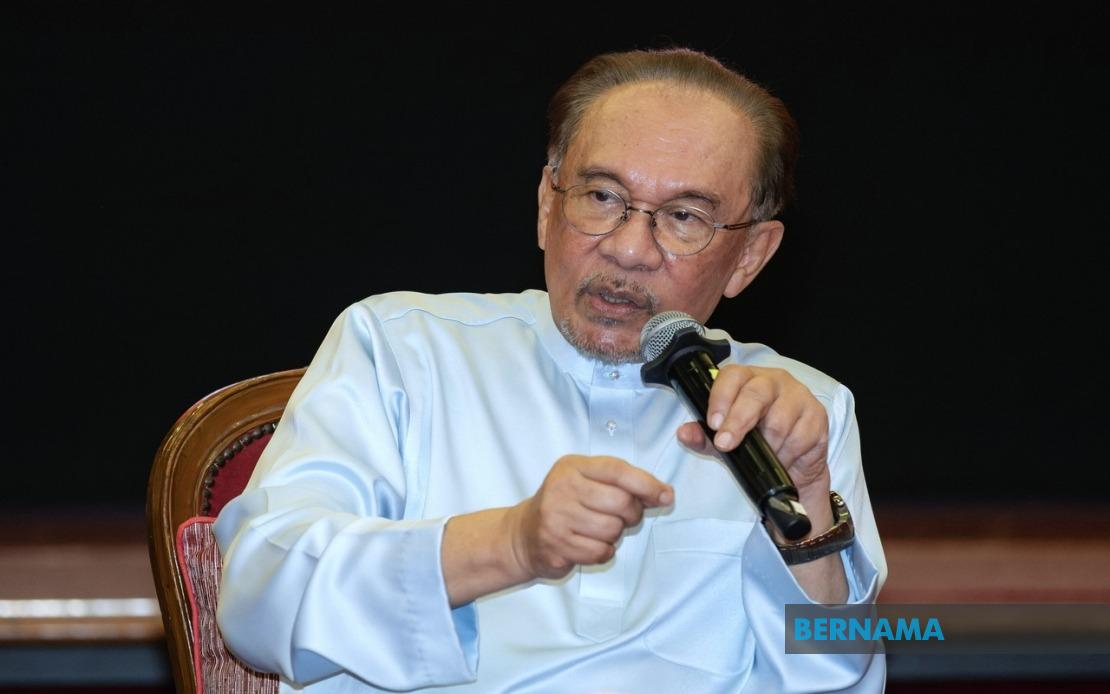
Prime Minister Datuk Seri Anwar Ibrahim has taken the extraordinary step of writing directly to Indonesian President Prabowo Subianto to seek his intervention in resolving a critical financial crisis affecting Malaysia's Federal Land Development Authority (Felda). The matter centres on substantial losses stemming from the authority's investments in Indonesia, particularly its holdings in PT Eagle High Plantations Tbk (EHP), a situation that Anwar characterised during a meeting with Felda's senior management as potentially catastrophic for the institution.
The scale of the financial exposure is staggering. Anwar disclosed that decisions made by Felda's previous management have created a situation where the authority faces potential losses of up to RM2.5 billion, with realistic recovery expectations now standing at merely RM200 million. This represents a dramatic erosion of value—a recovery rate of just eight percent that underscores how severely the investment has deteriorated. The disclosure came during a meet-and-greet session at Hotel Tenera in Bangi, where Anwar addressed senior managers and executives alongside Felda chairman Tan Sri Ahmad Badri Mohd Zahir and director-general Datuk Dr Suzana Idayu Wati Osman.
The underlying complication is that EHP's status remains contested within Indonesia's judicial system. Felda has been unable to recover its funds because the company continues to challenge the authority's claims through Indonesian courts, creating a prolonged stalemate that prevents resolution. By engaging President Prabowo directly, Anwar is signalling that the matter has reached a level requiring diplomatic intervention to break the deadlock and protect Malaysian interests. This approach reflects the gravity with which the Prime Minister views the situation and the recognition that conventional commercial channels have failed to yield results.
Anwar's decision to lay bare these figures to Felda's entire management cadre reveals a deliberate strategic choice. Rather than allowing the financial crisis to remain abstract or confined to senior leadership discussions, he wanted every manager across the organisation to comprehend precisely what they are confronting. This transparency serves multiple purposes: it prevents misinformation, establishes a shared understanding of institutional challenges, and demonstrates that the Prime Minister takes the recovery process seriously enough to demand full accountability and awareness throughout the ranks.
The Prime Minister emphasised to managers that the predicament they face was not of their making. He pointedly asked what responsibility a typical Felda manager working in Pahang or Johor should bear for investment decisions made at the highest levels years earlier. Yet he was also clear that regardless of culpability, all staff members would share the consequences of recovery efforts. This framing attempts to maintain morale and cohesion while avoiding the trap of scapegoating operational management for decisions made in the corporate and investment sphere. The underlying message was one of institutional resilience: everyone must shoulder the burden, but this burden stems from past governance failures, not present management inadequacy.
Anwar stressed the importance of ensuring that all Felda personnel understand the full scope of these governance challenges without allowing despair to undermine operational effectiveness. He cautioned against managers being swayed by narratives or propaganda that might minimise the significance of governance failures, suggesting that there may have been attempts within the organisation to downplay the severity of previous mismanagement. By insisting on clear-eyed acknowledgment of institutional problems, Anwar positioned improved governance as essential to Felda's rehabilitation and future credibility.
The Prime Minister carefully separated the forensic aspects of the crisis from the management communication strategy. He noted that investigations, enforcement actions, and court proceedings constitute distinct pathways that will unfold separately. However, he made clear that this compartmentalisation should not prevent managers from fully grasping how these legal and investigative processes are unfolding and what they mean for the organisation's future. This distinction between understanding the problem and passing judgment on individuals reflects Anwar's effort to maintain focus on systemic recovery rather than personalised blame.
Beyond the immediate investment crisis, Anwar indicated that the government remains committed to accelerating welfare initiatives that directly benefit Felda's constituents. Recognising that repair and maintenance work on managers' and settlers' homes has been delayed, he signalled the government's willingness to fund these projects before next year's budget cycle arrives. This demonstrates that despite the serious financial challenges, the government is not using the investment losses as justification for reducing its commitment to Felda's social obligations and community support functions.
Anwar's wider message emphasised that the government's focus on governance, integrity, and accountability is not an exercise in fault-finding directed at any particular individual or faction within Felda. Instead, it represents a commitment to rebuilding public confidence in the institution and ensuring Felda eventually reclaims its position as an organisation that Malaysians can respect and trust. This framing is significant for a settlement scheme with historical importance and deep roots in Malaysian rural development policy, as Felda's standing affects not only its beneficiaries but also public perception of government agencies more broadly.
The intervention with President Prabowo signals Malaysia's willingness to engage high-level diplomatic channels to protect its institutional interests abroad. It also reflects growing recognition that the EHP matter cannot be resolved through commercial negotiations alone and that presidential attention may be necessary to unblock Indonesian legal processes. For Malaysia-Indonesia relations, the approach suggests a pragmatic effort to resolve a discrete but significant commercial dispute through coordinated leadership engagement rather than escalation or confrontation.
Felda's investment troubles illustrate broader lessons about due diligence, governance oversight, and accountability in state-backed enterprises. The authority's significant exposure in a single Indonesian venture, combined with apparent governance weaknesses that allowed such substantial losses to accumulate, points to systemic vulnerabilities that likely extend beyond this single investment. Anwar's transparency about the figures and his emphasis on understanding these challenges suggest recognition that institutional repair requires honest assessment rather than concealment or minimisation of problems.
The situation also carries implications for other Malaysian investors and institutions considering regional investments. The EHP experience underscores the importance of robust mechanisms for protecting investments in foreign jurisdictions and the challenges that arise when disputes become entangled in another country's legal system. For Felda specifically, recovery depends not only on Prabowo's intervention but also on sustained pressure through diplomatic channels and commercial negotiations to move the Indonesian court proceedings toward resolution.

