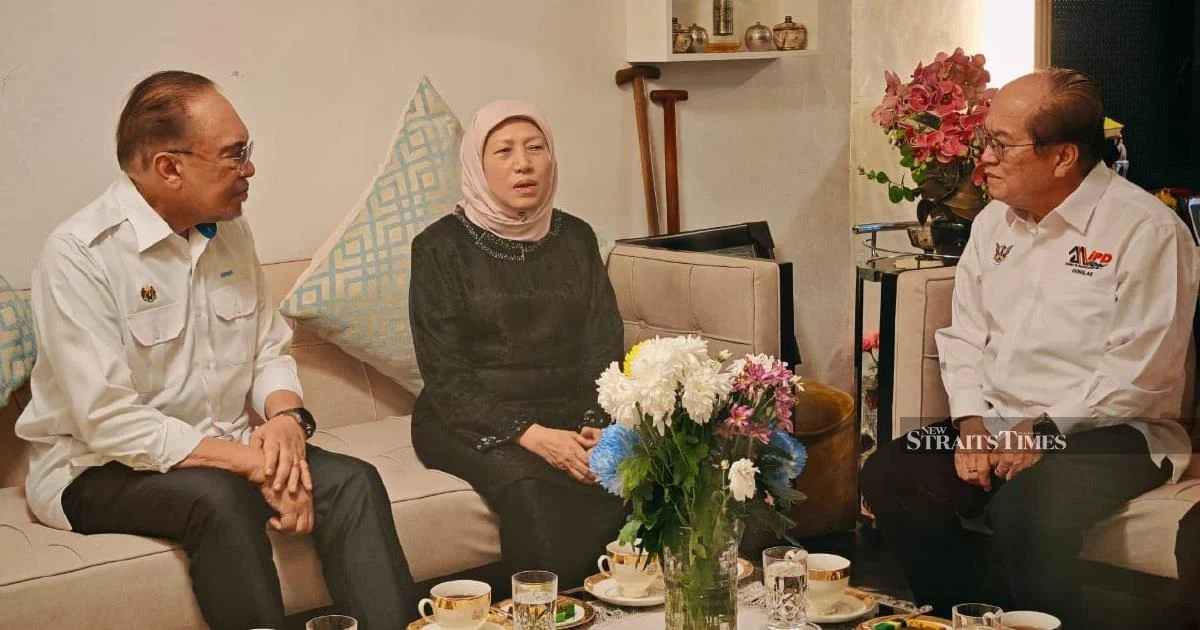
Prime Minister Datuk Seri Anwar Ibrahim travelled to Kuching to offer his personal condolences to Women, Family and Community Development Minister Datuk Seri Nancy Shukri following the death of her husband, Datuk Kamil Misuari. The visit underscores the significance of maintaining supportive relationships within the Cabinet, particularly during moments of profound personal loss that affect senior government figures.
The passing of Datuk Kamil Misuari represents a significant personal tragedy for Nancy Shukri, who has held her ministerial portfolio overseeing critical social and family welfare programmes. Ministers in her position often find themselves balancing demanding professional responsibilities with personal circumstances, making such gestures from the Prime Minister particularly meaningful during periods of grief and adjustment.
Nancy Shukri has been instrumental in advocating for family-oriented policies and women's empowerment initiatives within Malaysia's government framework. Her ministry addresses substantial portfolios including domestic welfare, child protection, community development, and women's rights—all areas that require sustained political attention and ministerial dedication. The loss of a spouse can naturally impact the capacity of any public servant to maintain focus on such demanding responsibilities.
Anwar's personal visit to Sarawak demonstrates the conventions of political leadership in Malaysia, where senior figures acknowledge the humanity of their colleagues beyond the confines of official duties. This practice reflects established norms of respect and solidarity within the government hierarchy, signalling to the broader Cabinet and civil service that personal compassion remains integral to governance even amidst the pressures of managing national affairs.
The condolence visit also carries diplomatic implications for Sarawak specifically. As Malaysia's largest state by area, Sarawak maintains a distinct political identity while remaining central to federal governance. The Prime Minister's willingness to travel to the state for a personal engagement illustrates the importance placed on maintaining harmonious centre-state relations, particularly when key federal ministers represent Sarawakian constituencies.
Nancy Shukri represents Batang Sadong, a constituency in Sarawak, and her ministerial role grants her significant influence over policies that affect families and communities throughout the state. Her effectiveness in channelling resources and policy priorities to her home state depends partly on maintaining strong relationships with federal leadership—relationships that are nurtured through such gestures of solidarity during difficult periods.
The timing and nature of such visits reflect broader Malaysian political culture, where personal networks and relationships significantly influence policy implementation and resource allocation. While these practices are sometimes critiqued for personalising governance, they also represent an acknowledgment that effective administration requires trust and goodwill among decision-makers who must regularly negotiate complex policy trade-offs.
For civil servants and junior officials observing such interactions, the Prime Minister's gesture carries instructive weight. It reinforces that compassion for colleagues' circumstances is compatible with maintaining rigorous professional standards and governance expectations. This balance between empathy and accountability shapes the institutional culture within Malaysia's public service.
The women's ministry itself may benefit from visible continuity of leadership during this period. While Nancy Shukri manages her personal bereavement, the Cabinet's public expression of support helps assure stakeholders—including women's rights groups, family welfare organisations, and community leaders—that ministerial focus on their concerns remains steady. Policy implementation and ongoing programmes can continue without interruption when institutional backing is clearly evident.
Such moments also highlight the role of protocol and ceremony in Malaysian governance. State visits, condolence calls, and formal acknowledgments serve functions beyond their immediate interpersonal purposes; they communicate messages about institutional stability, government solidarity, and continued commitment to public service to watching constituents and international observers.
The broader context includes Malaysia's ongoing efforts to strengthen governance standards while maintaining the personal relationships that facilitate effective administration. Nancy Shukri's continued service in a portfolio addressing social cohesion and family matters suggests that her ministerial experience and institutional knowledge remain valued by Cabinet leadership, even as her household navigates significant personal transition.
For Malaysian readers across peninsular and East Malaysian contexts, such developments underscore how leadership transitions and personal circumstances affecting senior officials can create either disruptions or opportunities for renewed policy focus, depending on how institutions manage continuity and change. The government's handling of such situations sets precedents for how state institutions relate to the personal dimensions of public service.

