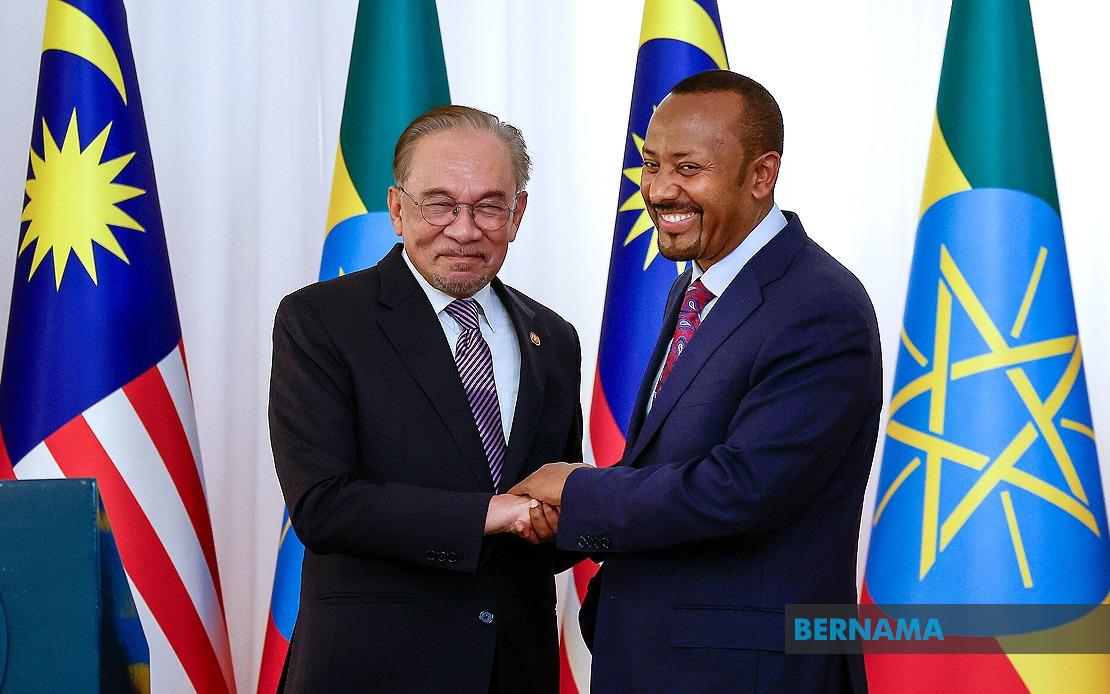
Prime Minister Datuk Seri Anwar Ibrahim has publicly commended Ethiopian Prime Minister Abiy Ahmed Ali and his Prosperity Party following their success in Ethiopia's recent general election. The Malaysian leader's formal acknowledgement underscores the deepening diplomatic engagement between Kuala Lumpur and Addis Ababa, reflecting a broader strategic positioning by Malaysia within the African continent and the Global South more broadly.
Anwar's congratulatory message, shared through social media, recalled his historic visit to Addis Ababa in the preceding year, which held particular significance as the first visit by a sitting Malaysian prime minister to the Ethiopian capital. That journey represented a deliberate effort to elevate bilateral relations and to signal Malaysia's renewed interest in engaging meaningfully with African nations beyond conventional trade relationships. The reception Anwar received during that mission evidently left a strong impression, serving as the foundation for the warm tenor of his recent message.
The Prime Minister's public remarks highlighted a shared worldview between himself and his Ethiopian counterpart. According to Anwar, his discussions with Abiy revealed complementary perspectives on global affairs and mutual recognition of the opportunities available to developing nations when they collaborate as genuine partners rather than accepting subordinate roles in international relations. This framing reflects Malaysia's increasingly vocal stance on reforming global economic and political structures to better serve the interests of nations in the Global South, a position that has become more prominent in Malaysian foreign policy discourse under Anwar's leadership.
In Anwar's assessment, Ethiopia occupies strategic importance within Malaysia's broader African engagement strategy. By designating the Horn of Africa nation as a significant partner, Malaysia signals its intention to deepen institutional and bilateral ties beyond episodic diplomatic exchanges. Addis Ababa's position as the seat of the African Union further elevates its geopolitical weight, offering Malaysia a gateway to continent-wide engagement and platforms for advancing shared interests within multilateral forums.
The Prime Minister's reference to initiatives already set in motion during his 2023 visit indicates that Malaysia and Ethiopia have concrete cooperation frameworks under development. These unspecified arrangements likely encompass economic partnerships, educational exchanges, and possibly security or defence cooperation. The commitment expressed by Anwar to carry forward these endeavours jointly suggests that both nations view the electoral outcome in Ethiopia as validating their chosen trajectory for bilateral engagement.
Abiy Ahmed's Prosperity Party victory provides Malaysia with continuity in its diplomatic partnership. Rather than facing potential disruption through a change in Ethiopian leadership, the reaffirmed mandate for Abiy ensures that the relationships and agreements developed during Anwar's tenure can proceed without interruption. This stability is valuable for Malaysia as it seeks to establish itself as a reliable and forward-thinking partner within the African context, particularly as competition for influence on the continent intensifies among global powers.
For Malaysian readers, this diplomatic milestone carries implications for the nation's international standing and economic opportunities. Enhanced ties with Ethiopia could facilitate Malaysian business interests across the African continent, particularly in sectors such as infrastructure, technology, and professional services. The personal rapport between Anwar and Abiy, evident in the Prime Minister's messaging, may translate into preferential treatment for Malaysian enterprises seeking entry into the African market through Ethiopian channels.
The broader context involves Malaysia's deliberate repositioning within global affairs through strengthened South-South cooperation. By elevating relationships with nations like Ethiopia, Malaysia articulates an alternative vision of international order centred on genuine partnership among developing nations rather than deference to traditional power centres. This approach resonates with Abiy's own reformist agenda within Ethiopia and the African Union, creating natural alignment between the two leaders' visions.
The electoral victory in Ethiopia also validates the reform trajectory that Abiy has pursued since taking office, including efforts toward democratic opening and economic modernization. Malaysia's prompt and warm recognition of this victory aligns the country with progressive forces within Africa and signals support for Abiy's governance agenda. This positioning strengthens Malaysia's reputation as a nation committed to democratic values while maintaining pragmatic engagement with developing-world partners.
Moving forward, observers of Malaysian foreign policy should monitor the concrete manifestations of Anwar's stated commitment to advancing bilateral initiatives with Ethiopia. Announcements regarding trade agreements, educational scholarships, or institutional partnerships would provide substance to the diplomatic warmth currently on display. The coming months will reveal whether Anwar's words translate into the substantive relationship-building that Malaysia seeks to establish across the African continent.

