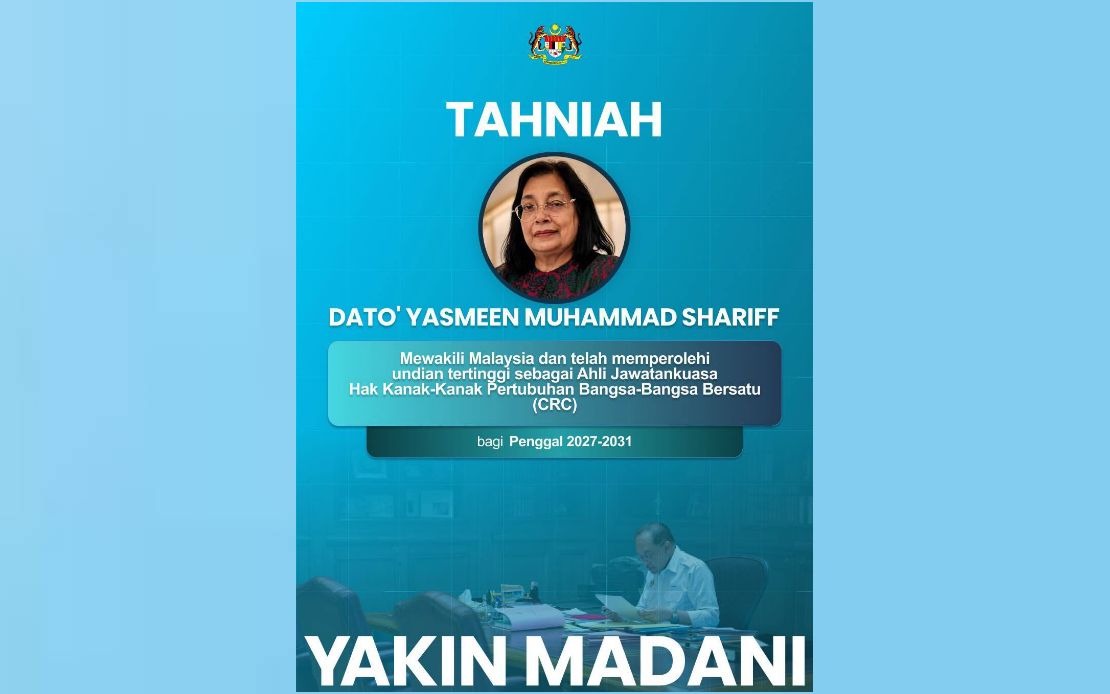
Prime Minister Datuk Seri Anwar Ibrahim has offered his congratulations to Datuk Yasmeen Muhamad Shariff following her successful election to the United Nations Committee on the Rights of the Child (CRC) for a five-year term beginning in 2027. The election represents a significant diplomatic achievement for Malaysia and underscores the country's standing within the international community on matters concerning child welfare and protection standards.
Yasmeen secured 136 votes from 189 States Parties that participated in voting during the 21st Meeting of States Parties to the Convention on the Rights of the Child, held at UN headquarters in New York on Tuesday. This commanding majority demonstrates substantial support from the global community and reflects the credibility Malaysia has cultivated through its advocacy work on children's issues at the international level.
In a statement posted on social media, Anwar emphasised that the achievement validates the international community's trust in Malaysia's broader commitment to advancing global development priorities. He noted that this electoral success sends a powerful signal about Malaysia's capability to contribute meaningfully to UN mechanisms that shape international policy on sensitive human rights matters, particularly those affecting vulnerable populations such as children.
The Ministry of Women, Family and Community Development (KPWKM) announced the election results and contextualised Yasmeen's appointment within her distinguished career in child advocacy. This marks her second election to the committee, having previously served as a member during the 2013-2017 term. Her re-election reflects recognition of her expertise and effectiveness in previous contributions to the committee's work, suggesting that she has earned respect among fellow committee members and represented Malaysia's interests competently.
As a committee member, Yasmeen will serve in her personal capacity as an independent expert rather than as a representative of Malaysia's government. This distinction is important to understanding the structure of UN treaty bodies, which operate with independence from state delegations to ensure impartial assessment of compliance with international child rights standards. Her individual standing and professional reputation were clearly factors that influenced voting outcomes.
The election carries broader implications for Malaysia's diplomatic strategy in international forums. Child rights issues have become increasingly central to development discourse globally, intersecting with education policy, health systems, labour standards, and gender equality initiatives. Malaysia's influence within this committee positions the country to help shape global norms and best practices in child protection, which can then inform domestic policy development.
For the Ministry of Women, Family and Community Development, the appointment provides an opportunity to elevate Malaysia's profile as a nation seriously engaged with international standards on women's and children's welfare. The ministry has been working to strengthen protections for vulnerable groups, and having representation within key UN bodies creates channels to exchange experiences, access international expertise, and demonstrate commitment to global obligations under the Convention on the Rights of the Child, which Malaysia has ratified.
Prime Minister Anwar's public recognition of this achievement serves to highlight his administration's focus on maintaining Malaysia's relevance within international institutions and multilateral frameworks. It demonstrates strategic engagement with the UN system as a platform for advancing Malaysian interests while contributing to global public goods. This approach aligns with Malaysia's broader positioning as a responsible stakeholder in addressing transnational challenges.
The committee itself holds significant influence in interpreting how signatory nations implement the Convention on the Rights of the Child. It reviews periodic reports submitted by states, issues recommendations for policy improvements, and generates general comments that guide international interpretation of child rights standards. Yasmeen's participation will therefore directly affect how Malaysia and other nations approach child welfare implementation and how international community expectations on these matters continue to evolve through her committee work.
For Malaysian civil society organisations and advocacy groups working on child-related issues, Yasmeen's position creates potential avenues for engagement with international child rights mechanisms. International NGOs and domestic stakeholders can leverage this connection to ensure that Malaysia's implementation of child rights commitments receives appropriate scrutiny and support from within UN structures, potentially amplifying voices calling for policy reforms or resource allocation improvements.
The election also reflects the Southeast Asian region's broader capacity to contribute expertise to global governance structures. As one of several regional countries with representatives in major UN bodies, Malaysia's successful placement of qualified candidates sends a message about the region's professional standards and demonstrates that Southeast Asia possesses individuals capable of meeting the demanding technical and diplomatic requirements of international expert committees.
Looking forward, Anwar expressed hope that Yasmeen's appointment would catalyse broader efforts to strengthen Malaysia's international standing and secure additional achievements at the global level. This aspirational framing suggests the government views this election as part of a larger strategy to enhance Malaysia's influence within multilateral institutions, which could translate into greater voice in shaping international policy agendas affecting development, security, and human rights issues that concern Southeast Asian nations.

