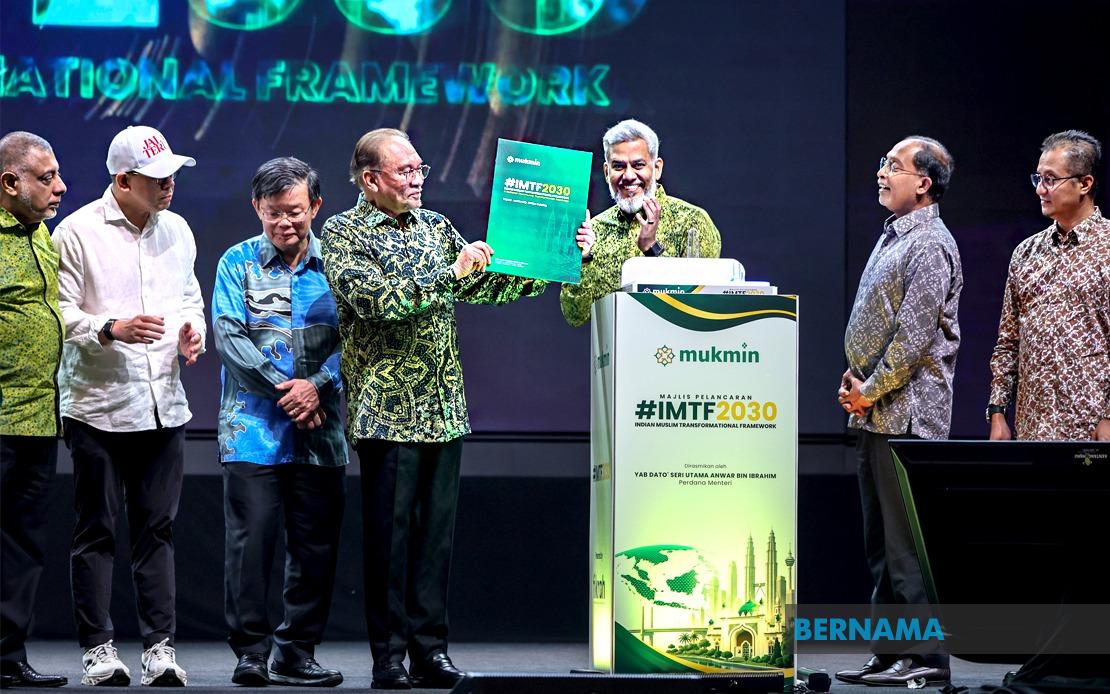
Prime Minister Datuk Seri Anwar Ibrahim has issued a firm directive to Malaysia's administrative machinery to resolve lingering foreign worker recruitment obstacles within a month, with particular focus on the restaurant industry where staffing gaps are increasingly acute. Speaking at the launch of the Indian Muslim Transformational Framework 2030 at the PICCA@Arena Butterworth Convention Centre in Penang on July 24, Anwar acknowledged the genuine operational challenges facing hospitality operators while emphasizing that any expansion in migrant worker quotas must remain controlled and strategically managed.
The timing of this intervention reflects growing pressure from the business community, particularly restaurant owners and operators who have repeatedly complained about delays and bureaucratic hurdles in processing foreign worker visa applications. The hospitality sector has become increasingly vocal about its inability to find sufficient local workers to fill kitchen, waiting staff, and operational positions, creating a bottleneck that threatens service quality and business viability across the country. By setting a concrete deadline beginning Monday from his announcement date, Anwar is signalling executive impatience with departmental inefficiency and demanding visible progress on this economically sensitive issue.
Anwar's statement reveals a delicate political balancing act within his administration. While he demonstrated empathy for restaurant operators facing genuine labour constraints, he simultaneously cautioned against wholesale liberalization of foreign worker policies that could flood Malaysia's labour market with additional migrants at a time when unemployment and underemployment among citizens remain concerns. This tension between pragmatic business needs and social stability reflects broader policy dilemmas facing developing economies managing migration flows. The Prime Minister's language—acknowledging that Malaysia already hosts "too many foreign workers, including unskilled ones"—suggests internal government acknowledgment that current migrant populations may have already exceeded optimal levels in certain sectors.
The directive comes against the backdrop of Malaysia's existing regulatory framework governing migrant labour. Under the 12th Malaysia Plan, foreign workers are capped at 15 per cent of the national workforce, while the more ambitious 13th Malaysia Plan targets reduction to just 10 per cent by 2030. These competing policy frameworks create inherent tension: while long-term strategy aims to diminish reliance on foreign labour, immediate sectoral needs push in the opposite direction. The one-month resolution period Anwar has mandated must therefore produce solutions that satisfy immediate business pressures without contravening longer-term labour localization objectives.
The restaurant sector's particular inclusion in Anwar's directive underscores this industry's critical importance to Malaysia's economy and tourism appeal. Unlike construction or manufacturing, restaurant operations directly impact tourist experiences and domestic consumer satisfaction. A hospitality sector hamstrung by understaffing affects not only business operators but also Malaysia's competitive positioning in the regional tourism market where service quality differentiates destinations. This sectoral prioritization suggests the government recognizes that some industries warrant faster-track solutions than others based on their economic multiplier effects and consumer-facing consequences.
Present at the Butterworth event were senior government figures including Penang Chief Minister Chow Kon Yeow, Minister of Higher Education Datuk Seri Dr Zambry Abdul Kadir, and Minister of Entrepreneur Development and Cooperatives Steven Sim, signalling this was a coordinated policy announcement rather than an isolated ministerial initiative. The gathering's focus on the Indian Muslim Transformational Framework 2030 provided a platform for addressing broader community welfare issues, with Anwar announcing a RM2 million allocation to Pertubuhan Gabungan MUKMIN Nasional for educational support to underprivileged children. This coupling of migrant labour policy with social welfare commitments suggests the government's attempt to address multiple constituencies simultaneously—reassuring business operators while demonstrating continued investment in citizen welfare.
The communications minister Datuk Seri Fahmi Fadzil had previously signalled this policy review, indicating that Cabinet discussions had already identified foreign worker recruitment in restaurants and construction as requiring government recalibration. This sequential approach—initial Cabinet discussion followed by Prime Minister's public deadline—represents standard Malaysian executive procedure for signalling policy shifts without appearing reactive or ad hoc. For restaurant operators and broader business stakeholders, however, the practical impact matters more than procedural niceties: they now have explicit Prime Ministerial assurance that processing delays will be addressed within a defined timeframe.
The implications for Southeast Asian labour markets extend beyond Malaysia's borders. As the region's most developed economy faces labour supply constraints despite significant migrant populations, other ASEAN nations grappling with similar issues will likely monitor Malaysia's approach. Countries including Thailand, Singapore, and the Philippines face comparable pressures to balance migrant worker utilization against citizen employment and wage protection. Malaysia's policy trajectory—simultaneously restricting long-term migrant quotas while expediting sector-specific recruitment—may offer a template for regional peers seeking similar equilibrium.
For Malaysian restaurateurs and hospitality operators, the next 30 days represent a crucial window of opportunity. Those with pending foreign worker applications should expect accelerated processing, while those not yet in the system should prioritize submissions before the deadline period concludes. However, the resolution Anwar has mandated is procedural rather than substantive—it addresses application processing speed rather than fundamentally expanding worker quotas. Operators should therefore maintain realistic expectations that faster decisions may still result in partial rather than complete staffing solutions, particularly if recruitment numbers remain constrained by existing percentage caps.
The broader policy question remains unresolved: whether Malaysia's labour market structure requires permanent adjustment toward greater migrant reliance or whether genuine investment in citizen training and wage competitiveness can ultimately fill hospitality sector vacancies. Anwar's one-month initiative addresses immediate operational pressures but does not resolve this deeper strategic tension. Future policy evolution will likely depend on whether the expedited application process generates measurable business improvement and whether political appetite exists for modifying the 10 per cent migrant worker target enshrined in the 13th Malaysia Plan.

