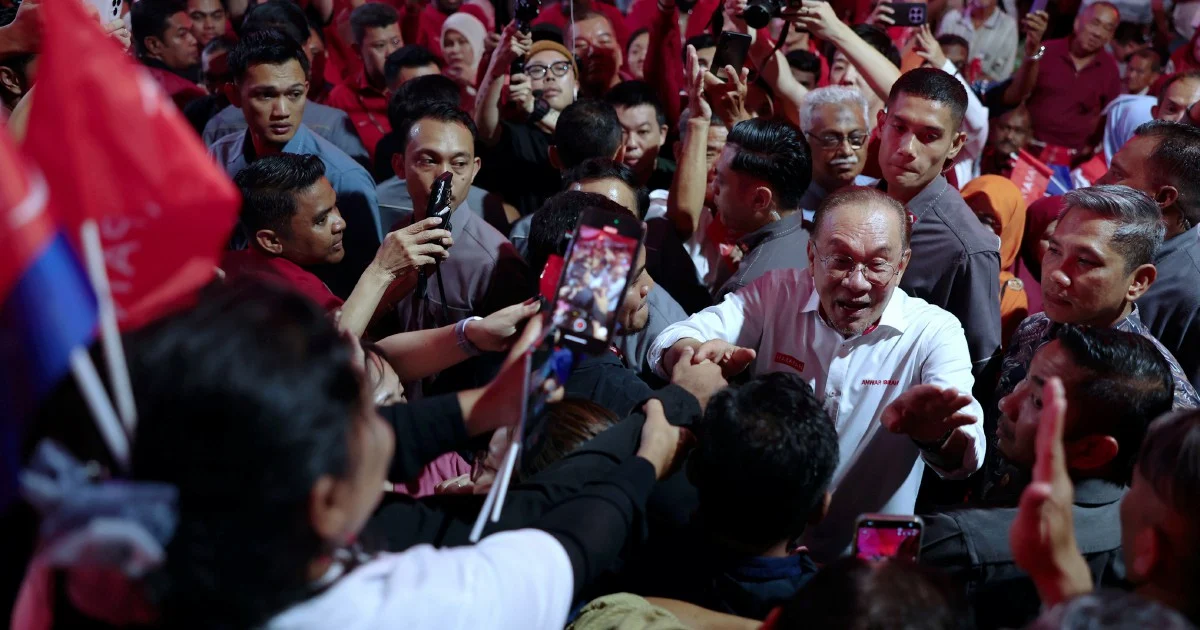
Pakatan Harapan mounted a significant push into Johor's political arena this week when coalition chairman Datuk Seri Anwar Ibrahim unveiled the complete roster of 56 candidates selected to contest the state election on July 11. The announcement, made in Tangkak, represents a crucial moment for the opposition alliance as it seeks to expand its foothold in peninsular Malaysia's southern heartland, a region traditionally dominated by competing political forces.
The timing of the candidate announcement carries considerable significance for Malaysian politics. Johor has long been viewed as a crucial swing state, and PH's decision to field a full slate across all 56 state assembly seats demonstrates the coalition's commitment to transforming political dynamics in the region. The state's economic importance and demographic diversity make it a prize worth contesting, particularly as both federal and state-level political alignments continue to shift across the country.
Anwar's direct involvement in presenting the candidates underscores PH's strategic focus on the contest. As Prime Minister and coalition leader, his presence lends weight to the campaign machinery and signals to supporters that the headquarters is investing significant resources and attention into the Johor operation. This personal engagement differs markedly from previous election cycles, suggesting PH views the contest as potentially transformative for its national political positioning.
The composition of the candidate slate will likely reveal much about PH's strategic calculations regarding which constituencies represent genuine pickup opportunities and where the coalition merely seeks to maintain a competitive presence. Analyst attention will focus on whether established incumbents from other states have been fielded in promising seats, or whether the coalition has opted to develop local political talent within Johor itself. Such decisions reflect broader questions about how PH balances centralised direction with empowerment of regional structures.
Johor's political landscape has experienced considerable flux in recent years, with voters demonstrating willingness to shift allegiances across election cycles. The state's diverse population includes substantial communities in urban centres, manufacturing hubs, and agricultural regions, each with distinct political preferences and priorities. Understanding how PH's candidate selection addresses these regional variations will provide insight into the coalition's electoral strategy and confidence levels in different areas.
For Malaysian opposition politics more broadly, the Johor contest represents an important test of whether PH can sustain and build upon momentum from recent federal-level developments. The coalition's performance here will likely influence voter confidence heading into future electoral contests and potentially reshape perceptions about which parties hold genuine prospects of capturing state governments. Media coverage and internal party assessments of the candidate list will shape public discourse throughout the campaign period.
The announcement also invites scrutiny regarding coalition mechanics among PH's component parties. How candidate slots were distributed among Parti Keadilan Rakyat, Democratic Action Party, Amanah, and other alliance members, and whether these allocations reflected earlier agreements or generated fresh tensions, offers a window into the health of the broader PH project. Successful coalition management during candidate selection processes often correlates with electoral performance and governing stability thereafter.
Regional observers will be watching closely to determine whether PH's Johor campaign can effectively communicate its policy agenda to voters prioritising bread-and-butter economic issues. Manufacturing employment, palm oil sector stability, port operations, and agricultural sustainability represent concerns that cut across demographic lines. How prominently PH places these concerns relative to national political narratives will influence the coalition's resonance with local audiences.
The July 11 election date itself carries implications beyond Johor's borders. Coming midway through the current parliamentary term, the contest provides voters an opportunity to register approval or disapproval of federal government performance without directly challenging the government's parliamentary majority. Depending on results, the contest could generate momentum for other state-level contests or alternatively require PH to undertake significant strategic reassessment.
Competitor responses to the PH candidate announcement will also merit attention. How other parties frame their own campaign strategies in relation to the opposition lineup, whether they attempt to poach candidates from rival lists, and how they position themselves relative to PH's messaging will illustrate the broader competitive environment. Johor's electoral dynamics do not exist in isolation but rather reflect and shape nationwide political currents.
Looking ahead to the campaign itself, the candidate selection process represents merely the opening phase of what promises to be an intensive period of electioneering. Ground-level organising, resource mobilisation, media strategy, and direct voter engagement will ultimately determine whether PH's ambitious candidate slate translates into parliamentary seats. The July contest will provide crucial data points for assessing the coalition's contemporary political strength and identifying which strategies prove most effective in contemporary Malaysian conditions.

