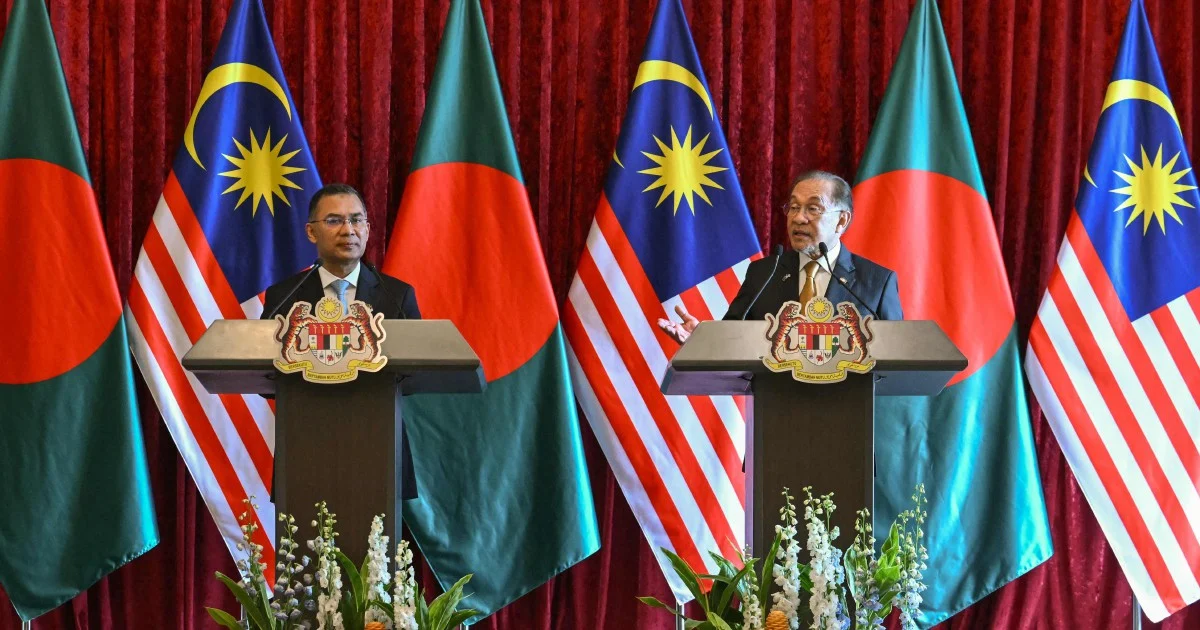
Prime Minister Datuk Seri Anwar Ibrahim has vowed to eradicate the exploitation of Bangladeshi workers in Malaysia, underscoring their irreplaceable contribution to the nation's economic framework. In his declaration, Anwar characterised the maltreatment of these workers as unacceptable, signalling an intensified push to safeguard the welfare and rights of the migrant labour force that underpins crucial sectors across the country.
Bangladeshi nationals constitute a substantial portion of Malaysia's foreign workforce, with hundreds of thousands employed across construction, manufacturing, agriculture, and domestic service sectors. Their presence has become structurally embedded in the Malaysian economy, filling labour gaps in industries where local workers are scarce or reluctant to take positions. The sheer scale of this dependence makes their protection not merely a humanitarian concern but an economic imperative for sustaining growth and development projects.
Exploitation of migrant workers remains endemic across Southeast Asia, manifesting through wage theft, excessive working hours, unsafe conditions, document confiscation, and physical abuse. Malaysia has faced international scrutiny over these issues, with various human rights organisations documenting systemic violations. Bangladeshi workers have been particularly vulnerable, often arriving through informal recruitment channels with limited knowledge of local laws and workplace rights, creating power imbalances that unscrupulous employers routinely exploit.
Anwar's commitment reflects growing domestic and international pressure to address labour standards. The Malaysian government faces reputational stakes in an increasingly scrutinised global economy where supply chain transparency and worker welfare impact investor confidence and trade relationships. Southeast Asian nations compete for foreign investment, and labour abuse allegations can undermine their attractiveness to multinational corporations adhering to corporate social responsibility standards.
The Prime Minister's pledge signals intent to strengthen enforcement mechanisms and institutional accountability. Effective implementation would require coordinated efforts across multiple agencies including the Ministry of Human Resources, Immigration Department, and labour inspectorates to conduct regular workplace inspections, investigate complaints, and prosecute violators. Training programmes for inspectors and accessible complaint mechanisms for workers themselves must be substantially enhanced to transform rhetoric into tangible outcomes.
Bangladesh's government has similarly pressed Malaysia to improve worker protections, reflecting significant diplomatic and economic dimensions to this issue. Migration represents a vital source of foreign exchange for Bangladesh, with remittances constituting a major portion of national income. When workers face exploitation or suffer injuries without adequate compensation, it generates diplomatic tension and prompts Bangladesh to restrict worker approvals, threatening Malaysia's labour supply pipelines.
The Malaysian business community's response to stricter enforcement will prove pivotal. Companies operating on thin margins may resist compliance costs, potentially lobbying against regulations. However, this logic overlooks how exploitation perpetuates wage suppression and reduces domestic consumer purchasing power while creating reputational risks for industry sectors. Equitable treatment of migrant workers ultimately benefits responsible employers by raising competitive standards and preventing disreputable operators from undercutting through abusive practices.
Regional context matters considerably here. Vietnam and Thailand have implemented various migrant worker protections, establishing comparative standards that Malaysia cannot ignore without losing competitive advantage in attracting quality foreign talent. Workers can choose destinations, and repeated exploitation incidents drive workers toward jurisdictions perceived as safer, constraining labour availability precisely when economic growth demands remain high.
Anwar's statement carries additional weight given Malaysia's positioning as a middle-income developing nation aspiring toward high-income status by 2050. This transition requires embracing labour standards aligned with developed economies rather than competing downward through worker abuse. Nations pursuing similar transitions typically discover that dignified working conditions and fair treatment ultimately strengthen their competitive position by attracting skilled workers, facilitating technology transfer, and enhancing social stability.
Implementation timelines remain unclear, and scepticism is warranted given historical gaps between government announcements and enforcement outcomes. Systematic change requires sustained political will, adequate budgeting for inspection and prosecution infrastructure, and willingness to sanction prominent employers regardless of their political connections or economic importance. Without these elements, pledges become hollow promises that international observers and civil society organisations will scrutinise.
The Bangladeshi migrant worker population also encompasses women employed in domestic service roles who face acute vulnerabilities including isolation, physical confinement, and sexual abuse. Protecting this cohort demands specialised approaches including safe housing standards, telephone access, and mechanisms enabling reporting without fear of deportation or retaliation. Gender-sensitive interventions must accompany broad protections.
Moving forward, Malaysia's credibility on this issue depends upon demonstrable results over subsequent months and years. Visible prosecution of exploitative employers, compensation for affected workers, and improved workplace inspections would signal genuine commitment beyond political positioning. The business community, civil society, religious organisations, and ordinary Malaysians all have roles in holding authorities accountable and refusing to tolerate the abuse that too often characterises migrant worker experiences in the region.

