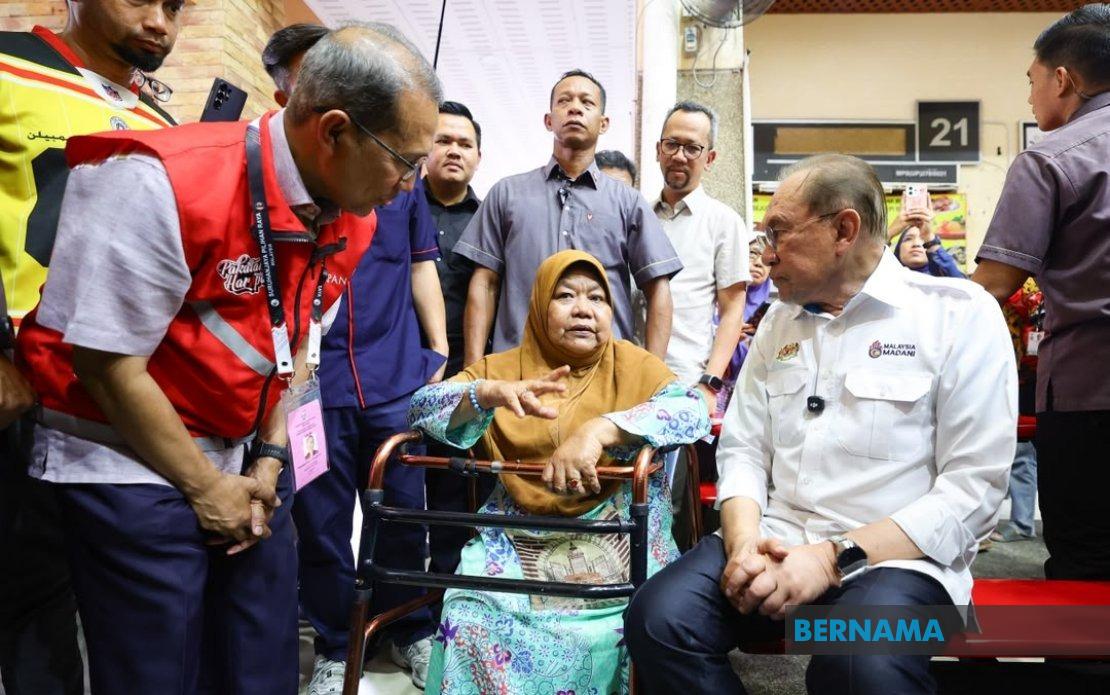
Prime Minister Datuk Seri Anwar Ibrahim has pointed to a series of infrastructure initiatives in Negeri Sembilan as tangible evidence that the Pakatan Harapan-led state administration can effectively balance development with equitable distribution of public benefits. Speaking at a community engagement event in Ampangan, Anwar highlighted reciprocal river widening and deepening projects across several locations as demonstrations of how resources extracted from such works can be channelled back to address local concerns and improve living standards.
The Ampangan project, which forms part of the broader flood mitigation strategy for the district, exemplifies what Anwar describes as transparent resource management. Rather than allowing excavated materials to represent a cost burden or unused by-product, the state government has adopted a model whereby sand and aggregates extracted during dredging operations are repurposed to finance ongoing maintenance and infrastructure upgrades in affected river corridors. This circular approach, according to the Prime Minister, ensures that communities directly benefit from development work undertaken in their areas while reducing the need for additional government expenditure.
Anwar's remarks came during the Santai Petang Bersama Warga Ampangan event, where he engaged directly with residents alongside Muhammad Nazri Kassim, the Pakatan Harapan candidate contesting the Ampangan state seat. The Prime Minister has been conducting a series of campaign activities across Negeri Sembilan in advance of the state election scheduled for August 1, with early voting set for July 28. His presence and messaging underscore the importance the coalition places on the peninsula's central state in its broader electoral strategy.
Beyond the mechanics of specific projects, Anwar framed the Ampangan initiative within a larger philosophy of governance centred on integrity and public interest. He stressed that every infrastructure project must be conceived and executed with genuine concern for the communities it affects, rather than serving as mere exercises in construction or political visibility. The Prime Minister contended that such an approach requires public officials to operate with transparency and accountability, qualities he argued are fundamental to sustainable development and public trust.
To illustrate his governance philosophy in practice, Anwar recounted his involvement in negotiations surrounding a hotel development project in Port Dickson. In that instance, he said, considerations extended beyond the commercial aspects of the undertaking to encompass the welfare of the local fishing community. The arrangement reportedly included provisions affecting educational opportunities and residential improvements for residents, demonstrating how larger development initiatives can be structured to incorporate social components benefiting affected populations.
The Prime Minister's emphasis on integrity-based governance carries particular resonance in the Malaysian political context, where public perception of corruption and mismanagement has historically influenced electoral behaviour. By highlighting specific projects that show resource efficiency and direct community benefit, Anwar and Pakatan Harapan are attempting to position themselves as custodians of fiscal responsibility and accountable administration. This messaging strategy targets voters who prioritise concrete improvements to local infrastructure and services over broader ideological considerations.
In the broader context of the Negeri Sembilan election, Anwar's campaign narrative seeks to consolidate support among communities that have experienced flooding and related water management challenges. The prevalence of such issues in the state has created both a practical need and a political opportunity for the governing coalition to demonstrate competence in addressing infrastructure deficits. By presenting the Ampangan project and related initiatives as evidence of this capability, Pakatan Harapan aims to secure voter confidence ahead of the August 1 polling.
The coalition is contesting all 36 seats in the state election, with the parliamentary seat distribution reflecting its internal alliance structure. Parti Keadilan Rakyat is fielding 16 candidates, while the Democratic Action Party is contesting 11 seats and Amanah presents nine candidates. This allocation reflects both the relative strength of coalition partners and their respective geographic bases of support within Negeri Sembilan. The distribution strategy suggests confidence among Pakatan Harapan leaders regarding their prospects, though the outcome will depend substantially on voter response to the coalition's performance record and campaign messaging.
Anwar's appeal to voters emphasised the importance of selecting leaders based on personal integrity and trustworthiness rather than other considerations. He urged residents to choose candidates regardless of ethnicity, arguing that Malaysia possesses capable individuals of all communities prepared to serve with dignity and commitment to public welfare. This inclusive framing attempts to broaden Pakatan Harapan's appeal beyond its core support base, particularly among communities that may harbour reservations about specific coalition components.
The timing of Anwar's Negeri Sembilan visit and his focus on development projects reflects broader strategic considerations within Malaysian politics. As Prime Minister and Pakatan Harapan chairman, his personal engagement in state-level campaigns signals the coalition's determination to retain control of Negeri Sembilan, a state that has historically been competitive but remains significant in the peninsula's political geography. The emphasis on infrastructure delivery and resource management addresses voter concerns about tangible improvements to living conditions, an issue that often determines electoral outcomes at state level more decisively than national-scale political dynamics.
The river management projects Anwar highlighted also connect to climate and environmental concerns increasingly relevant to Malaysian voters. Flooding events have become more frequent and severe in recent years, affecting multiple states and creating public demand for effective water management infrastructure. By framing reciprocal dredging projects as both flood mitigation and resource-efficient governance, Anwar positioned Pakatan Harapan as addressing contemporary environmental challenges while maintaining fiscal discipline. This dual messaging seeks to appeal to constituencies concerned with both disaster risk reduction and responsible public spending.
Looking toward the August 1 election, Pakatan Harapan's performance in Negeri Sembilan will carry symbolic and practical significance for the broader political landscape. A strong showing would reinforce the coalition's viability at state level and strengthen Anwar's position as a leader capable of delivering on development and governance promises. Conversely, setbacks could embolden political opponents and create momentum for alternative coalitions. The campaign messaging emphasising concrete projects, transparent administration, and inclusive leadership represents the coalition's primary strategy for securing voter support in this crucial contest.

