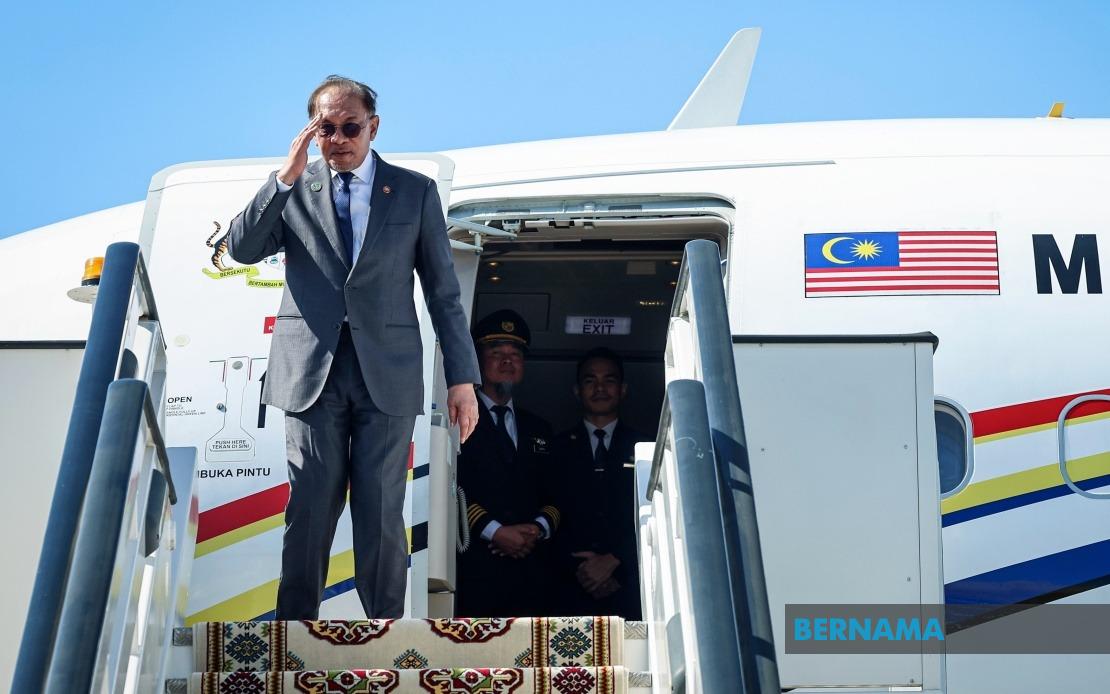
Prime Minister Datuk Seri Anwar Ibrahim moved swiftly from Central Asia to the Malaysian peninsula on June 20, departing Ashgabat immediately after concluding his official engagement in Turkmenistan and touching down in Penang for a concentrated programme of economic and ceremonial duties. The transition underscores the demanding schedule maintained by the nation's chief executive, who simultaneously holds the Finance Ministry portfolio while managing diplomatic responsibilities across multiple continents and domestic commitments throughout the country.
Anwar's two-day presence in Turkmenistan, commencing on June 18, marked a significant milestone in bilateral relations—the first visit by Malaysia's 10th Prime Minister since his appointment in November 2022. The journey was undertaken at the invitation of President Serdar Berdimuhamedov and followed immediately after Anwar's participation in the 35th ASEAN-Russia Commemorative Summit in Kazan, where he was accompanied by Investment, Trade and Industry Minister Datuk Seri Johari Abdul Ghani and Economy Minister Akmal Nasrullah Mohd Nasir. The geopolitical positioning reflects Malaysia's sustained engagement with both traditional and emerging partners in maintaining regional balance and economic partnerships.
Upon arrival in Penang, Anwar's itinerary commenced at 11 am with the formal opening of MKS Instruments Malaysia Sdn Bhd at Bandar Cassia Technology Park in Batu Kawan. This facility represents the company's investment footprint in Malaysia's growing technology and manufacturing ecosystem, with the Prime Minister's presence signalling government backing for foreign direct investment in the northern corridor.
The 1 pm groundbreaking ceremony for Setia Fontaines Industrial Park at the Setia Experience Centre in Bandar Setia Fontaines, Kepala Batas, positioned the event as a cornerstone of long-term economic development strategy for Penang and the surrounding Northern Corridor region. Property and industrial development company Setia used the occasion to underscore its commitment to regional economic diversification beyond residential property, with two additional strategic collaborations also unveiled within the broader Setia Fontaines township project. Such developments are crucial for creating employment opportunities and attracting manufacturing and services businesses to the state.
The centrepiece of Anwar's Penang visit was his attendance at the HAWANA 2026 Grand Finale at 3 pm, held at PICCA Convention Centre @ Butterworth Arena. The event drew approximately 1,000 media practitioners from within Malaysia and internationally, representing the scale of recognition accorded to the journalism profession in the country. HAWANA, jointly organised by the Communications Ministry with Bernama, the Malaysian National News Agency, as implementing partner, functions as the principal recognition platform for honouring contributions, dedication and professional standards within Malaysia's media landscape.
At the ceremony, Anwar presented both the HAWANA Award and Special HAWANA Award to individuals deemed to have made substantial contributions to journalism and the advancement of public discourse in Malaysia. The deliberate recognition of journalism's role in developing informed public thought reflects official acknowledgment of media's foundational importance to democratic function and national development. Additionally, the Prime Minister allocated distributions from Tabung Kasih@HAWANA to media practitioners facing financial hardship, providing targeted assistance to journalists in vulnerable circumstances.
HAWANA's existence as an annual national platform has become increasingly significant in an era when traditional news organisations face structural economic pressures. By elevating professional recognition and providing welfare support, the programme attempts to maintain recruitment and retention within journalism at a time when many countries witness declining enrolment in journalism schools and experienced professionals leaving the field for better-remunerated sectors. For Malaysian media, which operates within a complex regulatory environment while competing with digital platforms and declining advertising revenue, such institutional recognition carries particular weight in affirming journalism's societal value.
Anwar's deliberate inclusion of media recognition within his high-level schedule signals administrative prioritisation of press freedom and journalistic standards at the national level. The presence of Malaysia's chief executive at journalism awards ceremonies reinforces the government's stated commitment to press development, though this must be contextualised within broader conversations about editorial independence and regulatory frameworks affecting news organisations throughout the region.
The Penang visit itself reflects the state's continued significance as an economic hub and technology centre within the Malaysian federation. Industrial park openings and manufacturing facility inaugurations emphasise the state's role in attracting foreign investment and maintaining manufacturing capacity as Southeast Asia's regional economy evolves. Penang's strategic positioning as a northern gateway, combined with established infrastructure and skilled workforce availability, makes such investments important indicators of business confidence in Malaysia's economic trajectory.
Following the conclusion of his Penang commitments, Anwar was scheduled to travel to Negeri Sembilan for the Himpunan Pertubuhan Lima Generasi (PLG) Malaysia dinner that evening, extending the working day into night-time engagements. This pattern of sequential commitments across multiple states within single days reflects the geographical demands of managing a nation-wide political base while simultaneously executing ministerial responsibilities and maintaining international diplomatic engagement.
The compressed schedule also illustrates the operational intensity expected of Malaysia's Prime Minister in the contemporary period, where rapid transport enables multiple physical locations within twenty-four hours but demands sustained stamina and coordination among support teams. The successful execution of such itineraries depends on meticulous logistical planning, advance coordination with host organisations, and effective delegation of responsibilities among ministerial colleagues managing specific portfolios during the Premier's travel.

