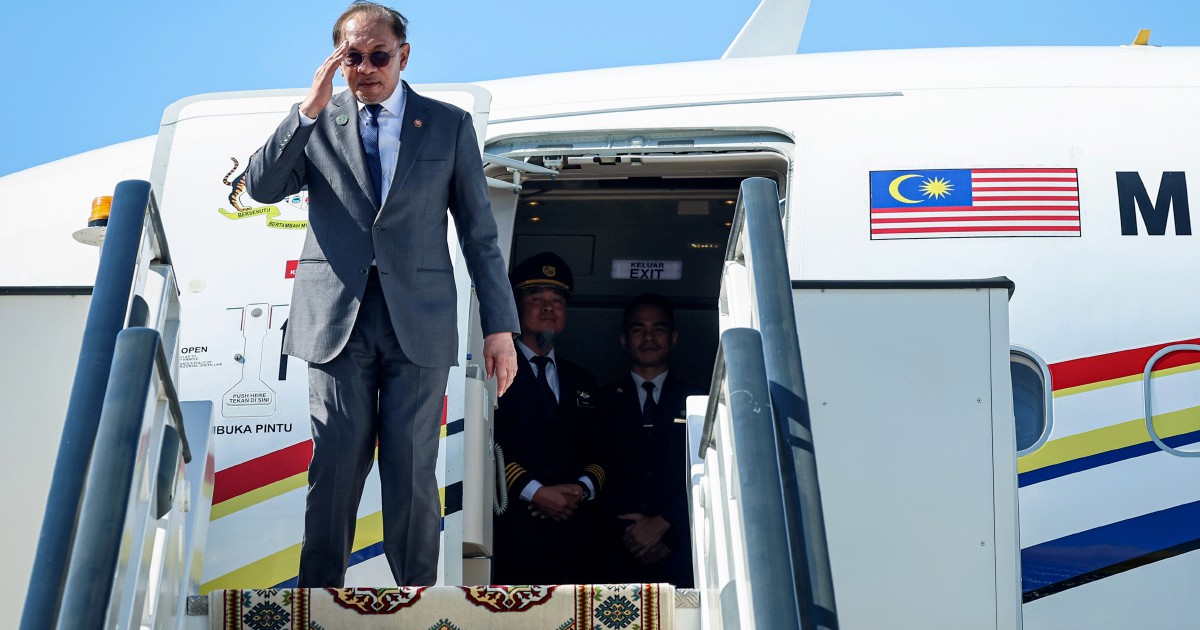
Prime Minister Datuk Seri Anwar Ibrahim touched down in Penang today, transitioning seamlessly from his state visit to Turkmenistan to a packed schedule of engagements on Malaysia's northwest coast. The premier's arrival in Butterworth marks the culmination of his Central Asian diplomatic mission and signals the government's continued emphasis on maintaining visibility in key economic and media hubs across the country.
Anwar's itinerary in Penang centres on his participation in the National Journalists' Day (Hawana) 2026 grand finale, an event that underscores the government's commitment to recognising the media industry's role in nation-building. Hawana, an annual celebration that brings together practitioners and stakeholders from journalism and media, provides a platform for acknowledging contributions to press freedom and professional standards. The premier's attendance at such events reinforces the administration's engagement with the fourth estate, particularly important given ongoing discussions about media regulation and freedom of expression in the region.
Beyond the media-focused proceedings, Anwar's Penang visit encompasses investment-oriented activities designed to attract capital and drive economic development in the state. Penang has long positioned itself as a competitive investment destination, leveraging its strategic geographic location, established manufacturing base, and growing technology sector. The prime minister's presence at these forums sends a signal to both domestic and international investors that the federal government remains committed to supporting economic expansion initiatives at the state level, a sentiment particularly relevant as Malaysia seeks to diversify revenue streams beyond traditional sectors.
The timing of Anwar's Penang stopover reflects the government's approach to combining diplomatic missions with domestic constituency engagement. By travelling directly from Turkmenistan to Penang, the prime minister demonstrates efficient time management while maintaining his responsibilities across multiple portfolios. This pattern of back-to-back regional visits has become characteristic of his leadership style, reflecting the demands of balancing international relations with domestic development priorities.
Turkmenistan, as a Central Asian nation with significant energy resources and growing economic importance along the Belt and Road Initiative corridors, represents a strategic diplomatic engagement point for Malaysia. The bilateral relationship between Malaysia and Turkmenistan encompasses trade, investment, and cultural exchange opportunities. Anwar's visit to Turkmenistan would have addressed these dimensions while positioning Malaysia as an engaged regional player in Asia's broader geopolitical landscape. The transition from Turkmenistan to Penang illustrates how contemporary governance involves constant movement across international and domestic spheres.
Penang itself has emerged as an increasingly important venue for high-level government events. As a state with significant economic output, a substantial media presence, and a diverse population, Penang serves as a bellwether for national sentiments and priorities. The state's importance extends beyond its economic contributions; it represents a test ground for government policies and initiatives. Media engagement activities such as Hawana provide the government opportunities to communicate directly with journalistic communities and shape narratives around policy achievements and future direction.
The investment events that form part of Anwar's Penang schedule align with the government's broader economic agenda, particularly efforts to attract foreign direct investment and support local entrepreneurship. These forums typically feature presentations on investment opportunities, sector-specific briefings, and networking sessions designed to facilitate partnerships between government agencies, local enterprises, and potential investors. For a state like Penang, which has historically depended on manufacturing and increasingly on technology and services sectors, such high-level promotional activities remain essential to maintaining competitive advantage in the regional investment marketplace.
Anwar's presence at the Hawana finale also carries symbolic weight within the context of press-government relations in Malaysia. The event provides an occasion to articulate the government's stance on media independence, professional journalism standards, and the industry's evolving challenges amid digital transformation. As media ecosystems globally face disruption from technological change and shifting audience behaviours, government engagement with media practitioners takes on heightened significance. Recognising journalists through formal events like Hawana demonstrates acknowledgement of media professionals' working conditions and professional contributions.
The sequential nature of Anwar's movements between Turkmenistan and Penang reflects the reality of modern executive governance, where political leaders navigate complex networks of international obligations and domestic responsibilities. His ability to transition rapidly between contexts—from diplomatic negotiations in Central Asia to media engagement on the northwest coast of Peninsular Malaysia—illustrates the multifaceted demands of the prime ministerial office in a country increasingly integrated into regional and global affairs.

