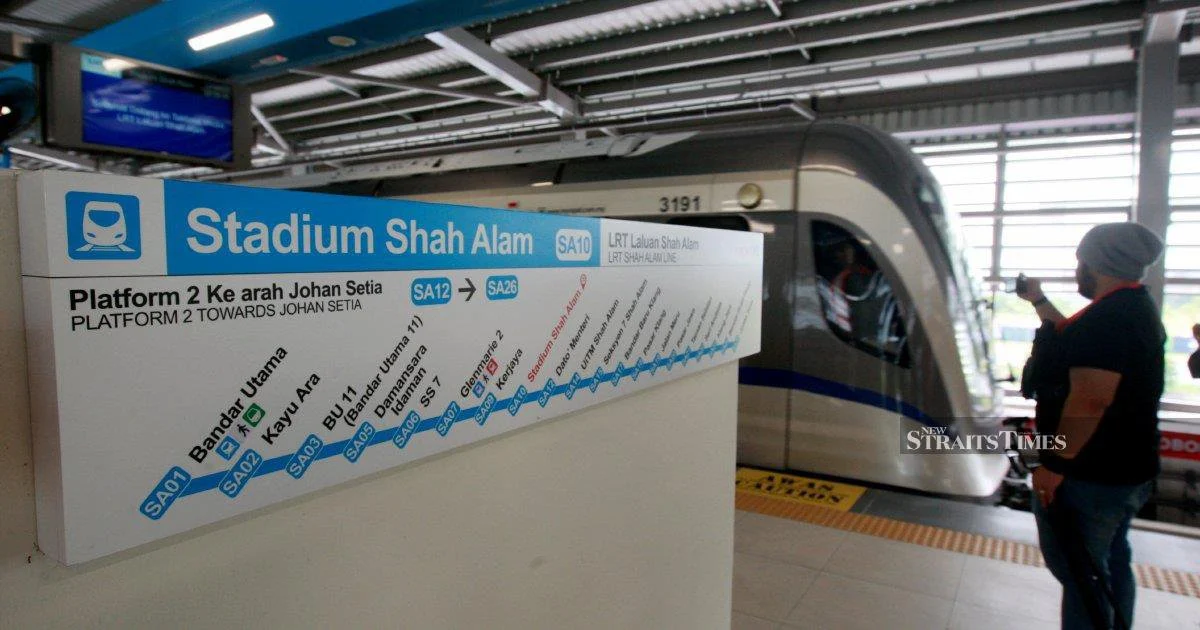
Prime Minister Datuk Seri Anwar Ibrahim is set to formally inaugurate the Light Rail Transit Line 3 (LRT3) Shah Alam extension during an official ceremony this Sunday, paving the way for the new rail corridor to begin full commercial operations the following day. The launch marks a significant milestone in the Klang Valley's ongoing efforts to strengthen its rapid transit infrastructure and alleviate mounting traffic pressures across the metropolitan region.
The LRT3 Shah Alam line represents a substantial expansion of the existing LRT3 network, which previously connected Bandar Utama to Klang. By extending service westward into Shah Alam, the project aims to provide commuters in Selangor's state capital with a modern, reliable alternative to road transport while simultaneously bolstering connectivity throughout the broader Klang Valley corridor. The new stations will serve residential, commercial, and industrial zones that have experienced rapid population and economic growth but have struggled with inadequate public transport options.
Infrastructure development has become an increasingly central pillar of the government's economic and social agenda, particularly in addressing urban congestion that threatens to undermine the region's competitiveness. The Klang Valley, home to over seven million people, remains heavily dependent on private vehicles despite existing rail networks. Persistent traffic bottlenecks on key highways such as the Federal Highway and Middle Ring Road have become emblematic of the challenges facing Malaysia's largest metropolitan area. The LRT3 extension is designed to capture a portion of these trips and reduce strain on road networks while improving air quality and livability.
The timing of the launch also carries political significance, as the government seeks to demonstrate tangible progress on its infrastructure development commitments ahead of various electoral cycles. Public transport improvements have historically been popular policy initiatives that enjoy broad-based support across different socioeconomic groups. By delivering operational rail services that directly impact daily commuting patterns, the administration can point to concrete outcomes that enhance urban residents' quality of life.
The Shah Alam extension follows years of planning, design, and construction phases that encountered the typical challenges associated with major infrastructure projects. These include securing financing, managing right-of-way issues, coordinating with multiple government agencies, and navigating environmental and community concerns. The completion of this phase demonstrates the feasibility of expanding the LRT3 system further, potentially encouraging future extensions that could reach additional underserved areas.
From a regional perspective, the LRT3 Shah Alam line's opening reflects broader trends across Southeast Asia towards investing in rapid transit systems. Countries throughout the region have increasingly recognised that sustainable urban development depends on shifting passenger journeys from automobiles to mass transit. Malaysia's experience with multiple overlapping rail lines—including LRT1, LRT2, the Monorail, the KTM Komuter network, and the Mass Rapid Transit system—illustrates both the benefits and complexities of building integrated networks. Ensuring seamless connections between different rail operators and fare systems remains an ongoing operational challenge that policymakers continue to grapple with.
The LRT3 Shah Alam extension also carries implications for Selangor's economic development trajectory. By improving accessibility to Shah Alam's industrial parks, manufacturing facilities, and emerging commercial zones, the new line could enhance the state's attractiveness to businesses seeking to relocate or expand operations. Better-connected cities generally experience lower logistics costs and enjoy competitive advantages in attracting investment. The ripple effects of improved transport connectivity often extend beyond immediate commuting benefits to influence broader patterns of economic activity and employment distribution.
Operational success of the LRT3 Shah Alam line will depend significantly on factors beyond the inaugural infrastructure itself. Frequency and reliability of service, integration with complementary transport modes such as bus networks and feeder services, and pricing structures all influence whether commuters choose rail over private vehicles. International evidence suggests that adoption rates are maximised when systems offer convenient connections, competitive journey times compared to driving, and affordable fares. The management authority overseeing the LRT3 extension will face pressure to optimise these operational parameters.
Looking ahead, the Shah Alam extension creates a foundation for potential further expansion of the LRT3 system. Several routes have been proposed, including extensions towards Putrajaya and extensions to underserved peripheral areas. However, such extensions typically require substantial capital investment and careful demand forecasting to ensure financial viability. The successful delivery of the current phase will therefore serve as a crucial test case for assessing whether the government and private operators can maintain momentum on subsequent transit infrastructure projects.
For Klang Valley residents, particularly those in Shah Alam and surrounding areas, the commencement of LRT3 service represents a tangible shift in transport options that may gradually reshape commuting patterns and residential preferences. Over time, proximity to rapid transit stations often influences property values and urban development patterns, potentially encouraging denser, more walkable neighbourhoods. The cumulative effect of multiple transport infrastructure improvements across Malaysia's urban centres could ultimately contribute to more sustainable, efficient metropolitan areas.

