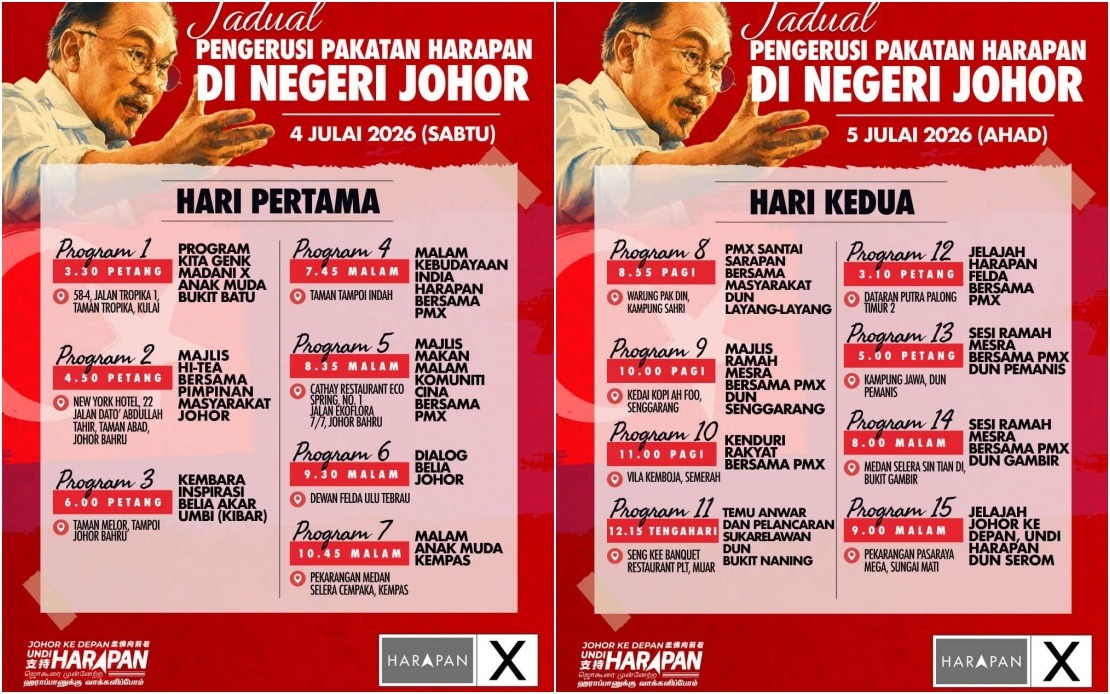
Pakatan Harapan chairman Datuk Seri Anwar Ibrahim is deploying a comprehensive campaign strategy for the 16th Johor state election, committing to attend 15 separate programmes across the state over this weekend to galvanise voter support for 56 PH candidates. The initiative represents a significant show of political force by the national leadership just eight days before polling day on July 11, signalling the coalition's determination to capture or retain ground in a state traditionally considered crucial to Malaysia's political balance.
Anwar's schedule reflects a sophisticated approach to grassroots mobilisation, strategically blending community engagement with cultural outreach and youth-focused initiatives. The design suggests PH recognises that victory in Johor requires more than traditional rallies—it demands direct interaction with diverse voter demographics across urban and rural constituencies. By attending sessions spanning from early morning breakfast gatherings to late evening youth dialogues, the PH chairman is attempting to create multiple touchpoints with the electorate and demonstrate personal commitment to the campaign effort.
The opening day itinerary on Saturday begins with the Kita Genk MADANI x Anak Muda Bukit Batu programme in Kulai at 3.30 pm, establishing early momentum before transitioning into an evening focused on community mobilisation. A hi-tea with Johor community leaders underscores outreach to influential local figures who command respect and networks within their constituencies. The Kembara Inspirasi Belia Akar Umbi initiative in Tampoi targets the grassroots youth movement, a demographic PH has made particular efforts to energise following strong showings among younger voters in recent national elections.
The cultural dimension of Saturday's schedule becomes pronounced through the evening programming. The Harapan Indian Cultural Night with PMX (which appears to reference a senior party figure or the Prime Minister) at Taman Tampoi Indah reflects recognition of Malaysia's significant Indian community and their importance as swing voters. Similarly, the Chinese Community Dinner scheduled later demonstrates a deliberate effort to court the country's Chinese electorate through cultural celebration rather than purely political messaging. This approach acknowledges that in competitive state elections, symbolic representation of multiculturalism matters as much as policy platforms.
By late evening, Anwar transitions to youth-oriented programming with the Johor Youth Dialogue at Dewan Felda Ulu Tebrau and the Anak Muda Kempas Night, programming designed to capture younger voters who may be less engaged with traditional political events. The intensity of the schedule—seven programmes compressed into a single day—suggests PH views this as a crucial final push before early voting commences on July 7. The pacing also tests Anwar's physical stamina and willingness to campaign extensively, a signal that often registers with voters assessing a leader's commitment.
Sunday's agenda adopts a subtly different rhythm, beginning early with a breakfast gathering with Layang-Layang constituents at a local warung, a setting that emphasises accessibility and approachability over formal state apparatus. This constituent-focused engagement before the mid-morning Meet-and-Greet at Dewan Undangan Negeri Senggarang suggests a deliberate effort to address local grievances and concerns before broader campaign messaging. The Kenduri Rakyat Bersama PMX in Semerah, a communal feast format widely used across Malaysian politics to build goodwill, continues this community-centric approach.
The second day incorporates several constituency-specific interventions, including launching the Bukit Naning Volunteers and conducting dedicated meeting sessions in Pemanis and Gambir constituencies. This micro-targeting within the broader state campaign indicates that PH strategists have identified particular constituencies requiring senior leadership attention, suggesting competitive races in these areas. The Jelajah Harapan Felda Bersama PMX initiative in Dataran Putra Palong Timur 2 specifically targets the Federal Land Development Authority (FELDA) settler communities, a segment that has historically swung between major coalitions and remains strategically significant.
The campaign concludes with the Jelajah Johor Ke Depan, Undi Harapan DUN Serom programme at Sungai Mati at 9 pm, ending the intensive two-day effort on a forward-looking note with messaging about Johor's future trajectory. The programme naming suggests PH is framing the election around developmental and governance promises rather than negative campaigning. This positioning may reflect confidence in PH's record or calculations that constructive messaging resonates better with Johor's voting intentions.
For Malaysian observers and regional analysts, Anwar's commitment of personal time and energy to the Johor campaign underscores how critically important state-level elections remain to national political calculations. While federal politics dominate headlines, state governments control significant resources and can strengthen or weaken a coalition's position heading into future national elections. Johor's size, economic importance, and historical role as a Barisan Nasional stronghold make it particularly consequential for PH's long-term political sustainability.
The scale of this weekend campaign also reflects broader tactical considerations within PH itself. By maintaining high-visibility leadership engagement, national figures like Anwar attempt to energise party machinery and volunteers who often rely on leadership signals to gauge campaign intensity. The public announcement through Facebook of these 15 programmes also sets expectations among supporters and media observers, creating accountability for both candidate performance and party discipline.
Early voting scheduled for July 7 introduces an additional urgency to this weekend's programming, as a substantial portion of the electorate may have already voted by the time polling day arrives on July 11. This compressed timeline explains why PH leadership is orchestrating such an intensive schedule—the final full weekend before early voting represents perhaps the last opportunity for sustained direct campaigning to undecided or persuadable voters.
As Malaysia's political landscape continues evolving with stronger emphasis on state-level competition and multiracial coalition building, Anwar's 15-programme Johor weekend exemplifies how modern Malaysian campaign strategy combines targeted community engagement, cultural outreach, and leadership visibility in pursuit of electoral advantage. The outcome of the Johor election will provide crucial insights into PH's continued capacity to maintain and expand its electoral coalition across diverse Malaysian constituencies.

