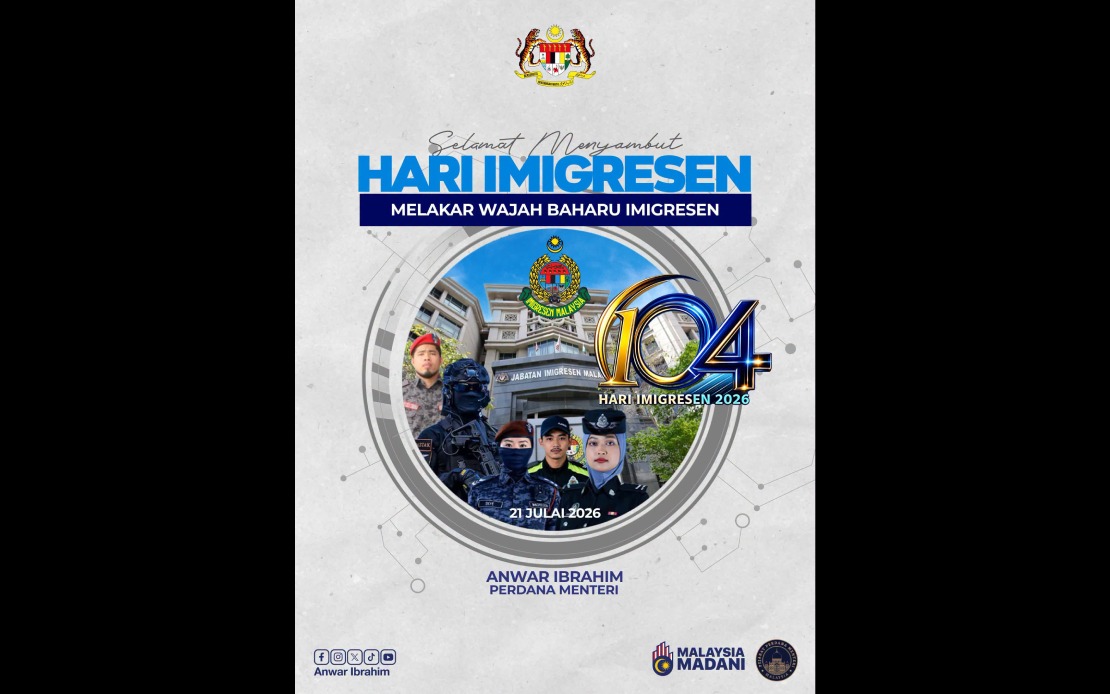
Prime Minister Datuk Seri Anwar Ibrahim has directed all personnel within the Immigration Department to execute their duties with unwavering integrity whilst maintaining a steadfast opposition to any form of misconduct or corrupt practices. The address, delivered through a Facebook post marking Immigration Day on July 21, underscores the government's commitment to institutional reform and ethical governance across the civil service. This public call to action signals renewed momentum in the administration's anti-corruption agenda, a priority that has gained prominence amid growing public scrutiny of governance standards across multiple government agencies.
Beyond the emphasis on integrity, Anwar stressed that Immigration Department staff must ground their professional conduct in compassion and empathy. This dual focus on both stringent ethical standards and human-centred service reflects a broader policy direction aimed at rebuilding public trust in government institutions. The Prime Minister envisioned immigration officials delivering services that are not only efficient and courteous but also reflective of Malaysia's commitment to professionalism on the global stage. This framing suggests that departmental reforms extend beyond internal compliance—they represent an investment in Malaysia's international reputation and soft power.
The timing of Anwar's statement carries particular significance given the persistent challenges surrounding immigration services in Southeast Asia. Corruption within immigration systems has long been identified as a vulnerability by international observers, affecting everything from document processing to border security. Malaysia, as a major hub for regional travel and commerce, faces heightened pressure to maintain robust systems that prevent exploitation while facilitating legitimate movement. By publicly emphasising anti-corruption measures, the Prime Minister addresses both domestic accountability concerns and external confidence in Malaysia's administrative capacity.
Importantly, the 2026 Immigration Day theme, "Charting a New Face for Immigration," suggests that the government is positioning this as a transformative moment for the agency. This thematic choice indicates recognition that immigration services require modernisation and cultural reform to meet contemporary expectations. Such messaging aligns with international best practices where immigration agencies are increasingly viewed not merely as security gatekeepers but as first-contact points reflecting a nation's values and competence. For Malaysian readers and those interacting with the system, this framing promises a departure from outdated bureaucratic approaches.
The Prime Minister's call also resonates within the context of Malaysia's broader governance challenges. The country has faced recurring instances of institutional lapses requiring intervention and reform. By directly addressing the Immigration Department, Anwar signals that no agency is exempt from scrutiny, whilst simultaneously offering support for personnel committed to ethical conduct. This approach combines accountability with institutional strengthening—a delicate balance that has proven effective in jurisdictions where civil service reform succeeded in tandem with corruption prevention campaigns.
For frontline immigration officers, the message carries practical implications. Officers working at airports, land borders, and ports operate under conditions where discretionary decision-making intersects with opportunities for impropriety. The Prime Minister's emphasis on integrity establishes a clear organisational expectation, whilst the accompanying language about compassion and professionalism acknowledges the complexity of immigration work and the human dimensions involved in processing applications and managing border security. This dual messaging aims to create conditions where ethical conduct is both mandated and culturally reinforced.
From a Southeast Asian perspective, Malaysia's immigration system directly affects the region. Millions of workers, tourists, and business travellers navigate Malaysian immigration annually. Neighbouring countries such as Indonesia, Thailand, and the Philippines maintain substantial populations within Malaysia, whilst Malaysian nationals maintain significant diaspora communities throughout the region. Strengthening integrity within Malaysia's immigration services therefore carries regional implications, potentially establishing standards that encourage similar reforms across ASEAN jurisdictions and contributing to the broader regional project of enhancing governance credibility.
The initiative also intersects with Malaysia's economic interests. International investors assess governance quality when making decisions about locating operations or increasing investment. An immigration system marred by corruption or inefficiency becomes a friction point in foreign direct investment calculations. Conversely, demonstrating tangible improvements in institutional integrity—through public commitments, enhanced training, and accountability mechanisms—can strengthen Malaysia's competitive positioning in the region's race to attract capital and talent. In this sense, Anwar's statement serves both ethical and economic purposes.
Going forward, the efficacy of this anti-corruption call will depend on implementation mechanisms. Establishing clear reporting channels for corruption allegations, implementing transparent decision-making processes, and ensuring accountability for violations represent critical follow-through measures. International observers and civil society organisations will likely monitor whether this pronouncement translates into substantive operational changes or remains primarily rhetorical. The commitment to combining integrity with compassion also requires careful training and resource allocation to ensure that officers can perform their duties without resort to corrupt practices despite potential pressures or inadequate systems infrastructure.
For Malaysian citizens and residents, these statements carry broader significance regarding government accountability and service standards. The immigration system directly impacts access to travel, employment opportunities, and family reunification. Public commitments to ethical conduct and professional service delivery address longstanding citizen concerns about bureaucratic fairness and impartiality. Whether this translates into perceptible improvements in the citizen experience—faster processing, clearer procedures, fairer outcomes—will ultimately determine whether the initiative achieves its intended effect of restoring institutional credibility.

