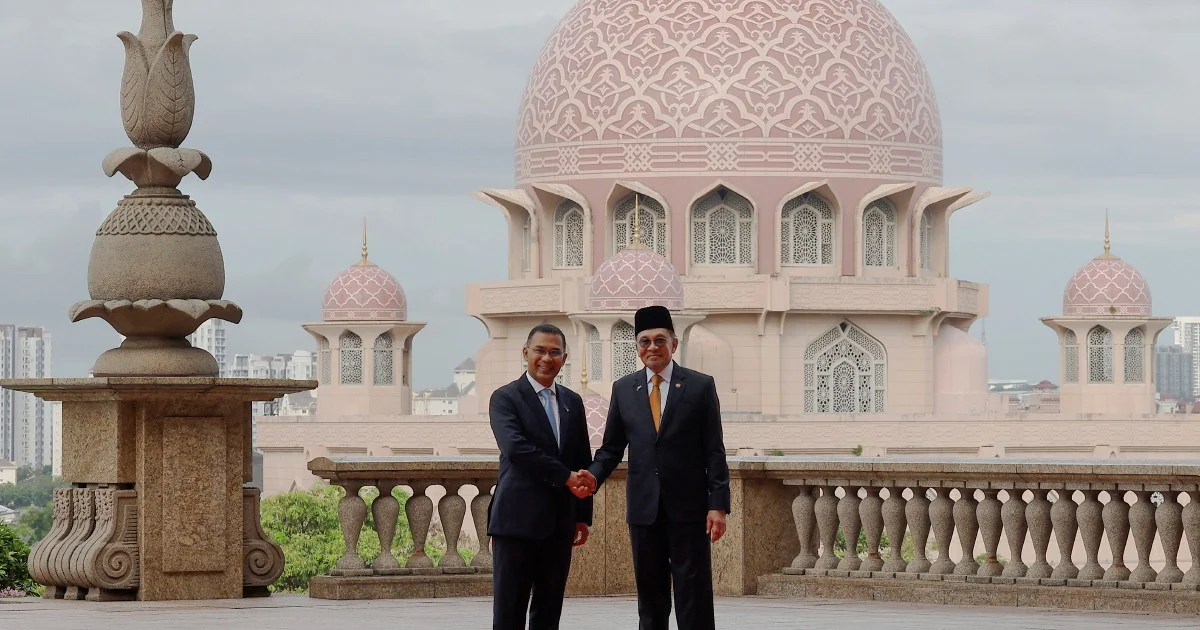
Prime Minister Anwar Ibrahim has welcomed Bangladesh Prime Minister Tarique Rahman to Malaysia, extending an official reception at the Perdana Putra Complex in Putrajaya. The ceremonial visit underscores the strengthening bilateral relationship between the two South and Southeast Asian nations, as both governments seek to deepen cooperation across multiple sectors including trade, investment, and security.
Tarique Rahman's two-day sojourn marks a significant diplomatic engagement in the region at a time when Bangladesh faces considerable domestic and economic challenges, and Malaysia continues positioning itself as a hub for regional collaboration. The timing of the visit reflects the continued importance both nations place on maintaining robust ties, particularly as regional geopolitical dynamics shift and economic pressures mount on both sides.
The official reception at Malaysia's seat of government signals the high-level nature of this engagement. Such ceremonial protocols are typically reserved for visits that carry substantial strategic weight, suggesting the two administrations have identified key areas requiring collaborative attention. For Malaysia, hosting such delegations reinforces its role as a credible partner in South Asian affairs, while for Bangladesh, the visit provides an opportunity to explore economic partnerships with a more established Southeast Asian economy.
Bilateral relations between Kuala Lumpur and Dhaka have historically centred on trade agreements and people-to-people exchanges, given the substantial Bangladeshi diaspora in Malaysia. The construction and domestic work sectors have particularly benefited from labour migration between the nations, though recent years have seen both countries grappling with migration management and worker welfare issues that require ongoing dialogue and policy coordination.
For Malaysian readers, the significance of this visit extends beyond ceremonial courtesies. Bangladesh represents a major market for Malaysian services and investment, while also serving as a potential source for skilled and semi-skilled labour to address Malaysia's workforce requirements. Regional economic integration initiatives such as ASEAN Plus arrangements could feature in discussions, particularly given Bangladesh's observer status in various Asian regional forums.
The visit also carries implications for multilateral initiatives in which both nations participate. Cooperation on development issues, climate change adaptation—a critical concern for low-lying Bangladesh—and counterterrorism efforts are likely agenda items. Malaysia's experience in managing religious and ethnic diversity may also offer valuable insights for Bangladesh as it navigates its own complex social landscape.
From a strategic perspective, the visit demonstrates ongoing efforts to maintain stable neighbourly relations across South Asia and Southeast Asia. As global powers increasingly focus on Indo-Pacific affairs, mid-sized nations like Malaysia and Bangladesh must demonstrate sustained commitment to intra-regional cooperation to maintain relevance and pursue national interests effectively within emerging regional architectures.
The Perdana Putra Complex, Malaysia's administrative headquarters, serves as the venue for high-level state visits and bilateral negotiations. Rahman's reception there signals that substantive discussions are anticipated, likely involving senior government officials from both nations exploring avenues for expanded cooperation and addressing any outstanding concerns in their bilateral relationship.
Economic considerations will undoubtedly feature prominently during discussions. Malaysia's established manufacturing and services sectors present opportunities for Bangladeshi investment and joint ventures, while Malaysian entities continue seeking opportunities in Bangladesh's growing economy. Trade volumes between the nations, though significant, remain below potential given the complementary nature of their economies and geographic proximity.
Cultural and educational exchanges also deserve attention in bilateral contexts. Malaysian universities increasingly attract Bangladeshi students, fostering networks that benefit both nations long-term. Religious and cultural organisations in both countries share common interests in interfaith dialogue and social cohesion initiatives that could be amplified through governmental support and coordination.
The visit reflects broader patterns of diplomatic engagement in Southeast Asia, where nations maintain regular high-level exchanges to address shared concerns ranging from maritime security to disaster management. Malaysia's role as a fellow Muslim-majority nation and ASEAN member provides particular resonance for Bangladesh, which values relationships with influential regional players capable of amplifying its interests in multilateral forums.
Looking ahead, observers will monitor outcomes from Rahman's meetings with Malaysian leadership to assess potential new initiatives or deepening of existing cooperation frameworks. Joint statements and bilateral agreements may emerge from the discussions, potentially setting the agenda for enhanced engagement in coming months and years. Such visits, though often overlooked by general audiences, frequently establish foundations for significant policy developments affecting trade, security, and people-to-people connections between nations.

