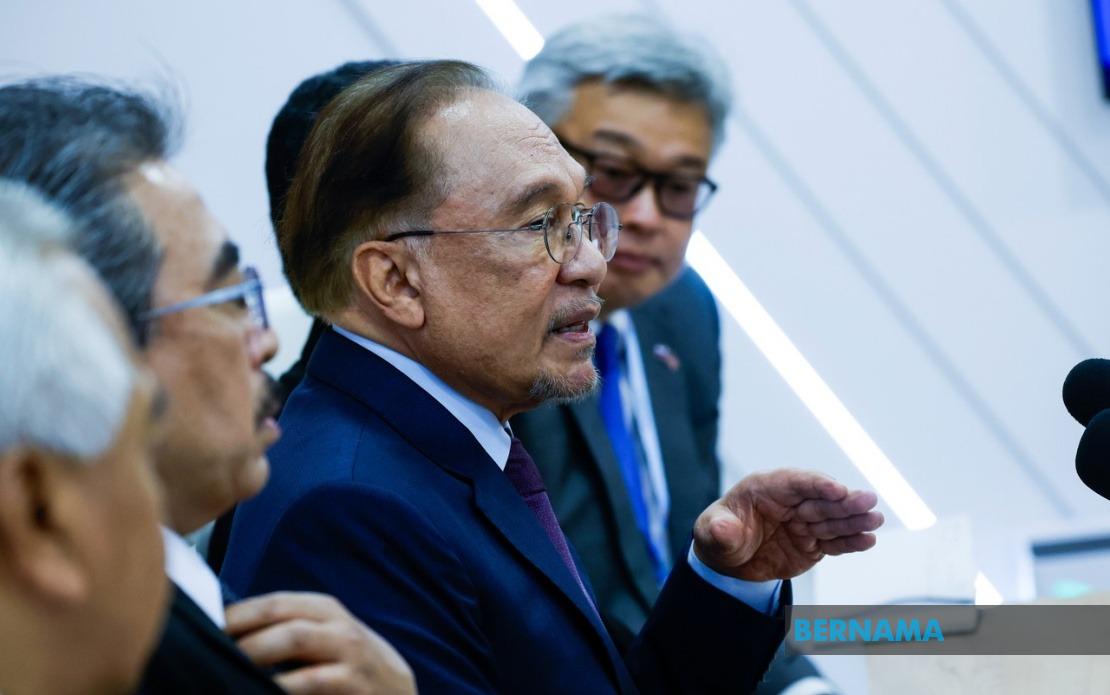
Prime Minister Datuk Seri Anwar Ibrahim's two-day working visit to Kazan has delivered tangible results for Malaysia's energy security strategy, with Russia committing to a long-term framework for supplying petroleum products, crude oil, and natural gas. The visit to attend the 35th ASEAN-Russia Commemorative Summit represents a significant recalibration of Malaysia's approach to energy diversification, moving away from vulnerable short-term contracts towards stable, predictable multi-year supply agreements that provide greater insulation against market volatility and geopolitical disruption.
The cornerstone achievement of the mission involves transitioning from Malaysia's traditional reliance on annual or seasonal energy arrangements to agreements spanning multiple years. Anwar disclosed during the closing press conference that the bilateral framework has already secured high-level approval, with company delegations already on the ground to finalise the legal documentation. The structure of these negotiations reveals the advanced stage of implementation, with draft texts completed and core principles settled. What remains are technical reviews and formal signatures—procedural steps the Prime Minister indicated would be accelerated upon his return to Kuala Lumpur.
This strategic pivot towards Russian energy partnerships reflects Malaysia's recognition that global supply chains have become increasingly fragmented and unpredictable. The nation faces a complex energy landscape where traditional suppliers face capacity constraints, political complications, or price volatility that threatens manufacturing competitiveness and domestic energy security. By securing long-term contracts with Moscow, Malaysia reduces exposure to sudden price spikes or supply interruptions that characterised earlier relationships with other major producers. The arrangement also signals that Malaysia is willing to engage pragmatically with diverse geopolitical actors, prioritising national energy interests over ideological alignments.
During bilateral discussions with Russian President Vladimir Putin on Tuesday, Anwar expressed gratitude for Moscow's support in expanding energy cooperation frameworks, particularly through Petronas' involvement in Russian hydrocarbon projects. The elevation of energy cooperation to a strategic bilateral priority underscores how Malaysia views the relationship beyond traditional diplomatic courtesies. The involvement of state-owned Petronas in negotiations demonstrates that this represents genuine commercial engagement rather than symbolic posturing, with Malaysia's flagship energy company positioned to execute investments and operational activities across Russia's vast petroleum and natural gas infrastructure.
Beyond energy, Anwar articulated a broader strategic repositioning that requires Malaysia to adopt more assertive economic engagement with emerging markets and non-traditional partners. He cautioned against excessive caution in international economic dealings, suggesting that Malaysia's historical approach of carefully calibrated relationships may have constrained potential opportunities for growth and diversification. This rhetorical shift indicates a government increasingly comfortable with multi-alignment policies that engage Western allies whilst simultaneously deepening partnerships with Moscow, Beijing, and other non-Western powers. For Malaysian businesses, such positioning potentially opens doors to Russian markets, supply chains, and investment opportunities previously constrained by geopolitical considerations.
The visit also yielded practical measures to facilitate people-to-people exchanges and tourism flows. Anwar called for expedited implementation of visa-free travel arrangements and establishment of direct flights connecting Malaysia and Russia, recognising that energy partnerships function most effectively when supported by broader societal connections. These proposals address genuine friction points in the bilateral relationship, as visa procedures and indirect routing via third countries have historically limited tourist numbers and business travel. Direct connectivity would reduce transaction costs for Malaysian companies exploring Russian opportunities whilst facilitating cultural and educational exchanges that strengthen long-term institutional ties.
At the regional level, the finalisation of the ASEAN-Russia Strategic Programme on Trade and Investment Cooperation 2026-2035 provides a structured framework for expanding economic relationships across the ten-member association. This ten-year programme signals Moscow's commitment to sustained engagement with Southeast Asia despite Western sanctions and geopolitical isolation, whilst offering ASEAN nations a counterweight to other external powers. For Malaysia, positioning itself as a bridge between ASEAN consensus-building and Russian interests enhances its diplomatic influence within the regional bloc and with Moscow simultaneously.
The trade statistics underscore Russia's growing importance to ASEAN economies. Total ASEAN-Russia trade reached US$18.1 billion in 2024, whilst Russian foreign direct investment in the association totalled RM367.90 million (US$92.97 million). For Malaysia specifically, Russia ranked ninth among European trading partners in 2025, with bilateral commerce valued at RM8.72 billion (US$2.04 billion). Malaysian exports to Russia centre on electrical and electronic products, machinery, equipment and components, and processed foods—sectors where Malaysian manufacturers have developed genuine competitive advantages. Conversely, Malaysia imports petroleum products, minerals, chemicals, and chemical-based goods, creating natural complementarities that long-term energy agreements will only strengthen.
During separate bilateral discussions with Rustam Minnikhanov, Head of the Republic of Tatarstan, Anwar identified opportunities spanning trade, investment, education, tourism, the halal sector, technology, and talent development. Tatarstan's position as one of Russia's foremost oil-producing regions makes it a natural partner for Petronas and Malaysian petroleum engineers exploring downstream activities, refining operations, and petrochemical ventures. The explicit mention of the halal economy reflects Malaysia's strategic positioning as a global leader in Islamic finance and halal certification—areas where Tatarstan and broader Russia possess growing interest as they cultivate trade relationships with Muslim-majority markets to offset Western economic restrictions.
Anwar's itinerary extended beyond Kazan to encompass a subsequent two-day official visit to Turkmenistan, signalling that Central Asian energy partnerships represent a comprehensive strategic initiative rather than isolated bilateral engagement. Turkmenistan possesses vast natural gas reserves and has historically sought alternative export routes and buyers beyond traditional relationships with Russian and Chinese entities. Malaysia's outreach to Turkmenistan suggests a government determined to construct diversified supply relationships across the region, reducing dependence on any single supplier whilst positioning Malaysian companies to participate in Central Asian energy infrastructure and development projects.
The broader context for this diplomatic offensive involves growing global energy uncertainty stemming from geopolitical tensions, supply chain fragmentation, and volatile commodity prices. Malaysia's manufacturing sector—particularly energy-intensive industries such as petrochemicals, refining, and processing—requires stable, competitively priced energy inputs to maintain international competitiveness. By securing long-term Russian supplies at presumably negotiated rates, Malaysia protects industrial profitability and employment whilst signalling to international investors that the nation provides reliable access to critical inputs. This energy security foundation becomes increasingly valuable as regional tensions rise, global supply routes face disruption, and energy availability becomes weaponised as a geopolitical tool.
Anwar characterised the Kazan visit as productive and successful, expressing optimism that the subsequent Turkmenistan engagement would yield even more substantial outcomes. Such enthusiasm reflects genuine progress on concrete deliverables rather than diplomatic pleasantries. The involvement of Investment, Trade and Industry Minister Datuk Seri Johari Abdul Ghani and Economy Minister Akmal Nasrullah Mohd Nasir demonstrated that Malaysia mobilised senior economic policymakers for these negotiations, signifying the importance assigned to these energy relationships at the highest governmental levels. For Malaysian stakeholders, this high-level engagement suggests that long-term Russian energy supplies will receive consistent policy support and regulatory streamlining to enable swift implementation once formal agreements are concluded.

