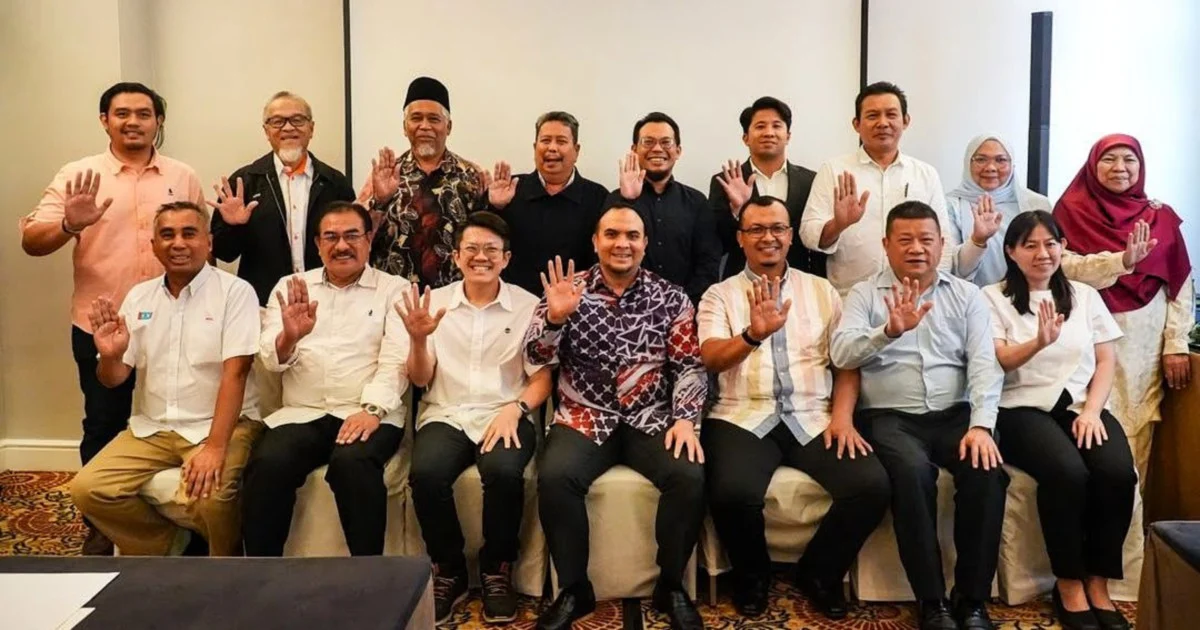
Prime Minister Datuk Seri Anwar Ibrahim's political secretary, Datuk Ahmad Farhan Fauzi, has assumed the role of Pahang Pakatan Harapan (PH) chairman, a move that reflects the leadership's strategy to strengthen party machinery in one of Malaysia's key electoral battlegrounds. The appointment represents a significant personnel shift within the coalition's state-level administration and underscores the importance placed on unified command structures as the government consolidates its political position.
Ahmad Farhan's elevation to the chairmanship position comes at a critical juncture for the ruling coalition. Pahang has remained a contested political landscape, with electoral outcomes historically volatile and support distributed unevenly across the state's diverse communities and regions. By installing a trusted lieutenant from his immediate circle, Anwar appears intent on ensuring alignment between federal-level party objectives and ground-level execution in the state, a persistent challenge for multi-layered political organisations operating across Malaysia's varied geographical and demographic contexts.
The appointment carries practical implications for how PH coordinates its operations in Pahang. A political secretary working directly under the Prime Minister occupies a unique position, having direct access to the apex of government decision-making while maintaining party-facing responsibilities. This dual positioning allows Ahmad Farhan to bridge communication gaps that sometimes emerge between federal party leadership and state-level operatives, potentially accelerating implementation of decisions and reducing bureaucratic friction within organisational hierarchies.
Historically, PH has faced challenges maintaining coherence in states where it lacks overwhelming electoral majorities. Internal disagreements between coalition partners—principally PKR, DAP, Amanah, and various smaller groups—have occasionally surfaced in Pahang, particularly regarding candidate selection, resource allocation, and representation of local interests. Installing Ahmad Farhan as chairman suggests an effort to inject fresh stabilising influence and establish clearer lines of accountability within the party structure.
The timing of this appointment also warrants examination. Malaysia's political landscape continues evolving following the 2022 general election, which produced a hung Parliament and necessitated complex negotiations resulting in the current federal government. Consolidating regional leadership teams before the next general election cycle—expected sometime within the next two years—represents prudent political management. Building strong organisational foundations at state level, where campaigning ultimately occurs and votes are mobilised, forms essential groundwork for electoral success.
Ahmad Farhan's background and the confidence Anwar has placed in him suggest expectations for dynamic, forward-thinking leadership. His proximity to the Prime Minister also means he can channel policy priorities and government achievements directly to party members and supporters, translating federal-level initiatives into locally resonant messaging. This capability proves valuable in places like Pahang, where constituent concerns range from rubber and palm oil farming to tourism development and defence of Malay-Muslim interests, requiring nuanced communication that balances diverse priorities.
For PH more broadly, the appointment signals that Anwar intends moving beyond maintaining the status quo towards actively strengthening the coalition's competitive position. Rather than leaving state chairmanships to emerge organically from local political networks, the Prime Minister appears willing to directly intervene in selecting leadership, suggesting confidence in his ability to impose organisational discipline. Whether such top-down appointments generate enthusiasm among grassroots activists or provoke resentment over perceived centralisation remains an open question, though successful parties typically balance these tensions effectively.
Pahang's political economy demands particular attention from ruling coalition leadership. The state encompasses significant Bumiputera interests, substantial Chinese communities in urban centres, and important agricultural constituencies whose livelihoods depend on commodity prices and trading arrangements influenced by federal policy. A PH chairman capable of synthesising these competing interests while maintaining party unity serves valuable purposes beyond simple administrative coordination.
The broader regional context matters too. Pahang neighbours Selangor, where PH faces different electoral dynamics and organisational challenges. Leadership decisions in one state inevitably influence perceptions and dynamics in neighbouring areas. Ahmad Farhan's appointment in Pahang may therefore ripple across PH's footprint in the broader Klang Valley and central region, either inspiring confidence in central leadership's commitment or generating concerns about consolidation of power within narrower circles.
Moving forward, Ahmad Farhan's performance in this role will significantly influence both PH's trajectory in Pahang and broader perceptions of Anwar's leadership style. Success would involve simultaneously managing party dynamics, maintaining coalition cohesion, delivering visible policy outcomes, and building organisational capacity for upcoming electoral campaigns. Failure would vindicate critics who argue that relying on centrally-appointed loyalists rather than developing organically-rooted local leadership creates long-term vulnerabilities. The coming months and years will reveal whether this appointment proves a masterstroke of political management or a cautionary example of over-centralisation.

