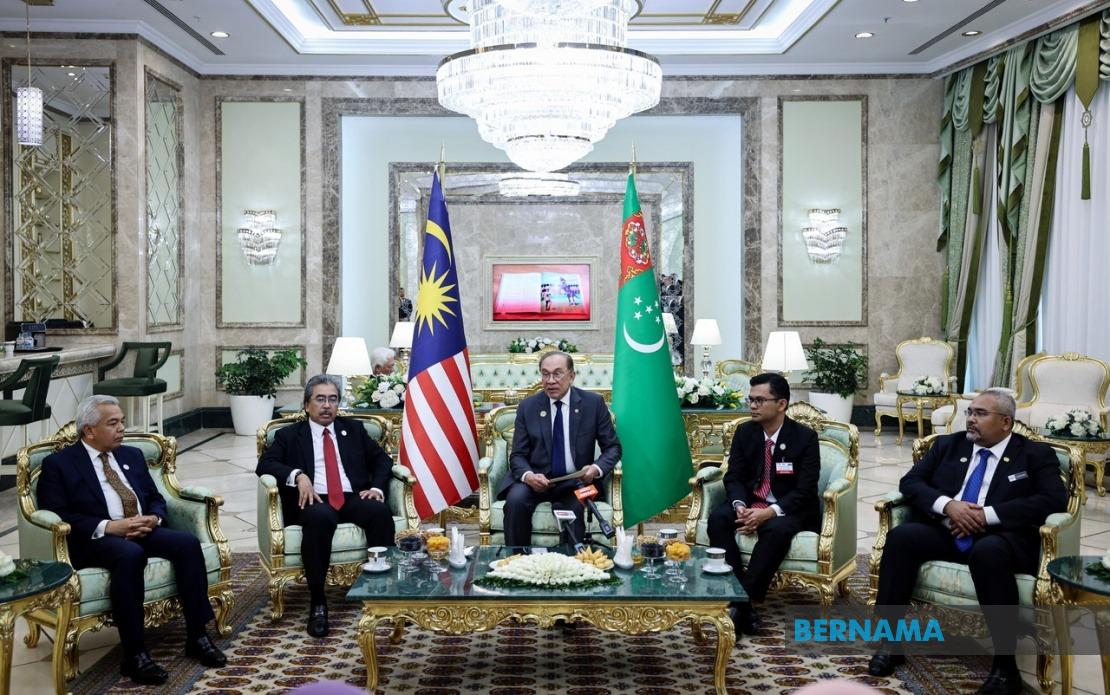
Prime Minister Datuk Seri Anwar Ibrahim returned from Turkmenistan having accomplished key diplomatic objectives, characterizing the two-day working visit as a watershed moment in Malaysia-Turkmenistan relations. The visit, which commenced on June 18, represents Anwar's inaugural official engagement with the Central Asian nation since his ascension to the Prime Minister's office in November 2022, coming at the formal invitation of Turkmenistan President Serdar Berdimuhamedov.
Anwar's assessment, shared through a Facebook post on June 19, emphasized that the delegation achieved its core aims of reinforcing friendly relations and establishing meaningful strategic cooperation frameworks between Kuala Lumpur and Ashgabat. The Prime Minister specifically highlighted the potential within bilateral engagement to unlock new collaborative pathways across multiple sectors, with particular emphasis on energy resources—an area where Turkmenistan possesses substantial reserves and technical expertise that align closely with Malaysia's long-term economic interests.
The energy sector emerged as the centrepiece of discussions during the visit, reflecting both nations' recognition of untapped potential in this domain. Turkmenistan sits atop one of the world's largest natural gas reserves and possesses considerable oil resources, making energy cooperation a logical foundation for deepened economic ties. For Malaysia, such partnerships could enhance energy security diversification while opening investment opportunities for Malaysian enterprises, particularly through PETRONAS involvement in regional projects. The framing of energy cooperation as offering "great potential" underscores how both governments view this sector as capable of delivering tangible prosperity benefits.
The composition of Anwar's delegation revealed the government's prioritization of this engagement across multiple policy dimensions. Minister of Investment, Trade and Industry Datuk Seri Johari Abdul Ghani's participation signalled Malaysia's readiness to explore trade and investment mechanisms, while Minister of Economy Akmal Nasrullah Mohd Nasir's attendance indicated focus on broader economic integration frameworks. The inclusion of PETRONAS representatives alongside Prime Minister's Office and Foreign Ministry officials demonstrated a whole-of-government approach, with Malaysia's national oil company positioned to evaluate commercial opportunities and technical partnerships.
Anwar expressed formal gratitude to President Berdimuhamedov and the Turkmenistan government for the reception extended to the Malaysian delegation, acknowledging the ceremonial warmth and diplomatic courtesy that characterize official state visits. Such acknowledgements, while customary in diplomatic communication, carry significance in establishing positive momentum for future engagements. The Prime Minister's specific mention of appreciation for the Malaysian Embassy in Ashgabat, ministry officials, PETRONAS personnel, security teams, and accompanying media reflected an inclusive acknowledgement of the organizational infrastructure required to execute successful high-level diplomacy.
The timing of this inaugural visit carries geopolitical implications for Malaysia's positioning in Central Asian affairs. By prioritizing engagement with Turkmenistan under the current administration, Malaysia signals intent to expand its diplomatic and economic footprint beyond traditional Southeast Asian and Middle Eastern partnerships. This diversification strategy acknowledges that prosperity increasingly depends on cultivating relationships across diverse regions and leveraging complementary economic strengths. For Malaysian investors and businesses, the visit represents an opening to explore market entry and partnership opportunities in a market historically less engaged with Southeast Asian economic actors.
Turkmenistan's strategic location along historic trade corridors linking Europe, Asia, and the Middle East adds another dimension to Malaysia's interest in deepening ties. Enhanced bilateral cooperation could position Malaysian enterprises to participate in regional infrastructure and energy projects that leverage Turkmenistan's geographic advantages. Additionally, cultural and educational exchanges, often underexplored between Malaysia and Central Asian nations, could gain momentum through high-level political backing established during such visits.
The characterization of this visit as opening "a new chapter" in bilateral cooperation suggests the Malaysian government perceives this as a departure point from previous engagement levels. This language indicates ambitions for substantive relationship deepening rather than maintaining status quo interactions. The emphasis on mutual interest areas and shared prosperity reflects a mutual benefits framework rather than a zero-sum approach to bilateral relations—a perspective increasingly important in contemporary Southeast Asian diplomacy.
For Malaysian readers, the significance extends beyond headline-level diplomatic courtesy. Successful energy partnerships with Turkmenistan could contribute to Malaysia's energy resilience, particularly as the nation transitions energy strategies. Moreover, opportunities for Malaysian companies to engage in Central Asian markets expand the geographic scope for economic growth and employment creation. The visit exemplifies how political leadership engagements translate into institutional frameworks—the agreements and understandings likely established during this visit will shape business opportunities and economic ties for years forward.
The delegation's successful navigation of what Anwar termed "smooth arrangements" suggests both nations' administrations invested effort in substantive preparation. This groundwork typically precedes formal agreements on trade preferences, investment guarantees, visa facilitation, and sector-specific cooperation frameworks. While specifics of such understandings remain to be formally announced, the Prime Minister's positive characterization suggests negotiations proceeded constructively.
Looking forward, the visit establishes a foundation upon which Malaysia can build sustained engagement with Turkmenistan and potentially other Central Asian nations. Such relationships, while not commanding headline attention comparable to larger powers' diplomacy, contribute meaningfully to Malaysia's economic resilience and global standing. For a middle-income country seeking to advance prosperity through diversified international partnerships, Central Asian engagement represents an underutilized opportunity—one that Anwar's visit has brought into sharper diplomatic focus.

