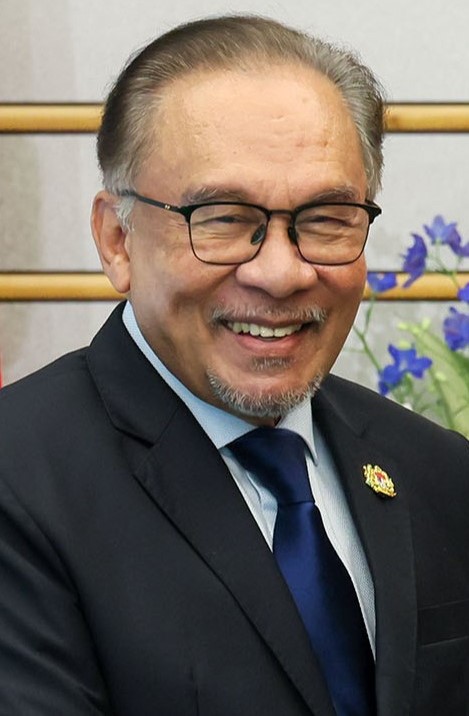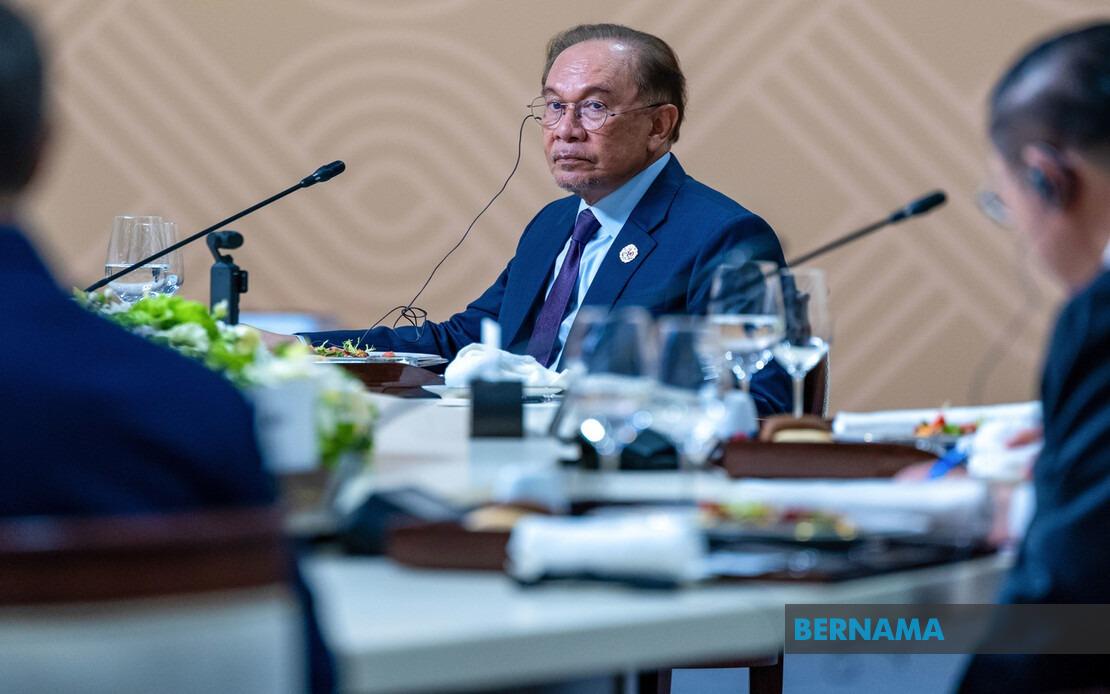
Prime Minister Datuk Seri Anwar Ibrahim has called for ASEAN and the Shanghai Cooperation Organisation to combine their institutional strengths in addressing two of the region's most pressing challenges: transnational organised crime and energy security. Speaking during an ASEAN-Russia working lunch in Kazan on June 18, Anwar outlined a strategic vision for deepening cooperation between the 11-member Southeast Asian bloc and the 10-member SCO, arguing that many contemporary threats demand coordinated responses across borders rather than isolated national efforts.
The Malaysian leader pointed to the 2005 memorandum of understanding between ASEAN and SCO as proof that both organisations already possess the diplomatic and institutional scaffolding necessary for enhanced cooperation. That agreement explicitly encompasses counter-terrorism operations, drug and narcotics control, money laundering prevention, and energy collaboration spanning hydroelectric power and biofuels. Rather than negotiating entirely new frameworks, Anwar suggested, the two organisations should build methodically on this existing foundation by identifying specific, achievable objectives with realistic timelines and measurable outcomes.
Anwar identified online scams, illicit financial flows, and human trafficking as particularly acute challenges requiring urgent joint action. These criminal activities increasingly transcend national boundaries at speeds that outpace individual countries' capacity to respond effectively. By establishing robust intelligence-sharing mechanisms and investing in capacity-building programmes across member states, ASEAN and SCO could create a more integrated enforcement network capable of detecting and disrupting criminal networks before they establish deep roots in multiple jurisdictions. This approach would be especially beneficial for smaller Southeast Asian nations that lack the technological infrastructure or personnel resources to combat sophisticated transnational criminal enterprises independently.
On energy security, Anwar emphasised the complementary strengths that SCO membership brings to the table. The organisation encompasses several major energy-producing nations, including Russia, Kazakhstan, and Uzbekistan, alongside countries with advanced expertise in energy technologies. This combination of resource endowment and technical knowledge creates opportunities for practical cooperation that would benefit ASEAN members seeking to strengthen their energy independence and diversify supply sources. For Malaysia, which relies on energy imports and faces mounting pressure to transition away from fossil fuels, such partnerships could prove strategically valuable.
The Prime Minister articulated a comprehensive energy cooperation agenda extending beyond traditional hydrocarbon sourcing. He highlighted energy efficiency improvements, grid modernisation and reliability, liquefied natural gas development, renewable energy integration, and knowledge transfer regarding safety protocols and system resilience as priority areas. These interconnected fields reflect the reality that modern energy security encompasses not merely ensuring adequate supply volumes but also building resilient, efficient, and environmentally sustainable systems capable of withstanding shocks. For Malaysian audiences, Anwar's emphasis on cleaner energy transitions carries particular resonance given growing domestic concerns about air quality, climate vulnerability, and long-term resource management.
Anwar extended his cooperation agenda to encompass the Eurasian Economic Union, where ASEAN has already established foundational frameworks through previous agreements. Rather than allowing these institutional arrangements to remain dormant or ceremonial, he advocated using them as platforms for substantive commercial engagement. By strengthening business confidence and regularising commercial interactions, ASEAN and the EAEU could unlock economic value that currently remains unrealised due to lack of visibility and structural connectivity between private sector actors in both regions.
The Prime Minister identified three specific commercial priorities warranting attention. First, he stressed the need for more frequent and structured encounters between business communities. Encouraging participation in each other's major economic forums, including ASEAN-EAEU Business Dialogues held alongside the Eastern Economic Forum and St Petersburg International Economic Forum, would create networking opportunities and facilitate deal-making between enterprises from both regions. Such initiatives have proven effective in other regional contexts where deliberate institutional mechanisms brought buyers, sellers, and investors together.
Second, Anwar recognised that smaller enterprises require targeted support to operate competitively across the ASEAN-EAEU space. Market access barriers, technological gaps, and skills deficiencies often disadvantage small and medium-sized enterprises from developing countries when attempting to enter larger markets or engage with foreign counterparts. Targeted capacity-building programmes, technology transfer mechanisms, and preferential market access arrangements could level competitive dynamics and enable Malaysian and other ASEAN firms to participate meaningfully in Eurasian commercial opportunities.
Third, Anwar identified emerging domains where ASEAN and EAEU interests increasingly converge: the digital economy, artificial intelligence, cybersecurity, and food security. These frontier areas transcend traditional sectoral boundaries and require collaborative approaches combining regulatory frameworks, technical standards, and knowledge-sharing. For Malaysia, positioning itself as a partner in these domains could enhance its technological competitiveness and attract investment in emerging sectors. Food security holds particular relevance for Southeast Asia, where population growth and climate variability increasingly threaten agricultural production and supply chain stability.
Anwar's remarks at the ASEAN-Russia Commemorative Summit in Kazan reflected a pragmatic approach to regional cooperation emphasising quick wins and demonstrable results rather than expansive but vague commitments. By proposing focused cooperation on specific issues with defined timelines and measurable benchmarks, he signalled that ASEAN intends moving beyond rhetorical declarations toward substantive collaborative action. This framework-building approach positions ASEAN to engage more effectively with major powers and multilateral organisations beyond its immediate neighbourhood, a consideration increasingly important as geopolitical competition intensifies in the Indo-Pacific region.
The Malaysian Prime Minister's emphasis on combining ASEAN's institutional expertise with SCO's resource endowment and technological capabilities reflects a sophisticated understanding of asymmetric interdependence. ASEAN brings geographic importance, demographic weight, and economic dynamism; SCO members offer energy resources, technological capabilities, and continental reach. By pooling these assets through coordinated action on shared challenges, both organisations could strengthen their respective positions whilst addressing problems that transcend existing regional architectures. For Malaysian policymakers and business leaders, Anwar's blueprint provides a roadmap for strategic engagement extending Malaysia's influence and economic opportunities beyond traditional Southeast Asian networks.