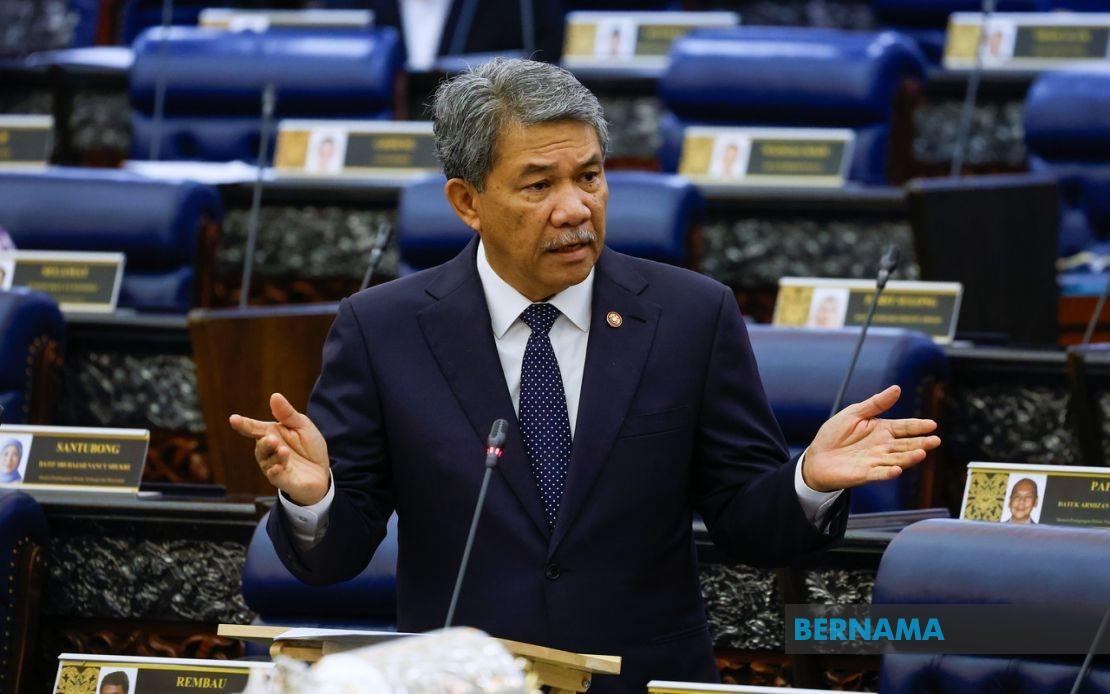
ASEAN is rethinking its approach to Myanmar's intractable political crisis, acknowledging that the Five-Point Consensus agreed upon by regional leaders remains unfulfilled despite more than two years of diplomatic engagement. Foreign Minister Datuk Seri Mohamad Hasan revealed on June 25 that the bloc is exploring revised tactics to breathe new life into the framework, which has become the cornerstone of regional efforts to resolve the military coup and subsequent conflict. The admission reflects growing frustration within ASEAN capitals that incremental progress alone is insufficient to move Myanmar toward meaningful political transition.
At the 48th ASEAN Summit held in Cebu, Philippines, on May 8, member states acknowledged the stalled implementation by directing their foreign ministers to conduct informal bilateral consultations with Naypyidaw. These engagements are designed to take stock of ground realities and collaboratively determine a viable path forward with Myanmar's military leadership. Rather than issuing prescriptive demands from the capitals, ASEAN is shifting toward a more consultative posture, recognising that confrontational rhetoric has yielded limited dividends. The approach signals both pragmatism and a degree of diplomatic exhaustion with the deadlock.
Crucially, Mohamad emphasised that while the Five-Point Consensus remains the operational framework guiding ASEAN's Myanmar policy, any substantive modifications must receive approval from ASEAN heads of state. This caveat underscores the political sensitivity of adjusting the bloc's position, as some members view the framework as sacrosanct while others believe tactical flexibility is essential. The distinction between maintaining the framework's symbolic value while permitting operational adjustments reflects the delicate balance ASEAN must strike between upholding its stated principles and acknowledging practical limitations.
Malaysia has specifically championed extending Myanmar's six-month ceasefire, which was set to lapse at the end of July, into a second phase that could facilitate more expansive peace negotiations. This proposal recognises that sustainable peace cannot emerge from temporary truces alone, and that institutional mechanisms for dialogue must be institutionalised. By advocating for the ceasefire's renewal, Malaysia is attempting to create breathing room for negotiators while demonstrating that incremental gains, however modest, should be preserved rather than allowed to expire.
Beyond the ceasefire extension, Malaysia has urged Myanmar to articulate a transparent roadmap detailing how the peace process will unfold and which parties will be included at subsequent negotiating stages. This demand reflects ASEAN's frustration with Myanmar's opacity regarding its medium and long-term intentions. Without clarity on timelines and inclusion criteria, Myanmar's military junta can indefinitely postpone political concessions while claiming to honour the Five-Point Consensus in spirit. The insistence on a written roadmap is therefore an attempt to lock the regime into specific commitments that can be independently verified.
A critical dimension of ASEAN's recalibration concerns preventing the emergence of a power vacuum in Myanmar that external actors might exploit. Mohamad articulated this concern explicitly, noting that leaving Myanmar isolated or marginalised could invite third-party interference that would further destabilise the country and regional security architecture. This strategic consideration reveals that ASEAN's engagement with Myanmar is motivated not solely by humanitarian concern for the Burmese people, but by calculations regarding regional geopolitics and the prevention of great power competition on ASEAN's doorstep. A Myanmar wracked by unresolved internal conflict becomes a potential arena for Chinese, Indian, and Western strategic competition—an outcome detrimental to ASEAN's collective interests.
Malaysia's commitment to engaging all stakeholders in the Myanmar crisis—including the military-backed government, the parallel National Unity Government, the People's Defence Force, and ethnic armed organisations—illustrates the complexity of ASEAN's position. By maintaining contact with multiple actors across Myanmar's fractured political landscape, Malaysia attempts to preserve its credibility as a neutral broker while simultaneously signalling that no faction can unilaterally dictate the resolution process. This multi-track approach, while diplomatically sensible, also distributes ASEAN's leverage thinly across antagonistic parties with mutually exclusive political objectives.
The Five-Point Consensus itself, agreed upon in April 2021, encompasses principles including ceasefire dialogue, humanitarian assistance, dialogue facilitation, ASEAN observer missions, and enhanced engagement with the international community. That Myanmar has failed to meaningfully advance on most of these fronts after more than two years suggests either that the framework was insufficiently detailed to guide implementation, or that Myanmar's military has consciously chosen non-compliance as a strategy to consolidate power while appearing minimally cooperative. ASEAN's new approach implicitly concedes that exhortation alone cannot compel compliance.
The timing of ASEAN's policy recalibration coincides with deteriorating security conditions across Myanmar, where armed resistance to military rule has intensified and atrocities against civilians persist. International pressure on Myanmar has mounted through UN mechanisms and bilateral sanctions, yet the junta shows no sign of genuinely surrendering power. ASEAN's preference for quiet diplomacy and face-saving arrangements increasingly appears misaligned with the gravity of the humanitarian catastrophe unfolding. The bloc must therefore navigate between its founding principle of non-interference and the reality that Myanmar's trajectory affects regional stability and ASEAN's institutional credibility.
For Malaysia and other ASEAN members, the challenge ahead involves sustaining diplomatic channels with Myanmar while maintaining the support of regional and international stakeholders invested in Myanmar's eventual transition to democratic governance. The shift toward informal engagements and tactical flexibility may yield marginal improvements, but without Myanmar's regime experiencing meaningful pressure or incentive to relinquish power, structural political change appears unlikely. ASEAN's recalibration thus represents an acknowledgment of constraints rather than a breakthrough in resolving Myanmar's fundamental political impasse.

