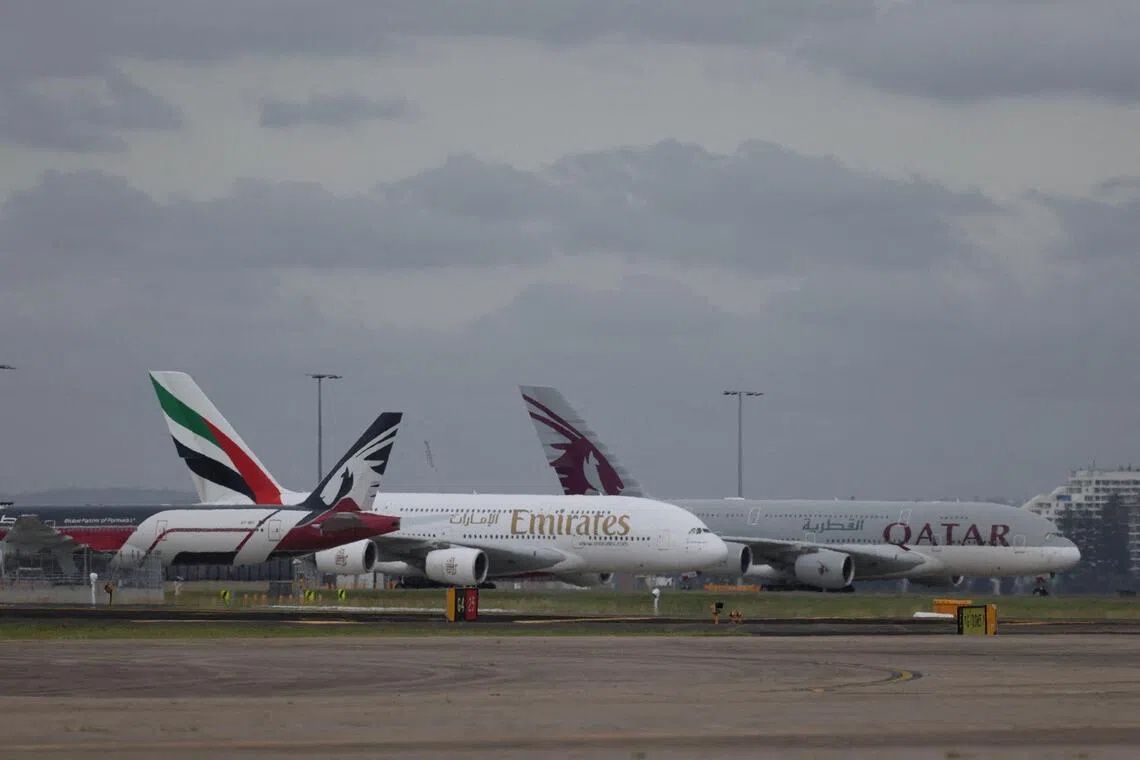
Australia's transport safety investigator has launched a formal inquiry into a troubling sequence of runway incidents at Sydney Airport, where three separate near-collisions occurred within a fortnight. The cluster of safety breaches has prompted urgent reviews of air traffic control operations and raised questions about whether proper protocols are being followed at one of the country's busiest aviation hubs.
The most recent incident unfolded on the morning of August 9 when a Virgin Australia Boeing 737 was authorised to take off by air traffic control. Moments after receiving clearance, the crew spotted a Qantas aircraft actively crossing the runway directly ahead of their intended flight path. Both aircraft had been cleared by controllers—one to depart and one to taxi across the runway—a procedural failure that created an immediate collision hazard. The Virgin Australia pilots reacted swiftly, bringing their aircraft to a complete stop approximately one kilometre away from the Qantas plane, preventing what could have been a catastrophic accident.
On the same day, a second dangerous situation unfolded when a Jetstar pilot was forced to execute emergency braking procedures to avoid contact with a Qatar Airways aircraft. The escalating pattern of incidents within hours exposed systemic vulnerabilities in the airport's control operations that had gone undetected until this critical week. Earlier in the month, on July 27, two Qantas aircraft narrowly avoided collision after both had been cleared for departure simultaneously—a third reminder that fundamental safety protocols were being compromised.
Transport Safety Bureau Chief Commissioner Angus Mitchell acknowledged the severity of the situation during a public statement on August 14, pledging a thorough examination of all contributing factors. His assurance focused on investigating not only the immediate circumstances of each incident but also any underlying organisational weaknesses or systemic flaws that might explain how trained professionals could make such fundamental errors. Mitchell indicated that investigators would examine operational tempo, control tower staffing levels during the incidents, and communications protocols.
The investigation has drawn attention to an unusual detail: the August 9 incident involved a supervisory or training scenario taking place in the control tower. Mitchell elaborated on this point, suggesting that the presence of instructional activities may have created a distraction or divided attention among personnel responsible for managing aircraft movements. This revelation introduces questions about whether training operations should proceed with full operational intensity or whether additional safeguards should be implemented when mentoring is occurring.
Australia's aviation sector is experiencing rapid expansion as air services recover and grow beyond pre-pandemic levels. Mitchell confirmed that the country is actively in a recruitment and training phase for air traffic controllers, suggesting that operational pressures stemming from industry growth may be creating conditions where personnel are stretched thin or working at maximum capacity. Whether newly qualified controllers or those still in training positions were involved in these incidents remains part of the investigation, but the timing suggests growth-related staffing challenges cannot be dismissed.
A separate concern has emerged regarding communication delays. Questions were raised about why the August 9 incident took considerable time to be formally reported, creating a gap between the actual near-miss and official acknowledgment. This transparency issue mirrors broader international challenges in aviation safety reporting, where hesitation to immediately escalate serious incidents can delay accident prevention measures and reduce the window for operational corrections.
For Malaysian and Southeast Asian readers, these incidents carry particular significance given the region's shared reliance on modern air traffic control systems and growing aviation demand. Sydney Airport serves as a major regional hub connecting Australia to Asia-Pacific, and operational failures there can have flow-on effects throughout the region's aviation network. The investigation will likely produce findings and recommendations that influence air traffic control procedures across nearby regional airports.
Prime Minister Anthony Albanese joined Transport Safety Commissioner Mitchell in calling for a rigorous investigation, signalling that the government takes the incidents seriously and expects comprehensive corrective action. The political engagement underscores that aviation safety transcends technical questions and becomes a matter of public confidence in national infrastructure.
The fundamental question facing investigators is straightforward: how did properly trained air traffic controllers in a modern facility permit three potentially catastrophic situations to develop? Whether the answer lies in insufficient staffing, inadequate training protocols, distraction from simultaneous training activities, or communication breakdowns will shape recommendations aimed at preventing future incidents. The investigation will need to distinguish between individual human error and systemic failures—a distinction that determines whether remedies involve personnel discipline or operational restructuring.
As Australia's aviation sector continues to expand and handle record passenger volumes, this cluster of near-misses serves as a reminder that growth must be managed deliberately. The incidents occurred not during routine operations but during a critical period of industry expansion and controller recruitment, suggesting that the pace of growth may have outstripped the capacity of existing safety management systems to adapt.

