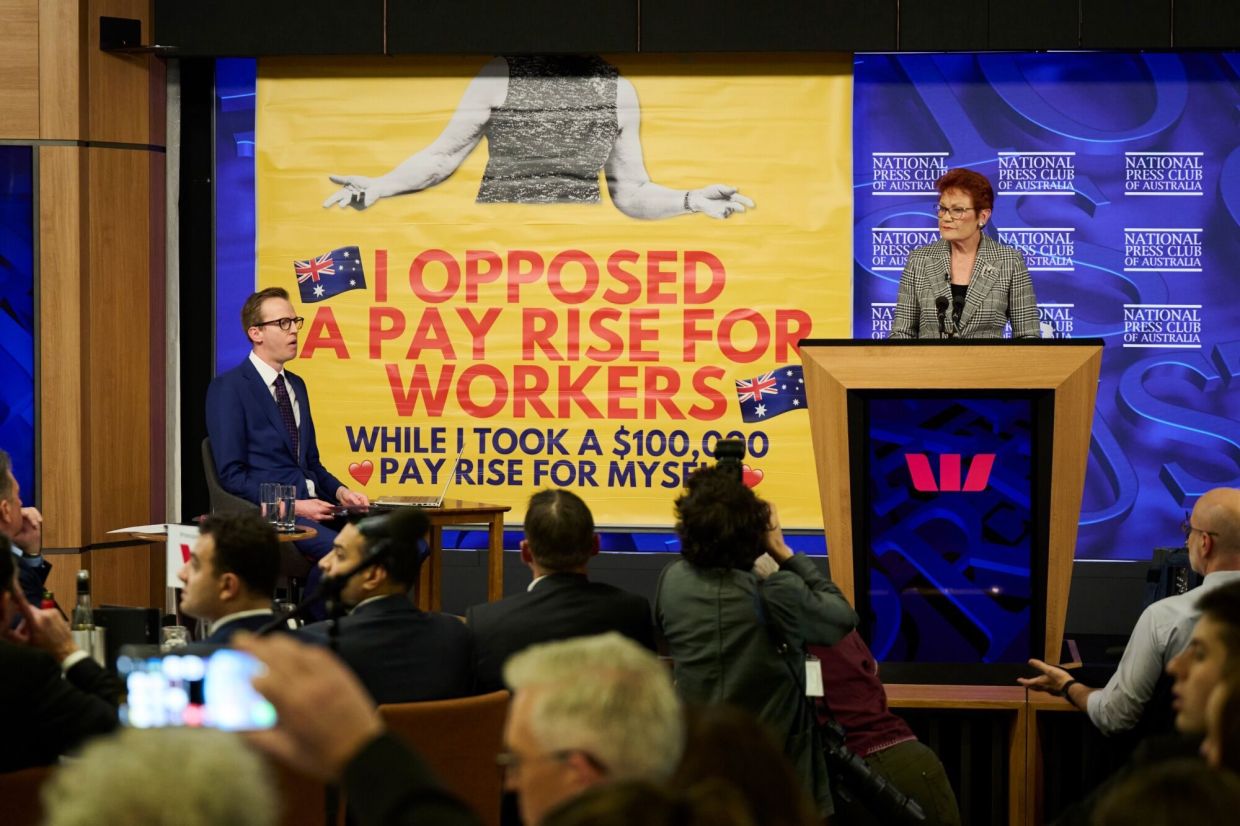
Pauline Hanson, leader of Australia's One Nation party, has made a stark call for the country to abandon its long-standing multicultural framework in favour of what she terms a "monocultural" model. Speaking at the National Press Club in Canberra on Wednesday, Hanson argued that while Australia can remain multiracial, its citizens must operate under a single cultural framework. The speech marked her first appearance at the prestigious venue during her three decades in politics and represents an escalation in her party's cultural messaging at a time when Australia grapples with acute cost-of-living pressures.
Hanson's framing of the distinction between racial and cultural homogeneity lies at the heart of her political prescription. She contends that multiculturalism as a policy has fundamentally failed the nation and contributed to mounting social pressures. Her argument effectively decouples demographic diversity from cultural integration, suggesting that people of different backgrounds can coexist provided they conform to a dominant cultural standard. This rhetorical approach attempts to sidestep accusations of racial exclusionism by ostensibly accepting racial diversity while enforcing cultural conformity.
Central to Hanson's economic grievance narrative is the assertion that Australia's severe housing affordability crisis stems directly from elevated immigration levels. She positioned restrictive migration policy as essential to addressing the shortage of available housing and soaring property prices that have locked many younger Australians out of the property market. This framing appeals to voters experiencing genuine distress over housing costs, translating complex economic factors into a straightforward immigration-centric explanation. By doing so, One Nation offers a populist solution to what economists typically attribute to multifaceted causes including planning constraints, foreign investment, construction costs, and inadequate supply responses.
Hanson's policy platform extends to explicitly targeting migration from what she characterises as regions "immersed in extremism like radical Islam." This formulation conflates geographic origin with ideological threat, a rhetorical device that allows her to present immigration restrictions as security-conscious rather than religiously or culturally motivated. The language reflects longstanding One Nation messaging that has frequently generated controversy over perceptions of Islamophobia, though the party frames such positions as pragmatic risk assessment rather than prejudicial.
One Nation's recent surge in opinion polling reflects a substantial shift in Australian political sentiment. The party has gained momentum particularly over the past twelve months, accelerating noticeably following the collapse of electoral support for the centre-right coalition government in May of the previous year. This trajectory suggests that voters discontented with mainstream centre and centre-right parties have found a receptive home in One Nation's populist messaging. The polling gains indicate that Hanson's messaging resonates with a significant segment of the Australian electorate, particularly those experiencing economic hardship.
The economic backdrop for Hanson's political ascendancy cannot be understated. Australians have confronted a challenging convergence of inflationary pressures, elevated interest rates, and surging fuel costs. The Iran conflict contributed to global oil price volatility, which flowed through to Australian petrol pumps and household energy bills. These cumulative pressures have created genuine economic anxiety among working and middle-class Australians. Hanson's messaging deliberately channels this discontent toward immigration and green energy policies, offering immigration restriction and energy policy reversals as remedies for inflation and fuel costs.
Prime Minister Anthony Albanese's Labor government has attempted to provide relief through targeted policy interventions, including a temporary reduction to fuel excise taxation and proposed tax reforms intended to improve housing affordability. These measures represent conventional policy responses to cost-of-living pressures. However, Labor has simultaneously diagnosed the political challenge differently than One Nation does. Albanese has explicitly attributed the rise of One Nation and similar populist movements to what he describes as "simplistic grievance-based politics," arguing that such messaging exploits legitimate economic concerns without offering substantive solutions to systemic economic dysfunction.
Albanese's critique suggests that populist parties capitalise on public perception that the economy no longer serves ordinary Australians effectively. Rather than addressing the underlying structural issues—wage stagnation, rising inequality, inadequate investment in productive capacity—populist movements offer scapegoats and culturally resonant targets. From Labor's perspective, this represents a dangerous deflection from necessary economic reform. The government's framing positions itself as serious economic managers while portraying One Nation as exploitative of legitimate grievances without delivering real solutions.
The debate between Labor and One Nation over causation matters significantly for regional observers, particularly in Southeast Asia. Australia's approach to immigration and multicultural policy influences its regional standing and soft power. A sustained shift toward monocultural nationalism could affect Australia's capacity to maintain deep engagement with neighbouring countries through cultural and people-to-people exchanges. Many Southeast Asian nations have significant Australian business communities, student populations, and cultural connections that depend upon Australia's openness to diversity and multiculturalism.
Furthermore, Hanson's emphasis on restricting migration from predominantly Muslim regions carries potential implications for Australia's diplomatic relationships, particularly with Indonesia and Malaysia. Both nations have substantial Muslim populations and considerable stakes in Australia's immigration policies. Explicit targeting of Muslim-majority countries for immigration restriction could generate bilateral tension and provide ammunition to those in Southeast Asia who question Australia's commitment to regional friendship.
The timing of Hanson's monocultural prescription during an acute cost-of-living crisis illustrates how economic hardship can provide political space for cultural nationalism. When households struggle with mortgage payments and fuel costs, immigration becomes a psychologically satisfying explanation for their suffering. This dynamic is neither unique to Australia nor new—similar patterns have emerged across developed democracies where populist parties gained traction during periods of economic stress.
For Malaysian observers, the Australian case study offers insights into how populist political movements can leverage economic anxiety to advance cultural nationalist agendas. Australia's multicultural identity, once considered a pillar of national strength, now faces challenge from a substantial political force arguing for monocultural conformity. Whether Hanson's One Nation can translate polling gains into electoral dominance, and whether her cultural nationalism resonates sufficiently to reshape Australian policy, remains uncertain. However, the movement's evident appeal reflects genuine voter dissatisfaction with the economic status quo.