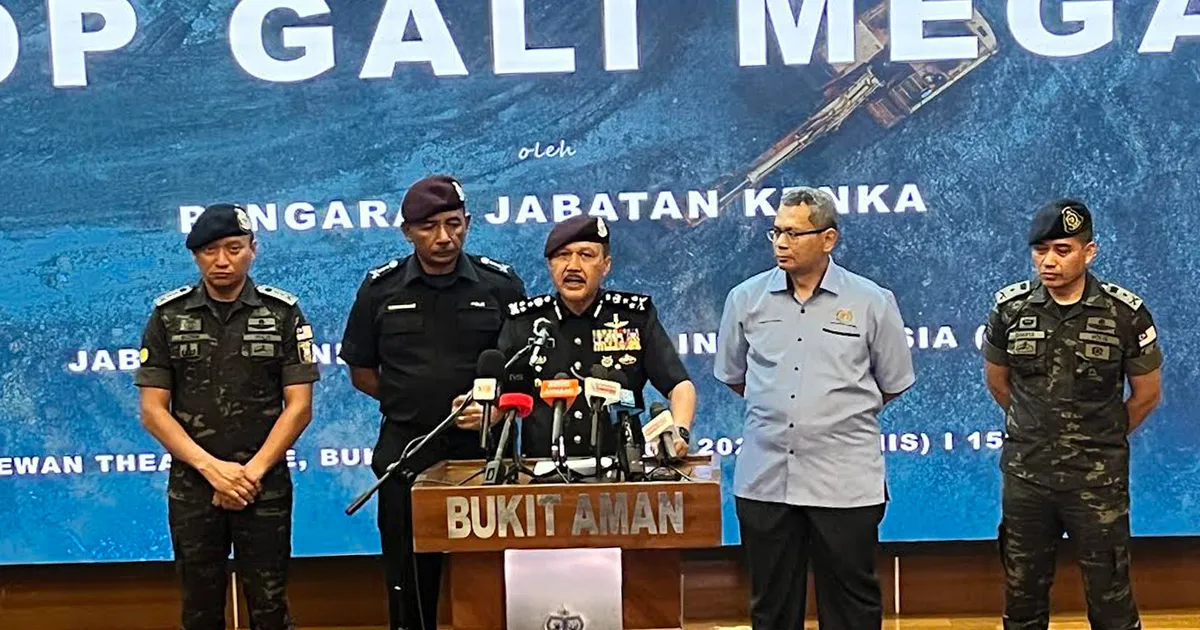
A coordinated crackdown on illegal mining operations has resulted in the arrest of 99 suspects and the recovery of RM119 million in assets, marking one of the more significant enforcement actions against unlicensed mining activities in recent months. The intensive operation, which ran from August 19 to 23, saw authorities mobilizing resources across multiple regions to dismantle networks engaged in the unauthorised extraction and trafficking of valuable natural resources.
The scale of material recovered during the five-day campaign underscores the magnitude of illegal mining as an ongoing challenge within Malaysia's resource management framework. Enforcement teams seized approximately 33,000 tonnes of unprocessed natural resources, including coal, quarry stone, earth and sand materials, with a combined estimated value of RM21 million. This substantial haul represents not only lost government revenue through illegal extraction but also the environmental and regulatory costs associated with unmonitored resource removal across the country.
The RM119 million figure encompasses the total value of all assets seized during the operation, extending well beyond the raw materials themselves. This broader valuation likely includes equipment, vehicles, machinery, and financial assets linked to the criminal networks orchestrating these illegal operations. The disparity between the RM21 million attributed directly to extracted materials and the total RM119 million seizure reveals the considerable infrastructure and capital investment underlying these illicit enterprises, suggesting operations of greater sophistication than simple opportunistic quarrying.
Illegal mining has emerged as a persistent problem across Southeast Asia, with Malaysia facing particular vulnerabilities due to its rich mineral deposits and extensive coastlines. The prevalence of such operations reflects persistent demand for cheap, unregulated raw materials in both domestic and regional markets, compounded by insufficient oversight in certain areas and communities facing economic pressures that incentivize participation in black-market extraction. The August operation demonstrates government determination to address this challenge through intensive, coordinated enforcement rather than relying solely on routine patrols.
For Malaysian businesses operating legitimately within the mining, quarrying and construction sectors, such enforcement actions carry dual significance. While they remove unfair competition from unlicensed operators undercutting legal suppliers, they also highlight regulatory risks and the potential for sudden asset seizure. Licensed quarry operators and mining companies benefit from a more level playing field, though the prevalence of illegal alternatives suggests enforcement remains inconsistent across all regions and that demand for cheap materials continues to sustain the shadow market.
The environmental implications of large-scale illegal mining extend beyond immediate resource depletion. Unregulated extraction typically involves minimal environmental safeguards, leading to habitat destruction, soil degradation, water table disruption, and landscape scarring that can persist for decades. The recovery of 33,000 tonnes of materials suggests extraction operations that, left unchecked, would have generated far greater environmental damage had the crackdown not intervened when it did. This dimension adds weight to enforcement beyond merely protecting state revenues and legal business operators.
The geographic distribution and nature of these 99 arrests likely reveals concerning patterns about which regions face the most entrenched illegal mining networks and which communities harbour the highest concentration of participants. Understanding these distribution patterns helps authorities allocate resources more effectively and identify whether certain local governance structures or economic conditions create environments where illegal mining flourishes. The five-day concentrated operation model may prove more effective than routine enforcement, given that large-scale illegal mining requires time and coordination to mobilize.
Regional perspectives from other Southeast Asian nations dealing with similar challenges suggest that sustainable solutions require complementary measures alongside enforcement raids. These include stronger supply chain transparency requirements, market incentives for certified materials, community economic diversification programs, and cross-border cooperation to prevent smuggling of illegally extracted resources. Malaysia's periodic intensive operations send deterrent signals, yet the recurring scale of subsequent crackdowns suggests these enforcement surges must eventually transition toward systemic prevention.
The recovery of RM119 million in assets represents a significant recovery for government coffers and demonstrates tangible returns from enforcement investments. However, the true measure of success extends beyond single operations to trend analysis over subsequent months and years. Sustained reduction in illegal mining activity would indicate that either deterrent effects are taking hold, market conditions are shifting against illicit operators, or enforcement capacity has genuinely constrained their operations. Conversely, if comparable crackdowns continue with similar frequency and scale, this would suggest the problem remains structural and immune to periodic enforcement interventions alone.
Moving forward, authorities will face pressure to transition from reactive raid-based responses toward proactive prevention strategies that address root causes driving participation in illegal mining networks. This might include stronger licensing requirements with meaningful inspections, community engagement initiatives in mining-adjacent areas, technology deployment for monitoring remote extraction sites, and financial incentives for legitimate operators to increase market share against their unregulated competitors. The August operation provides a snapshot of enforcement capacity, but sustainability requires complementary systemic reforms.

