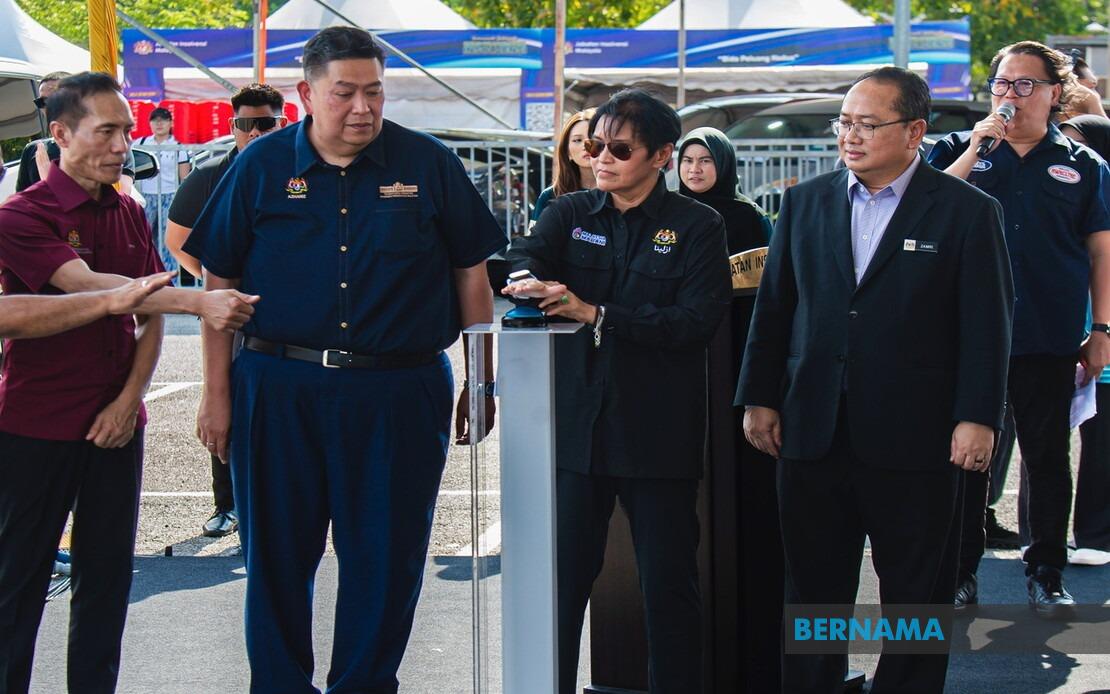
Voters heading to the polls in Johor should prioritize maintaining a cohesive working relationship between the state legislature and state administration, according to UMNO information chief Datuk Seri Azalina Othman Said. Speaking in Putrajaya, Azalina emphasized that choosing candidates aligned with the governing Barisan Nasional offers practical advantages for residents seeking efficient public service delivery at the state level.
While acknowledging the constitutional right of all political parties to field candidates, Azalina framed the upcoming Johor state election as fundamentally different from federal contests. In state-level elections, she argued, voters should weigh how electoral outcomes directly affect their interactions with local administration. Her remarks highlight a strategic focus on governance pragmatism rather than ideological competition, suggesting that administrative efficiency depends heavily on alignment between legislative and executive branches.
Azalina drew particular attention to the intricate networks that support rural and community services across Johor. Village heads, village development committees, and other grassroots administrative structures require consistent coordination with state government machinery to function effectively. These functionaries rely on state resources, approval processes, and policy direction to implement development projects and social programmes. When legislative representatives belong to the same coalition as the state government, she contended, these coordination mechanisms operate more smoothly, reducing bureaucratic friction that might otherwise delay or complicate service provision.
The argument reflects a broader debate within Malaysian politics about the relationship between electoral choice and governance outcomes. Supporters of this continuity approach maintain that divided government—where opposition parties control the state assembly while the same or different coalition governs the state executive—creates institutional tension. Critics counter that electoral competition strengthens democratic accountability regardless of political alignment. Azalina's intervention suggests the BN coalition is banking on voters prioritizing smooth service delivery over political change.
The timing of Azalina's appeal comes as Johor enters the final phase of its state election cycle. The state legislative assembly was dissolved on June 1, setting in motion a compressed electoral timeline. The Election Commission scheduled nomination day for June 27, early voting for July 7, and polling day for July 11. This compressed schedule gives candidates and parties limited time to campaign, placing particular emphasis on high-profile statements from senior party figures to shape voter perception.
For Malaysian voters, particularly those in Johor, this election represents an opportunity to assess whether continuity or change better serves their interests. Johor, as Malaysia's second-largest state by population and a significant economic contributor, carries implications beyond its borders. The state's governance trajectory influences investor confidence in the southern region and sets precedents for how other state governments manage relations with opposition-controlled legislatures or vice versa.
Azalina, who serves as Minister in the Prime Minister's Department responsible for law and institutional reform, brings official weight to the campaign argument. Her portfolio suggests the federal government views state-level governance through an institutional lens, where compatibility between elected assemblies and state administrations matters for policy implementation. Her remarks, delivered while officiating the Insolvency Second Chance Policy Roadshow Carnival 2026, illustrate how senior officials integrate campaign messaging into routine government events.
The emphasis on administrative continuity reflects evolving BN strategy in state elections. Rather than solely emphasizing party loyalty or national achievements, the coalition increasingly frames elections as choices about governance capacity and service delivery. This approach attempts to appeal to pragmatic swing voters who may be dissatisfied with BN performance but uncertain whether opposition parties could govern effectively. By focusing on the mechanics of state administration rather than party ideology, BN seeks to neutralize some advantages opposition parties gain from anti-incumbency sentiment.
Johor voters face substantive choices about the state's direction. The election will determine not only the composition of the state assembly but also the balance of power within Johor's political structure. If BN retains majority control, the current state administration continues relatively unchanged. If opposition parties gain significant ground or control, the state government would operate under greater legislative scrutiny. These outcomes carry practical consequences for how state resources are allocated, how contracts are awarded, and how development priorities are set.
The electoral context also reflects broader Malaysian political dynamics. The 2023 federal election demonstrated voters' willingness to split their ballots between different coalitions at different levels. Some voters support federal government parties while backing state opposition forces, or vice versa. Johor's election will test whether Azalina's argument about administrative continuity resonates with this pragmatic electorate or whether other concerns dominate voter calculations.
For Southeast Asian observers, Johor's election offers insights into how Malaysian democracy operates at the state level. Voter behavior in this important state provides clues about sentiment regarding the federal government's performance and about confidence in opposition parties' capacity to govern. The outcome may influence expectations for upcoming elections in other states, particularly those with competitive political dynamics.
As the election approaches, both BN and opposition coalitions will intensify their outreach efforts. Azalina's emphasis on administrative continuity represents one significant strand of the BN campaign narrative. Whether this argument proves decisive depends on whether Johor voters prioritize smooth governance over political change, and whether the opposition can convincingly argue that their candidates would deliver equivalent or superior service despite potential institutional complications.

