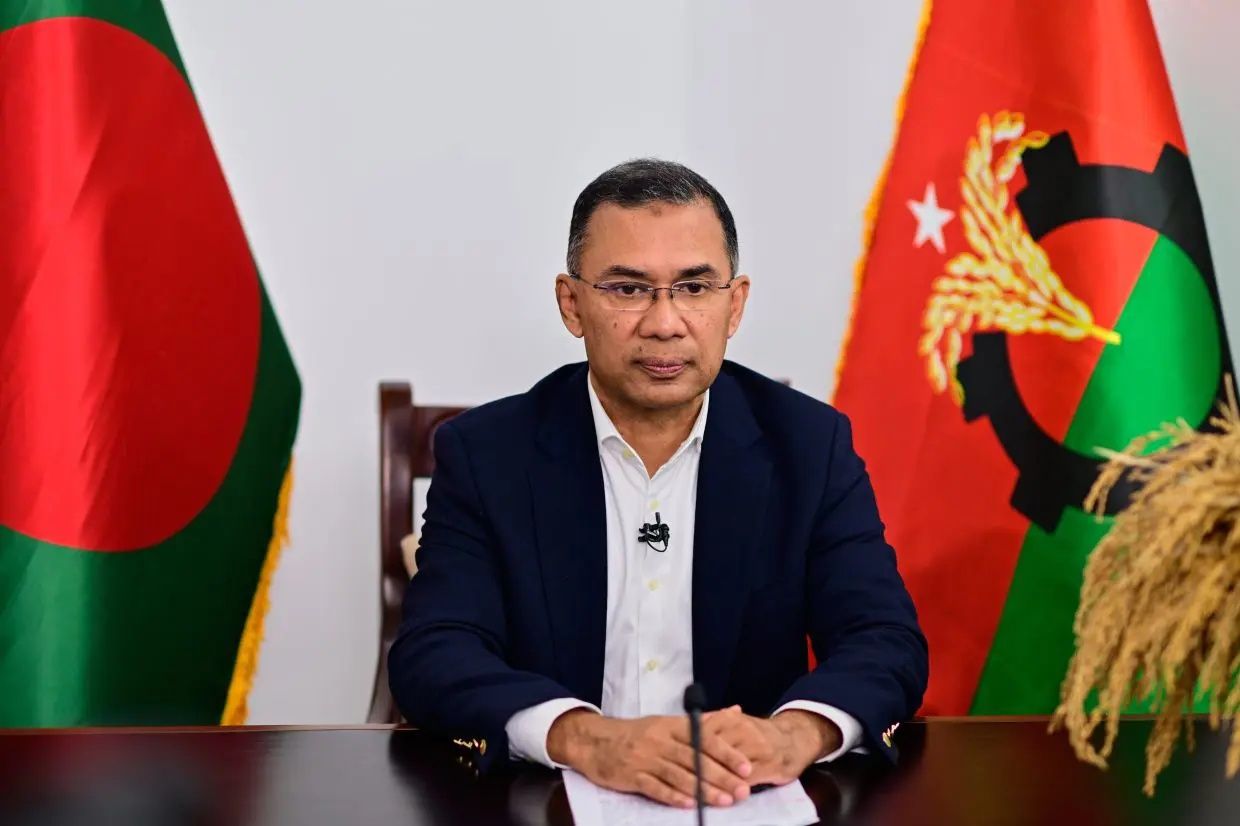
Bangladesh's newly installed Prime Minister Tarique Rahman is embarking on his maiden foreign tour this weekend, with visits to Malaysia and China that underscore a deliberate diplomatic realignment away from India—a significant move given Bangladesh's geographical proximity to and historical ties with its giant western neighbour. The foreign ministry announced the itinerary on Saturday, confirming that Rahman will travel to Malaysia on Sunday before proceeding to Beijing the following day, a sequencing that carries considerable symbolic weight in regional geopolitical terms. This choice of inaugural destinations reflects the government's immediate priority to strengthen economic linkages and stabilise relationships beyond South Asia's traditional power structures.
The timing of Rahman's tour carries particular significance within the context of Bangladesh's recent political upheaval and the subsequent reconfiguration of its government. Having assumed the premiership in February following elections held after an interim administration managed the transition from the previous regime, Rahman is moving swiftly to demonstrate that his government is operationally engaged and serious about international engagement. The early foreign visits also serve to establish his leadership credentials on the world stage and to signal continuity in governance despite the tumultuous circumstances of his predecessor's departure. By choosing Malaysia and China as his first ports of call rather than India—a choice that would have been more conventional given geographical and cultural proximity—Rahman is sending a carefully calibrated message about his administration's strategic orientation and its commitment to diversifying Bangladesh's international partnerships.
Malaysia holds particular economic importance for Bangladesh, hosting an estimated 800,000 Bangladeshi workers who constitute more than a third of the country's total foreign workforce. This substantial diaspora community creates a natural foundation for deeper bilateral engagement, and Rahman's visit offers an opportunity to discuss matters ranging from worker welfare and remittance flows to trade facilitation and investment opportunities. For Malaysian readers and stakeholders, the visit represents a chance to engage directly with Bangladesh's new leadership on issues affecting the large Bangladeshi community in the country, as well as to explore expanded commercial cooperation in areas such as manufacturing, agriculture, and services. The presence of such a significant migrant population means that Malaysia-Bangladesh relations have practical dimensions that affect hundreds of thousands of families on both sides of the relationship.
China features prominently on Rahman's agenda, with trade and infrastructure development forming the centrepiece of discussions in Beijing. The prominence of China in his inaugural tour reflects Bangladesh's growing economic interdependence with the world's second-largest economy and the importance of Chinese investment and technical expertise to Bangladesh's development aspirations. Among the specific projects expected to feature in talks is the Teesta River project, a long-pending initiative aimed at restoring and managing one of Bangladesh's most strategically important waterways through a combination of dredging operations, embankment reinforcement, and irrigation infrastructure. This project has languished for years, and Bangladesh has been seeking international cooperation, particularly from China, to move it forward. Chinese support could prove transformative for Bangladesh's agricultural productivity and water security, making discussions around this initiative a crucial focus of Rahman's Beijing visit.
The broader context for these visits emerges from the significant deterioration in Bangladesh-India relations following the 2024 uprising that toppled Sheikh Hasina's government. Hasina, who had cultivated close ties with New Delhi, fled the country and has remained in hiding in India while Bangladesh has repeatedly demanded her extradition—a demand India has not entertained. This fundamental breakdown in relations between the neighbouring governments has profound implications for regional stability, as India and Bangladesh are deeply interconnected through shared rivers, trade relationships, and historical ties spanning decades. The strains have extended beyond the Hasina question to encompass border management issues, where India has reportedly been sending individuals it classifies as illegal migrants across the boundary into Bangladesh, creating humanitarian and administrative challenges for Dhaka.
The geopolitical contest between India and China over regional influence in South Asia provides additional context for understanding Rahman's decision to prioritise these two nations in his early foreign diplomacy. India has long expressed concern about China's expanding footprint in South Asia, and the competition for influence and investment in countries like Bangladesh has become increasingly acute. By visiting China early in his tenure, Rahman is positioning Bangladesh as a nation willing to engage multiple great powers and not confining itself within India's traditional sphere of influence. This move reflects a desire to maintain strategic autonomy and to access Chinese capital and expertise without being perceived as aligned exclusively with New Delhi, a significant diplomatic statement given Bangladesh's geographic location and historical associations.
Foreign ministry officials have characterised these visits as components of a comprehensive diplomatic initiative aimed at consolidating Bangladesh's economic partnerships and establishing a new trajectory for international relations under Rahman's leadership. The emphasis on economics rather than purely political or security concerns suggests that the government is prioritising bread-and-butter issues affecting ordinary Bangladeshis—employment, trade opportunities, infrastructure development, and investment flows. This pragmatic orientation may help explain why Malaysia, as a major source of income for hundreds of thousands of Bangladeshi workers and as an established economic partner, features alongside China in the premier foreign tour of the new administration. The visits collectively represent an attempt to anchor Bangladesh within a network of prosperous, dynamic Asian economies that can provide both immediate economic benefits and longer-term development pathways.
Regional observers have noted that while ties with India have nominally improved since Rahman took office—replacing the acute tensions that characterised the interim period following Hasina's ouster—fundamental friction points remain unresolved and trust between the governments remains low. The decision to bypass India in favour of Malaysia and China may therefore reflect not merely a positive choice for engagement with those nations but also a recognition that immediate high-level dialogue with New Delhi would be fraught with complications and potentially counterproductive. By establishing momentum with other partners first, Rahman may be calculating that Bangladesh strengthens its negotiating position and reduces its vulnerability to Indian pressure on contentious issues, from the Hasina extradition demand to border management and water-sharing arrangements.
For Southeast Asian nations, particularly Malaysia, Rahman's visit signals that Bangladesh is actively seeking to expand its engagement within the region and to develop deeper economic and institutional ties beyond its immediate South Asian environment. This represents an opportunity for expanded cooperation on trade, investment, and people-to-people exchanges. The visit also underscores the reality that Bangladesh's external relations are undergoing significant recalibration, and countries seeking to deepen ties with Dhaka may find this a propitious moment to pursue collaborative initiatives. As Bangladesh's new government consolidates its position and articulates its international priorities, these early visits will likely establish patterns and frameworks that shape the country's diplomatic orientation for years to come.

