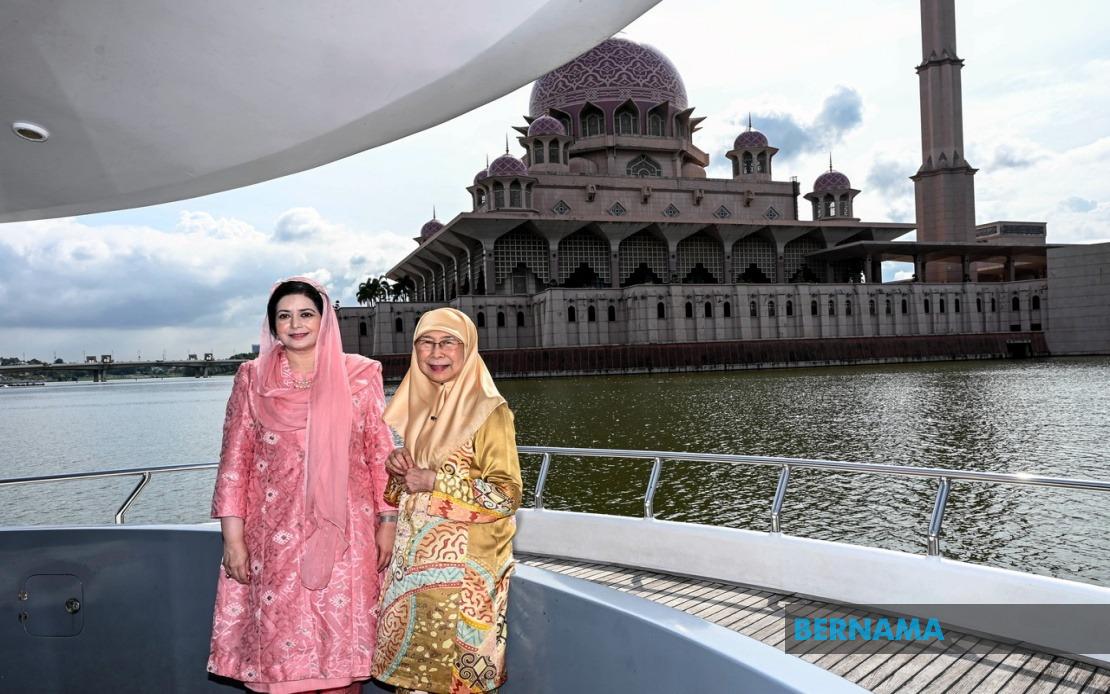
Dr Zubaida Rahman, spouse of Bangladesh Prime Minister Tarique Rahman, experienced the scenic beauty of Putrajaya's waterfront on June 22 during a leisurely boat cruise around the administrative capital's picturesque lake. The excursion allowed her to view the distinctive architectural landmarks dotting the shoreline while enjoying the tropical landscape that defines Malaysia's purpose-built federal territory.
The morning outing commenced at 9.30 am when Dr Zubaida was greeted by Datuk Seri Dr Wan Azizah Wan Ismail, the wife of Malaysian Prime Minister Datuk Seri Anwar Ibrahim, and Hannah Yeoh, who serves as Minister in the Prime Minister's Department overseeing Federal Territories. This welcoming committee reflected the diplomatic significance attached to the visitor's presence in Malaysia, signalling the warm reception extended to the Bangladesh delegation during their tenure in the country.
The cruise itself served as an informal diplomatic engagement, with Dr Zubaida spending approximately one hour conversing with her Malaysian counterparts while absorbing the panoramic vistas of Putrajaya's man-made landscape. Such cultural and recreational activities during high-level visits serve dual purposes: they provide visiting dignitaries with memorable experiences of their host nation while fostering personal relationships between the wives of senior government officials, a dimension of diplomacy that often proves instrumental in building goodwill at the leadership level.
The visit by Bangladesh Prime Minister Tarique Rahman and Dr Zubaida represents a significant moment in bilateral relations, occurring as part of an official two-day trip initiated following an invitation from Prime Minister Anwar Ibrahim. This journey marks Tarique's inaugural formal bilateral mission abroad since assuming office in February 2026, underscoring the importance Malaysia holds in Bangladesh's immediate diplomatic priorities upon entering his tenure.
The timing and nature of the visit reflect the commitment both nations have demonstrated toward deepening cooperation across multiple sectors. Malaysia and Bangladesh share longstanding historical, cultural, and economic ties rooted in their shared Islamic heritage and complementary development trajectories. The official engagement provides an opportunity for both governments to assess existing partnership frameworks and identify emerging areas for collaboration in a rapidly evolving regional context.
Economically, the relationship between Malaysia and Bangladesh carries substantial weight in regional commerce. Bangladesh currently occupies the position of Malaysia's 28th-largest trading partner globally, with bilateral trade reaching RM12.18 billion in aggregate value. Within South Asia specifically, Bangladesh ranks as Malaysia's second-most significant trading partner, trailing only India in the subregional hierarchy. This commercial dimension indicates the depth of economic interdependence and the diverse array of goods and services flowing between the two nations across maritime and overland routes.
The trading partnership encompasses multiple sectors including textiles, garments, pharmaceuticals, and agro-industrial products, reflecting the complementary nature of the two economies. Malaysian investment in Bangladesh spans manufacturing, telecommunications, and infrastructure development, while Bangladeshi entrepreneurs have increasingly established presence in Malaysian markets. The growth trajectory of bilateral commerce suggests ample room for expansion, particularly in emerging sectors such as renewable energy, digital technology, and green manufacturing where both nations share developmental objectives.
Putrajaya itself, the venue for Dr Zubaida's recreational experience, has become an increasingly prominent destination for official state visits and high-level diplomatic engagements. The modern administrative capital, constructed over the past three decades, exemplifies Malaysia's development ambitions and technological prowess. Visitors to Putrajaya Lake can observe architectural landmarks including the Prime Minister's Office, the Palace of Justice, and various government ministries arrayed around the carefully engineered waterfront, offering tangible evidence of Malaysia's urban planning capabilities and financial resources.
The lake cruise activity, seemingly modest in scale, carries symbolic significance in diplomatic protocol. Such informal settings allow senior officials and their families to communicate in relaxed environments, facilitating candid conversations that might prove difficult in formal conference settings. The presence of Dr Wan Azizah and Hannah Yeoh alongside Dr Zubaida demonstrates the Malaysian government's attention to providing substantive engagement rather than perfunctory courtesy visits, enhancing the personal dimension of state-to-state relations.
For Malaysian observers, the Bangladesh Prime Minister's inaugural foreign bilateral visit to Malaysia reinforces the nation's positioning as a preferred destination and trusted regional partner for new administrations establishing their international engagement strategies. It validates Malaysia's role as a steady presence in Asian diplomacy and suggests confidence in the bilateral relationship's trajectory under the new Bangladesh leadership. The visit also provides an opportunity for Malaysian stakeholders—government, business, and civil society—to strengthen connections with counterparts in Bangladesh and explore enhanced collaboration mechanisms.
The broader context of Malaysia-Bangladesh relations extends beyond economic metrics and diplomatic courtesy into cultural and people-to-people domains. Significant Malaysian business communities operate in Bangladesh, while a growing number of Bangladeshi professionals and students contribute to Malaysian society. Educational partnerships between universities in both countries have expanded, facilitating academic exchange and knowledge transfer. Religious and cultural institutions maintain active engagement, reflecting the shared Islamic identity that binds the two Muslim-majority nations.
Looking forward, this official visit establishes a foundation for deepened engagement under Prime Minister Tarique Rahman's administration. The signal sent by choosing Malaysia for his first bilateral foreign mission outside South Asia carries considerable weight, suggesting Bangladesh's interest in strengthening Southeast Asian connections and engaging with the ASEAN framework through partnerships with major regional economies. For Malaysia, the visit reinforces its diplomatic relevance and economic importance in South Asian calculations.

